Tuesday, December 02, 2025

Are Others Pretending to Listen to You?


We have been taught that active listening is key to effective communication and collaboration.  What, though, constitutes the most effective form of active listening?  Suppose that someone is making eye contact, affirming your statements with a few simple nods, and/or uttering "mm-hmm" after a key point or two.  Are they listening closely?  Or are they pretending to listen?   

It turns out that we are not always very good at discerning whether another party is listening closely or feigning attentiveness.   UCLA's Anderson Review recently spotlighted the research of Professor Hanne Collins and her colleagues, writing:  

A burgeoning area of study, with papers co-authored by UCLA Anderson’s Hanne K. Collins, is establishing that speakers who feel heard often are not; that when the spoken-to feign attentiveness, it’s highly effective at misleading a speaker; and that a more active listening mode — volleying back a bit of what you’ve heard, explicitly stating a desire to engage, especially on topics of a sensitive nature – is the path to a more effective sort of conversing.

Collins suggests that there are two forms of active listening.  In the simpler form, it involves non-verbal cues intended to suggest that you are paying close attention. In another form, you are engaging with the other party in a much more conversational form.  This latter form of active listening is much more effective, and it signals clearly that you are in no way feigning attentiveness.  Collins focuses on three types of interaction:
  • Paraphrasing: “Let me make sure I have this right. What happened at school today was…”
  • Conversational callbacks: “As you mentioned in your email last week, your team needs more support to complete this project on time.”
  • Follow-up questions: “I hear that you’re asking me to do more around the house. What specifically would help?”
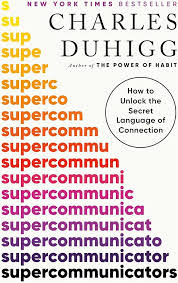
For more on how to have an effective dialogue that includes a healthy dose of active listening, I highly recommend Charles Duhigg's book, Supercommunicators: How to Unlock the Secret Language of Connection. 

Monday, November 24, 2025

Testing Your Assumptions

You've used AI and/or Excel to build a beautiful model that examines the ROI of a new venture, project, or initiative.  The result? A strong case for investment, because the ROI is quite good.  You are ready to make your case to senior executives and/or investors.  How can you stress test your model?  The most important thing you can do is to test your assumptions. After all, garbage in, garbage out. If you build a model based on false assumptions, you are in big trouble.  Of course, confirmation bias afflicts many of us as we make decisions. We may be picking and choosing assumptions to deliver a rosy picture, rather than making more realistic presumptions about the future.  

How do we decide which assumptions warrant the most attention and should be tested vigorously?  Jon Fjeld was a long-time tech industry executive, and he now teaches at Duke's Fuqua School of Business.  He has a simple method for determining which assumptions need to be scrutinized first.  He argues that three factors are critical:

1. Severity:  How big is the impact on the project if the assumption is not true?

2. Probability: How likely is it that the assumption is not true?

3. Cost:  How expensive and time consuming is it to test the assumption?

Fjeld uses these three factors to create a simple ratio that can be used to rank your assumptions.  His equation is: (Severity x Probability)/Cost.   The higher the ratio, the more important it is that your prioritize the testing and validation of that assumption.  While we don't actually have a clear way to quantify these three factors, the concept of this ratio makes good sense.  By thinking about these three factors, and their relationship to one another, we can do a better job of deciding how we want to test, experiment, and prototype before making a big bet.  

Friday, November 21, 2025

Educating Students More Effectively, Preparing Them for the Workforce

Source: https://theglobalscholars.com/

Did you use a laptop to take notes in class during school?  Do your children use laptops during class to take notes?  University of Wharton Professor Adam Grant points us to a recent meta-analysis published in the Educational Psychology Review by Abraham Flanigan and his co-authors.  The results are crystal clear.  Grant summarizes the key findings: 

24 experiments: Students learn more and get better grades after taking notes by hand than typing. It's not just because they're less distracted—writing enables deeper processing and more images. The pen is mightier than the keyboard.

Perhaps all those schools requiring students to spend a big chunk of their day on Chromebooks should rethink their pedagogical approach.  As more and more companies complain about the skills and capabilities of entry-level employees, we need to rethink how we teach and how students learn.  Yes, we need to enable young people to use technology productively.  We can't go back to the stone ages.  However, we cannot just blame the phones and social media for the challenges that learners face these days (though banning phones in schools is an excellent idea).  We have to ask ourselves whether we have contributed to the challenges learners face by shifting so much teaching and learning from paper and pencil to the Chromebook (or other devices).  

Monday, November 17, 2025

Reviewing the Performance Reviews


Do you write effective performance reviews for your team members?  Have you received a performance review that you considered especially constructive and useful?  Stephanie Mehta has an interesting article about performance reviews in Fast Company this week.  She focuses on the effort by Ironclad CEO Dan Springer to improve the way his managers evaluate employees.   Mehta writes,

The CEO then read one written midyear review from every frontline manager—about 80 in total. He says about 20% were outstanding. Another 60% were solid—clear, metrics-driven, with specific examples. But roughly 20% missed the mark. Some featured long narratives that showed care for the employee but lacked actionable guidance. Others were short and vague. Springer tapped these managers for further training on how to give effective feedback. “We really did try to make it fun and not boring,” he says.

I admire the commitment to providing an in-depth examination of how these reviews are written and then following up with training.  Many managers receive very little education in how to write an effective review.  They are promoted to lead a team and then asked to take on this important task without a great deal of guidance and support.  Providing useful feedback is an art and a science.  Educating leaders about the science of providing constructive feedback is essential. For example, research suggests that providing forward-looking advice is more effective than traditional forms of feedback.  Giving them chances to practice is key to helping them master the art of reviewing their team members' performance.  

Tuesday, November 04, 2025

How Quickly Should a Leader Respond to Feedback?


Suppose that you a leader receives feedback, perhaps through a 360 degree evaluation.  Should leaders respond immediately to this feedback and change their behavior?  Perhaps not.  A new study suggests that moving too quickly to adapt in light of constructive feedback may be detrimental to a leader's reputation and effectiveness. Stanford Leadership Insights reports on the findings from an interesting new study by Danbee Chon, Ovul Sezer, and Francis Flynn: 

While past research — and conventional wisdom — suggests that leaders should respond promptly to employee feedback to avoid seeming dismissive, the researchers demonstrated through a series of studies that people don’t necessarily trust rapid changes in their leaders’ behavior, especially when they consider those changes to be difficult. Instead, they may regard sudden shifts as inauthentic, betraying a lack of fidelity between a person’s actions and their genuine thoughts and feelings.

What's the implication for leaders?  Is it simply to move slowly?  Not necessarily. The research suggests that leaders should carefully explain to their employees the consideration and effort that they put into a behavioral or policy change.  They should explain how they considered the feedback, why they chose to adapt given the critique from employees, and very importantly, how hard it was to alter their behavior.  Showing that it was not a kneejerk reaction meant to placate others is critical in these situations.  

Tuesday, October 28, 2025

What's Good for Our Kids is Great for Us Too!

Source: theladders.com

If you have not read Jonathan Haidt's amazing book, The Anxious Generation, I highly recommend it. Haidt makes a great case for banning smartphones in schools. Now, many school systems have adopted his advice. Early results suggest that the policies are having a positive impact on learning. I do not allow phones in my university classroom, and I'm confident that removing this distraction improves our dialogue considerably.

If this smartphone policy is good for our kids, shouldn't it be good for us as well? In today's Wall Street Journal, Chip Cutter writes an article titled "CEOs Are Furious About Employees Texting in Meetings."  He writes:

A few weeks ago, Airbnb CEO Brian Chesky asked his top lieutenants to identify the problems they saw quietly plaguing the company. Chesky called it the “fester list.” One executive threw out an issue: Too many Airbnb employees weren’t present in meetings because they were checking their phones or laptops. “It’s a huge problem,” Chesky said. Then the chief had a realization. He was guilty of zoning out, too. “Sometimes I’m like, ‘OK, I heard it. I know what you’re about to say. I know the subject matter,’” Chesky said. “I text, but then people see me text, they text. This is a major societal problem.”

Cutter cites leaders from JP Morgan CEO Jamie Dimon to QXO CEO Brad Jacobs about the challenges of distraction during meetings.  Many leaders have become incredibly frustrated by the disconnected conversations, lack of collaboration, and poor listening occurring during meetings.  Of course, many of us would say that we turn to our phones because many meetings are long, dull, and boring.  However, we have ask ourselves:  Isn't that what our kids would say about classes in which they would love to use their phone?  Are we just rationalizing our use of phones during meetings in the same way students often do?  How about the "what if there is an emergency?" excuse?  Ask yourself: Just how many true emergencies do we experience in a week?  Moreover, we can easily set our phones such that people won't disturb us unless it is truly an emergency.   Yet, we choose not to do so.  I'm just as much of a culprit as many others I know.  

You can see the self-reinforcing mess we have on our hands.  We jump to our phone because a meeting is boring.  Then, because we are distracted and not listening actively to others, the meeting discussion drags on endlessly.  The collaboration breaks down, and we end up needing yet another meeting to get key matters resolved.  We have to break this endless unproductive loop.  Team leaders need to establish a new contract with their team members.  They will focus the meeting, tighten the agenda, and avoid repeated tangents.   In return, they ask that team members stay off their phones.  Try it out. See what happens.  My guess?  The results will be very positive, much as they are in schools.  

Monday, October 20, 2025

Leaders Should Always Consider How Their Team Members Might Answer The Question: “What’s in it for me?”

https://transformpartner.com

If you don't communicate effectively with your team members during a time of significant change, you will sow confusion and doubt.  Some leaders remain silent until they have more clarity themselves and until all the loose ends are tied up.  However, a lengthy period of non-communication can be very detrimental to the organization.   As Molly Rosen and Connie Rawson write in Fast Company this week, " We see this pattern again and again: silence creates space for confusion. In the absence of clarity, people default to self-protection and assume the worst. The longer the silence lingers, the further they go down the rabbit hole."  In fact, your team members will not only be confused, but they will speculate with their peers.  They will presume certain intent on your part if you don't explain your rationale.   

Rosen and Rawson offer some advice for leaders. They suggest that leaders should always put themselves in their employees' shoes and ask the simple question: "What's in it for me?"  If you want their buy-in, you have to understand what they stand to lose, as well as gain, from this organizational change?  Leaders need to analyze why they might be inclined to resist a change, and why they might find it beneficial to embrace a new initiative.  Rosen and Rawson suggest that leaders should ask themselves four questions before communicating about a new initiative: 
  1. What are they worried about losing?
  2. What might they gain?
  3. What does this mean for them in the next 30, 60, 90 days?
  4. What will we be transparent about even if we don’t have all the answers yet?

Wednesday, October 15, 2025

Does Your Boss Know Your Strengths and Help You Pursue New Roles Based on Those Skills?

Source: https://www.skillscaravan.com

Has one of your former bosses identified your (perhaps previously undiscovered) strengths and helped you pursue new roles that were well-suited to those capabilities? If so, you are very fortunate. The benefits from having such a boss may be significant and long-lasting.

In today's Wall Street Journal, University of Chicago Professor Virginia Minni explains the findings from a well-designed study of managers at a large multinational company.  She identified "top managers" as those who were promoted much faster than their peers.  She explains her methodology and results:

Here is how it worked. Let’s say two different teams of comparable workers have a regular boss (in other words, not a top manager). Then the managers rotate, and one of those two teams gets a top-performing leader while the other team gets another lesser chief. Since the two teams are otherwise the same, the manager would be responsible for any changes in performance.

The results were striking. For one thing, employees who had contact with a high-quality manager were much more likely to make a lateral move within the firm—about 40% more likely than other workers, within seven years of being assigned to a top manager. These weren’t trivial moves, either: They often involved large changes, such as moving between completely different roles at the company.

That leads to the next striking difference in performance. The workers who served under a top manager and changed jobs were much better paid and much more productive than other workers. Within seven years of contact with a top manager, these people earned about 13% more than workers with lower-performing managers. And their performance metrics—like sales per capita—were 16% higher than other workers’ numbers.

Minni discovered that the effects endured, meaning that the workers did not just benefit while working for the highly effective boss.  They continued to excel in their career after shifting roles and working for different leaders.  She finds that these excellent bosses spent more time in one-on-one meetings with workers, which she argues helped these leaders match their employees with the right roles moving forward.  Moreover, they coached people to excel in those new roles.  

While the study may not offer earth-shattering (or even mildly surprising) results, it does document in a very rigorous way the impact of having an excellent boss who looks out for your interests.  What I would add is that some managers are not bad at leading their current teams, but they do hoard talent.  In other words, they are not always looking out for the interests of their team members.  They would rather hold on to talented individuals, rather than helping them find the next great role that could advance their career.  The best leaders create high-performing teams, but they also develop their people and help them secure great new opportunities.  Because they know how to identify and develop talent, these great leaders don't worry about losing that talent.  They are able to find new people who they can coach and develop to replace the people who have shifted to new roles.  

Friday, October 10, 2025

Can Cold Hard Facts Mitigate Overconfidence Bias?


Do humans suffer from overconfidence bias?  You bet!  Most of us think that we are above average.  In fact, studies show that, "The most incompetent people, in whatever skill researchers ask about, tend to overestimate themselves by the widest margin. People who actually are above average are often pretty good at self-assessment, and some rock stars even mistake themselves as closer to average than they are." 

Many people have argued, however, that overconfidence can and should diminish if individuals are exposed to objective performance evaluation data.  Is that true?  Well, a new paper by Patrick Heck, Daniel Benjamin, Daniel Simons, and Christopher Chabris (published in Psychological Science) questions that conventional wisdom.   They studied over 3,000 tournament chess players from 22 countries.  In chess, each player has a rating that accurately reflects their probability of winning a contest.  In short, chess players have access to objective, accurate performance evaluation data.  Yet, overconfidence persists even in the face of cold hard facts! The scholars report:

"On average, participants asserted their ability was 89 Elo rating points higher than their observed ratings indicated—expecting to outscore an equally-rated opponent by 2:1. One year later, only 11.3% of overconfident players achieved their asserted ability rating. Low-rated players overestimated their skill the most and top-rated players were calibrated. Patterns consistent with overconfidence emerged in every sociodemographic subgroup we studied. We conclude that overconfidence persists in tournament chess, a real-world information environment that should be inhospitable to it."

Hubris gets the best of us at times, and it certainly affects business leaders in many situations.  My conclusion from this study is that we can't simply expect good outcome measures to mitigate overconfidence bias.  Pointing to the facts is not enough.  People's emotions matter, and their identity shapes how they will make sense of objective performance data.  As we give feedback or evaluate performance, we need to consider the likelihood that distorted perceptions of self-efficacy may not go away just by pointing to the numbers.  We have to appeal to people in ways that go beyond the data if we wish to help them reset their self-evaluations and improve based on our feedback.  

Tuesday, October 07, 2025

When Should You Launch Your Startup?

Source: Reuters

Should you launch your startup right after college, or might you benefit from gaining some work experience before becoming an entrepreneur? Recently, Amazon founder Jeff Bezos told Italian Tech Week that gaining work experience is the smarter strategy. He explained, "Go work at a best-practices company somewhere where you can learn a lot of basic fundamental things [like] how to hire really well, how to interview, etc. There’s a lot of stuff you would learn in a great company that will help you, and then there’s still lots of time to start a company after you have absorbed it.”  Bezos argues that college dropouts such as Bill Gates and Mark Zuckerberg are the great exceptions rather than the rule.  

Is Bezos correct?  What do the data show?  Johnny Wood, writing for World Economic Forum, profiled a key study on this topic.  Scholars Pierre Azoulay and Daniel Kim examined the link between age and entrepreneurship.  They published their findings in the American Economic Review.  The researchers examined nearly 3 million ventures over a 7 year period.  They found that experience leads to a higher probability of entrepreneurial success, confirming Bezos' intuition.  Wood writes:

The research looked at 2.7 million business start-ups between 2007 and 2014, and found the average age of people who founded a business and went on to hire at least one employee was 42.  The team also found that experience counts. Those entrepreneurs who had worked in the same sector as their business start-up were found to be 125% more successful than those without a background in their chosen sector.   Azoulay and Kim’s findings show that a small proportion of high-performing start-ups in the study period were founded by 20-year-olds, less than 1%. Those with the highest growth had an average entrepreneur age of 45.


Many reasons exist for this advantage that experience offers.  Building on what Bezos argued, I think that you not only learn best practices, but you learn worst practices too.  You discover what NOT to do by operating in different businesses.  You witness dysfunction, inefficiency, cultural barriers, and customer pain points.  By seeing how companies fail, you increase your odds of succeeding. 

Tuesday, September 30, 2025

Teaching Yourself New Ideas & New Skills

When is the last time you taught yourself a new skill or body of knowledge?  How did it make you feel?  During the process, you probably felt mighty uncomfortable, perhaps even stressed out.  Few of us enjoy making mistakes, struggling to understand a concept, or failing to master a new skill.  When we have achieved mastery, though, we usually feel extremely good about ourselves.  More importantly, we may have cultivated a new skill that helps us thrive in our careers.  

Writing in Psychology Today, Carlin Flora explains, "To survive in the knowledge economy, we must all become self-taught learners, whatever our formal training was or will be."  Flora explains some of the benefits of teaching ourselves: "The rewards of becoming an autodidact, though, include igniting inner fires, making new connections to knowledge and skills you already have, advancing in your career, meeting kindred spirits, and cultivating an overall zest for life and its riches."

Being self-taught doesn't mean we don't attend workshops, watch YouTube tutorials, or listen to experts at a conference.  However, it does mean organizing our own learning journey, and not relying solely on the passive process of listening to others explain something to us. We have to read voraciously, find opportunities to practice new skills, and experiment with new methods and techniques. 

I must admit that I don't love being a novice at something. Author James Marcus Bach explains that, for many people, "feelings of inadequacy stop curiosity." Yet, curiosity is at the heart of learning.  While teachers hopefully fostered our curiosity as students, we need to cultivate our own curiosity as adult learners.  We need to take the time to ask interesting questions, acknowledge what we don't know, and seek out sources of new information.  In many cases, we won't truly learn something new in a 60-second video.  It will take sustained attention and the reduction of distraction.  Finding the time to focus will be key if we wish to become more proficient at teaching ourselves something new.  

Wednesday, September 24, 2025

You Can't Make It Up on Volume!


Have you ordered groceries online? If you have, you may have found it incredibly convenient. However, new research confirms my intuition, namely that many retailers struggle to make online grocery sales profitable. Knowledge@Wharton recently featured research by Professors Marshall Fisher and Santiago Gallino on this topic. The two scholars published an article in Harvard Business Review titled "How Grocery Stores Should Respond to the Growth of Online Markets."  Interestingly, the authors point out that Trader Joe's does not offer online grocery sales.  Having written a case study about Trader Joe's, I love how they buck the conventional wisdom and profit greatly by doing so.  

Why are online grocery sales unprofitable for many retailers?  The authors found that, "Traditional in-store shopping requires 30 minutes of employee labor per customer. When a customer comes inside the store to pick up an online order, an additional 27 minutes of labor is needed. Curbside pickup adds 32.6 minutes, and delivery adds 37 minutes."  These labor costs are hard to recoup.   Given thin margins and intense price competition in the industry, retailers struggle to charge enough to offset these costs. 

Some retailers seemed to think that they would eventually become profitable through economies of scale.  However, the problem is that a key cost driver is the labor involved in serving the online customer in grocery stores.  That cost is largely variable, and it does not come down as you scale up.  Gallino explains: “Many grocery retailers have been pushing for this with the hope that scale will bring profitability. But we’ve been in this effort for a number of years now, and it’s not true. There is a physical reality that scale is not going to fix. Broadly speaking, it’s very challenging to make a profit.”  In short, the research confirms the old joke that, "you can't make it up on volume."  If variable costs exceed price, then no amount of scale is going to make you profitable.  

Companies should take a key lesson away from this research, and it extends well beyond online grocery sales. Firms need to have a good handle on fixed vs. variable costs, and they must understand the contribution margin per item. If the contribution margin is negative, then economies of scale will not likely save you. How might increasing volume lead to lower costs and more profits? If variable costs come down through something such as volume discounts in procurement, that would be helpful. Or, if variable costs come down because of a steep learning curve, that could make a service or product more profitable as volume increases.

Tuesday, September 09, 2025

Simplify, Simplify, Simplify

Source: New England Patriots

Last night marked the end of opening weekend in the National Football League. My beloved New England Patriots lost their opening game against the Las Vegas Raiders. The debate has raged in the aftermath of the loss. Did offensive coordinator Josh McDaniels make his strategy and scheme too complex for his young quarterback, Drake Maye? Or, did Maye execute the gameplan poorly and make costly mistakes? As fans, we have no way of knowing which explanation is closer to the truth.

As I listened to this debate rage on sports radio, television, and the web yesterday, I began to think about the lesson for business leaders.  Many enterprises face incredibly complex challenges, particularly in today's turbulent economic and geopolitical climate. Yet, the most effective leaders simplify their strategies and the operating plans. They provide clear, concise direction. They focus on a few key metrics, rather than trying to constantly shift attention among many different performance indicators. They don't pursue dozens of major initiatives; instead, they rally people around a few important endeavors. These leaders understand the power of small wins too, rather than only measuring success at the end of long, complicated initiatives.

Steve Jobs put it best when he said, "Simple can be harder than complex: You have to work hard to get your thinking clean to make it simple. But it’s worth it in the end because once you get there, you can move mountains."


Tuesday, September 02, 2025

Breaking up Kraft Heinz: When Will Executives Learn?


Another corporate breakup. Ho-hum. Another mega-merger that is being unwound. Ho-hum. When will CEOs ever learn? Today's news: Kraft Heinz will split into two companies. As Jesse Newman reports in the Wall Street Journal, "The food giant said it plans to split its business into two companies, unwinding an industry megamerger that married two packaged-food behemoths."  

Why the breakup? We read a few explanations in the Wall Street Journal article:
  • Miguel Patricio, Executive Chairman of Kraft Heinz: “We can allocate the right level of attention and resources to unlock the potential of each brand to drive better performance."
  • TD Cowen analyst Robert Moskow: “Food companies have found that their breadth of influence in the grocery store does not necessarily yield the advantages they expected."
  • Kraft Heinz CEO Carlos Abrams-Rivera: “Scale by itself is not the answer, but having scale along with focus creates opportunities."
For me, the lessons are simple, yet many leaders do not seem to recognize them as they rush headlong into these megamergers:
  1. CEOs often overestimate the economies of scale and scope, and they discount or downplay the diseconomies. 
  2. Leaders often overestimate the extent to which more market power will lead to huge benefits as they bargain with suppliers and buyers.  
  3. The benefits of simplicity and focus are often underrated by executives. 
  4. Merging two companies with inherent weaknesses does not automatically make them stronger together. 
  5. The challenges of merger integration often overwhelm top management teams and distract them from giving critical strategic issues the attention they need and deserve. 

Wednesday, August 27, 2025

Bad Office Conversations


Have you walked into work on Monday morning and been asked about your weekend while grabbing a cup of coffee?  How does the conversation go? Is the other party truly interested in your weekend activities, or do they quickly shift the conversation to tell you about their weekend? Alison Wood Brooks and Michael Yeomans have published a great new paper titled "Boomerasking: Answering Your Own Questions."  They explore how people who turn the conversation around in this manner actually harm their reputations with colleagues.  Here's what the scholars write in the abstract to their paper: 

We introduce one pervasive way people attempt to reconcile these competing goals—boomerasking—a sequence in which individuals first pose a question to their conversation partner (“How was your weekend?”), let their partner answer, and then answer the question themselves (“Mine was amazing!”). The boomerask starts with someone asking a question, but—like a boomerang—the question returns quickly to its source. We document three types of boomerasks: ask-bragging (asking a question followed by disclosing something positive, e.g., an amazing vacation); ask-complaining (asking a question followed by disclosing something negative, e.g., a family funeral); and ask-sharing (asking a question followed by disclosing something neutral, e.g., a weird dream). Though boomeraskers believe they leave positive impressions, in practice, their decision to share their own answer—rather than follow up on their partner’s—appears egocentric and disinterested in their partner’s perspective. As a result, people perceive boomeraskers as insincere and prefer conversation partners who straightforwardly self-disclose. 

For more on how to conduct effective conversations, I highly recommend my former student Charles Duhigg's book, Supercommunicators: How to Unlock the Secret Language of Connection.  Duhigg, a former writer for the New York Times, explains how to engage with others in a way that builds strong, enduring relationships. 

New Case Study: Savannah Bananas


I am pleased to announce the publication of my latest case study:  Savannah Bananas: Growing the Greatest Show in Baseball.  The case study offers valuable lessons in competitive strategy as well as design thinking/user experience.  Explore how and why the Bananas have been so successful, as well as why MLB has been slow to adapt over the past few decades.  The case study is available through the University of Michigan, and soon it will be distributed through Harvard Business Publishing as well. 

Other recent case studies include Tractor Supply, Viking Cruises, Zola, and Boeing.  Please let me know if you have questions about teaching these cases.  

Monday, July 21, 2025

Porsche vs. Ralph Lauren: The Danger of Diluting Brand Equity


Fortune reports this week on the contrasting situations at two iconic brands: Ralph Lauren and Porsche. At Ralph Lauren, revenues and margins are rising. CEO Patrice Louvet has executed a sustained campaign to "elevate" the brand.  Louvet rightfully came to be concerned that the company's growth strategy came with significant brand equity risks.  He recognized that the company needed to act forcefully to raise willingness to pay.    Fortune's Peter Vanham writes:

Before he arrived in 2017, Ralph Lauren “expanded in places where we probably shouldn’t have, which drove higher levels of promotional activity,” Louvet told me. “It was like the boiled frog phenomenon. I’m sure it was well-intended. Each year, we thought it was just marginal. But after a few years, you realize it’s not going to end well.”

Since then, he said, “we’ve had our eyes wide open on tough choices.” Joining Ralph Lauren after almost three decades at P&G, the native Frenchman took a page from his old employer’s turnaround book. To escape from the price race to the bottom, the company “took a one-year, painful hit” to reset consumer expectations. Then, during COVID, Louvet reset the distribution strategy, and closed two thirds of its wholesale presence.

Meanwhile, Fortune's Christiaan Hetzner reports on the recent challenges at Porsche. Hetzner writes that the Porsche CEO, Oliver Blume, has announced a second major round of cost reductions at the luxury automaker. Hetzner concludes that the company is "drifting deeper and deeper into its biggest crisis in decades."  Blume apparently attributes the troubles to a slowdown in EV demand, a tough price war in China, and the high new tariffs imposed by President Trump.  While these factors clearly have affected Porsche's business, I wonder if the troubles point to a deeper strategic challenge. Over the past two decades, Porsche has expanded beyond being the producer of its iconic super premium sports cars.  Porsche sells sedans and SUVs around the world.  Has that growth begun to impact the brand, and can the company continue to command the high willingness to pay that it generated in the past?  Will Porsche require the type of brand reset executed by Ralph Lauren?  

Sunday, July 13, 2025

What Happens When We Compare Ourselves to Generative AI?

Source: https://itsoli.ai/

What happens when we compare ourselves to generative AI?  What conclusions do we reach about our own capabilities? Taly Reich and Jacob Teeny have examined these questions in a new paper titled, "Does Artificial Intelligence Cause Artificial Confidence? Generative AI as an Emerging Social Referent."  The scholars conducted several experiments in which they exposed people to precisely the same work, but told some that it was performed by AI and others that it was completed by human beings.  Interestingly, the  researchers found that people exhibit greater self-confidence (with regard to completing a creative task) when they believe that the work they observed was completed by a generative AI model rather than fellow humans. Teeny offered some explanation in this feature from Kellogg Insight:

"From a practical standpoint, self-confidence is such an important driver of innovation, and past research shows so much of our behavior is driven by the simple perception that we are capable of doing that behavior, whether it’s to undertake a piece of creative work or apply for a dream job... Much of our self-perceptions are based on how we compare ourselves to others. If we’re exposed to people we believe are really good at something, we may think, ‘Oh, I’m not as good at that [task] as I thought I was.’ But if we’re exposed to people who do something poorly or who we believe are less skilled, we think, ‘I’m actually pretty good at that.’”

Of course, simply having more self-confidence does not mean people actually will perform well on a subsequent task.   In one of their studies, Reich and Teeny show that those who had compared themselves to an AI model did no better at a creative task than the individuals who compared themselves to other humans.  

Thursday, July 10, 2025

Scarcity, Pricing, and Luxury Goods: The Case of the Birkin Bag

Source: Teen Vogue

Why do we exhibit a strong desire to buy something that is not readily available?  Many people would say that we all fall victim to FOMO at times (Fear of Missing Out).  Psychologists have posited that "reactance theory" helps explain our behavior.  In short, this theory argues that we become very uncomfortable, and perhaps even anxious, when our freedom is constricted.  As a result of that discomfort, people have an even stronger desire to purchase a product.  Of course, consumers also care about status.  Thus, they value products more if many others cannot purchase it.  Having a product that others can't get their hands on turns out to be very enticing.  Thus, luxury goods manufacturers tend to use limited time offerings, special exclusive collections, and other related strategies to entice consumers.  They intentionally create scarcity so as to stimulate demand and enhance willingness to pay on the part of potential customers.  

No company has mastered scarcity better than Hermès.  The company markets the famous Birkin bag, named after British actress Jane Birkin, who inspired Hermès Executive Chairman Jean-Louis Dumas to create the leather bag during a conversation aboard a flight in 1984.  A classic Birkin 25 bag sells for more than $12,000 today.  Could the company raise prices even further?  Given the even higher prices on the resale market, it seems the firm could raise prices. However, as Carol Ryan wrote this week in the Wall Street Journal, Hermès chooses to drive profitability through a different strategy. She writes:

The brand limits how many it produces, so demand far outstrips supply. Hermès could easily jack up the price but has found a smarter way to profit from the Birkin’s popularity that is less likely to alienate loyal clients.  To get a Birkin, shoppers must build a relationship with one of the brand’s sales assistants and wait to be offered a purse. This creates a perception that the biggest spenders get access to Birkins and encourages customers to splurge on other goods to build the equivalent of an “Uber rating” at the Hermès store.

If you would like to learn more about the incredibly successful luxury goods firm Hermès, I highly recommend the episode of the Acquired podcast that tells the company's long and storied history and breaks down its competitive strategy. 

Scarcity does not only apply in the luxury goods market though.  Special limited offerings prove to be an essential part of the "treasure hunt" experience at value-based retailers such as Zara, Costco and Trader Joe's as well.  For these firms, the business model calls for drawing customers in to find those special offerings, but then hoping to sell them many other items while they are in the store.  At a company such as Zara, customers visit more often than the usual apparel retailer, because they know that products won't stay in the stores for a long time.  At Trader Joe's, special seasonal offerings will come and go, causing people to act quickly to grab popular items. 

Thursday, June 26, 2025

Rethinking the Exit Interview


We all know that employee turnover can be extremely costly for organizations.  Yet, we also recognize that many firms struggle with employee retention.  Managers sometimes cannot determine why people are leaving. They try to use exit interviews to learn about the conditions creating turnover, but they fail to arrive at concrete conclusions.  Often, departing employees hold back in those exit interviews, rather than disclosing completely the reasons for their move to a different company. 

Writing in Harvard Business Review, Ethan Bernstein, Michael B. Horn, and Bob Moesta explain a different approach to learning about what drives people to switch jobs.  They write,

As we noted earlier, exit interviews can be a bit of a joke. People usually assume it’s too late to address why they are leaving—so they say safe things and move on.  We’ve found that it’s more productive to interview employees about their previous roles soon after they’ve started something new. That’s essentially what we did in our research. By closely examining the pushes and pulls that compelled each person’s most recent job move, you can better understand what might motivate your employees to make another change soon—and, conversely, what might make them choose to stick around. You can frame these talks with employees as your way of identifying important features of their experience so that with their input you can create a workplace that they’ll want to “rehire” each day.

This strategy makes a good deal of sense to me.  These conversations can be useful in two key ways.  First, managers can get to know their new employees - what motivates and drives them, what they care deeply about, and what they love (and don't love) about their work.  Second, managers can begin to detect themes across their employee population.  What type of people are attracted to the organization?  Why are people self-selecting this company?  What, if anything, made them hesitant about taking a new job here?  The answers to these questions can shape a company's recruitment and retention strategies.  Finally, I would argue that the answers to some of these questions may emerge during the interview process.  Yet, managers are often focused on selecting the best candidate, rather than thinking about the interview process as an opportunity to learn about what motivates people to switch jobs.  Mining the interviews for this additional information could be very useful. 

Tuesday, June 17, 2025

Will Using AI at Work Damage Your Reputation?


How does using AI at work shape others' perceptions of you?  Could you enhance or damage your reputation by leveraging AI extensively?  Jessica Reif , Richard Larrick, and Jack Soll have published a fascinating new paper on this topic titled "Evidence of a social evaluation penalty for using AI."   The scholars conducted a series of experiments to examine how people perceive those that use AI extensively at work.   The authors concluded, "This work provides experimental evidence that people incur a social evaluation penalty for using AI tools at work. This generates a dilemma for employees: The productivity gains they can achieve with AI tools carry a social cost." 

Duke Fuqua Insights reported on this study's findings: "The study found that employees judge colleagues who use AI as less competent and lazier, and recruiting managers may act based on this perception by penalizing job candidates who rely on AI to complete tasks." On the other hand, if the manager also uses AI to enhance efficiency and productivity, this social penalty goes away.

Will these attitudes about AI shift over time? The authors think so. They write, "Perceptions of technology tend to be influenced by its age, and thus the social evaluation penalties we documented are likely to shift as AI tools become more commonplace and organizational norms around their use continue to develop."

What do I take away from this research?  What is the practical implication?   For me, I recommend that employees explain their rationale for using AI to enhance productivity and efficiency.  You have to make your case to the skeptics in your organization and provide evidence of the how it improves workplace performance.  Don't just assume others recognize its merits.  However, you also don't want to disparage colleagues and managers who might be resistant, or who might perceive AI users as lazy or incompetent.  Give them concrete evidence of its benefits, rather than making conceptual arguments.  Invite them to collaborate with you on projects that involve the use of AI.  Help them see firsthand how it can help them.  Finally, don't downplay the risks and problems associated with AI use.  Acknowledge the challenges associated with hallucinations and biases.  Explain how you try to address those risks in your work.  

Monday, June 09, 2025

Deep Curiosity to Solve Hard Problems


Recently, AMD CEO Lisa Su spoke at Stanford's Graduate School of Business. She described how leaders should be aiming to provide opportunities for their people to tackle hard problems. She argued that you won't be sure they can achieve those ambitious goals, but your job is to create those opportunities and provide them support. For employees, their goal should be to have an intense curiosity about solving tricky problems and an interest in exploring new challenges. Together, a leader looking to provide challenges and an employee with curiosity can be a perfect match. Here's an excerpt from Lisa Su's interview:

Well, I think the most important thing for all of us is to have a deep curiosity of just solving problems. That’s my view of the world. When I think about… In the early part of my career, some of the most difficult things, like the first product I ever worked on was a product that was a microprocessor, and we were just about to announce the processor and nothing worked. I mean, the chip did not work. We didn’t know why it didn’t work, but the company was about to announce it. And you think, “Oh, that’s terrible.” That’s very stressful. But actually, what it is it allows you to really galvanize teams on really taking, opening up every ounce of creativity you have to figure out, okay, how are we going to figure out why is this not working and how do we bring it, move the projects forward?

And so that’s what I view as the beauty of hard problems. You can work on anything in life, but when you work on a really hard problem, or in a company context, when you work on, let’s call it the most important projects, you can garner an incredible amount of just resources, creativity, focus that will allow you to do something that you wouldn’t imagine possible. That’s what I believe is the most important thing managers do or leaders do. What leaders do is they actually bring teams together to do something that nobody thought was possible. And that’s what I enjoy about the world that we’re in, is that you’re working on problems that are super interesting and quite impactful to the industry, and you’re also working on something that someone hasn’t done before.

Wednesday, May 28, 2025

Are You Leaning on AI Because You Are Afraid To Speak With Your Manager?


Are You Leaning on AI for Advice and Feedback Because You Are Afraid To Speak With Your Manager?  Perhaps many employees are doing so these days.  Fortune's Brit Morse writes:

Given an increasingly personal reliance on AI, HR professionals should also take note of where employees—and especially the youngest office workers—are getting career advice. Around 40% of employees overall say they rely more on ChatGPT than their manager to answer questions about work, with nearly half (49%) of Gen Zs agreeing. Pichura career coach for Resume.org.) notes that this generation is accustomed to receiving instant feedback, and when they’re not getting that from their manager, they may look to other sources instead.

What do we make of these findings?  I see two forces at play here. First, managers may not be providing the type of constructive, real-time advice and feedback that employees desire.  Second, many employees may be leaning on AI models because they are not comfortable speaking with their manager about their performance and opportunities for improvement.  I'm certainly not against using AI to enhance your productivity and performance on the job.  However, something very important is missing if we are avoiding conversations with our managers out of discomfort or conflict avoidance tendencies.  Managers need to make themselves more accessible and need to help their employees become more comfortable asking for help.  Employees need to tackle their discomfort head-on, and they must be willing to hear the hard truths needed to enhance performance. 

Thursday, May 22, 2025

The Pressure To Appear Confident


Do you feel pressure at times to appear confident in your decisions and plans? Are you actually certain, or are you trying to put on a brave face for your team members and/or external constituents? Are you afraid of appearing as though you are not sure how to proceed, or how the future will unfold for your organization? Fast Company's Kate O'Neill addresses the topic of confidence in a great new article titled Why the best leaders embrace ‘strategic disappointment’ (and how you can, too)  

O'Neill argues that the more success you have, the more likely you will disappointment your followers at some point. After all, expectations grow quickly if you deliver good results.  Moreover, she argues that you are probably not pushing the boundaries of innovation if you never disappoint.  O'Neill argues that we have to work through lofty expectations and potential disappointment, rather than trying to avoid ever disappointing others.  Managing expectations (our own and others' expectations) means understanding feelings of confidence very clearly. She writes: 

Part of the challenge is that we fundamentally misunderstand confidence. As Nobel laureate Daniel Kahneman explains, “Subjective confidence in a judgment is not a reasoned evaluation of the probability that this judgment is correct. Confidence is a feeling, which reflects the coherence of the information and the cognitive ease of processing it.”  In other words, our feeling of confidence often has more to do with how neatly our story fits together than with its actual likelihood of being correct. This creates a dangerous dynamic in leadership, where seemingly “confident” decisions may simply reflect coherent but flawed narratives, especially when those narratives align with what stakeholders want to hear... True confidence comes not from eliminating uncertainty, but from understanding precisely what we know and what we don’t, and responding appropriately.

In my view, this last sentence makes a crucial point. The best leaders acknowledge the gaps in their own knowledge and expertise.  As Microsoft CEO Satya Nadella says, they are "learn-it-all" leaders, not "know-it-all" leaders.  You can be confident without fooling yourself into thinking you have made all the correct assumptions and have made clear and accurate predictions of how the future will unfold.  Christa Quarles, CEO of Alludo, put it well when she says that effective and authentic leaders explain, "Here's what I know.  Here's what I don't know.  Now let's assemble the team and the people to go solve those problems in a holistic way."  

Monday, May 19, 2025

Hiring and Collaborating with Higher-Paid Employees

Source: Berkeley Economic Review

What happens when we know that others are paid more than us?  Does it affect our willingness to collaborate with them?  What about hiring decisions? Are we more or less likely to hire someone who may earn more than us?  Cornell Professors Kevin Kniffin and Angus Hildreth examined this question in a series of experimental studies.  They found an interesting, but not surprising, dichotomy when it came to collaboration vs. hiring.

First, the scholars discovered that, "People chose to collaborate with higher- rather than lower-paid peers unless explicitly told that their potential collaborators’ knowledge, skills, abilities, and experience were similar, suggesting that pay was viewed as a signal for competence."  On the other hand, they found that, "People were less likely to hire a candidate with a higher (versus lower) pay history for a subordinate position on their team."  

This study has some very interesting practical implications with regard to the pay transparency movement.   The collaboration finding seems quite positive, though one has to wonder whether it is appropriate for workers to always use pay as a sign of competence.  In some organizations, we know that compensation and position is not at all a sign of strong capabilities!   The hiring dynamic is perhaps more problematic.  We would hope that people would hire the best talent, and that they would not feel threatened by someone who had excellent capabilities warranting high compensation.  Naturally, though, people's emotions are affected by compensation differences.  If it means that we don't hire the best people, then that would be very worrisome. 

Wednesday, May 14, 2025

How to be a Supercommunicator


Have you met someone who is a highly effective communicator who engages you in enjoyable and helpful conversations with ease?  Why are they so effective at making conversation?  Recently, I read Charles Duhigg's terrific book, Supercommunicators: How to Unlock the Secret Language of Connection.  Charles earned a Pulitzer Prize as a writer for the New York Times.  Many years ago, he was my student in the MBA program at Harvard Business School.  In Duhigg's book, he explores the behaviors and methods of people who are particularly effective at connecting with others.  When he published the book, Duhigg sat for an interview with McKinsey & Company.  He commented on one very important trait of supercommunicators: 

Supercommunicators ask ten to 20 times more questions than the average person. Those questions can include something like, “That’s interesting. What did you think of that?” or “What did you say next?” They pose questions that invite us into the conversation.  Some of their questions are “deep questions.” These questions ask people about their values, beliefs, or experiences. An example of this could be as easy as saying, “You’re a lawyer. What made you decide to go to law school?” They ask questions that dig into learning who people are. They aren’t overly intimate questions but an opportunity to share who we are. People love the opportunities to share those things, which could feel amazing.

Duhigg notes that supercommunicators also are very good at detecting the type of conversation in which others wish to engage.  Is it an emotional, practical, or social conversation?  Many people mistakenly approach all conversations as practical ones, i.e., we are trying to solve a problem together.  Sometimes, though, others do not want help coming up with a plan of action or making a decision.  Instead, they want to share how they are feeling and would like someone to simply listen and empathize.  In short, you have to understand the purpose of the conversation.  In other words, what does the other party want from the dialogue?  

Finally, Duhigg stresses one technique that is very helpful in any conversation.  The term for this approach is "looping for understanding."  Sometimes, people describe it as the "playback" method. When we engage in looping or playback, we are listening actively, restating what we believe we have heard, and then we seek confirmation from the other party.  In short, we ask: Did I understand you correctly?  That question enables others to clarify their thoughts and helps us avoid misunderstandings.   

Friday, May 09, 2025

The Value of Companies with Many Occupational Options for Employees


Is it valuable for an employee to seek out employers that will offer the possibility of a variety of roles that they may fill over a period of years?  New research by Professors Inês Black and Ana Figueiredo suggests that role variety boosts wages, employee retention, and job satisfaction.  Duke Fuqua Insights recently summarized their research:
  • workers starting their career at firms with more occupational variety switch occupations internally more often within the first 10 years;
  • as a result, workers starting their career at firms that offer more job titles tend to have higher wages in 10 years;
  • independently of firm size, the more occupations a firm offers, the more likely it is to retain their employees.
Professor Black goes on to comment on the impact that role variety can have on retention: "For every one more occupation that I offer to my workers, I'm 10% more likely to retain them 10 years from now," she explained.  

Wednesday, April 30, 2025

Role Playing the Competition at Dick's Sporting Goods


In 2021, Dick's Sporting Goods introduced a new store format: Dick's House of Sport. These stores are  experiential retailing at large scale.  The stores exceed 100,000 square feet, and they feature rock-climbing walls, batting cages with HitTrax technology, golf hitting bays with simulator technology, putting greens, and a service department that will repair bicycles and other athletic equipment. In 2024, Dick's experienced strong comparable store sales growth, and they have announced plans to open 16 more locations this year. CEO Lauren Hobart commented on the new format:

The success of House of Sport and Field House concept stores isn’t just about climbing walls and large-scale experiences, Hobart said – although that helps.  “The experience is delighting athletes,” Hobart said. “We’re seeing athletes drive longer distances. They’re spending more time when they come. The community is just absolutely embracing House of Sport.”  Vendors like them too because they have more potential to bring a brand to life, with opportunities such as the “Collab” approach that looks like small brand stores within the large House of Sport concept, Hobart said.

How did Dick's Sporting Goods create this new concept?  Executive Chairman Ed Stack explained recently in a Forbes article:   “The brief I gave everybody was we need to sit down, and we need to design the concept that will kill Dick's Sporting Goods.”  I love this idea.  It reminds me of Lisa Bodell's "Kill the Company" exercise.  Bodell explains: "Kill the Company [allows you to] pretend that you are your number-one competitor. You have three minutes: How will you put yourself out of business?"  Stack used this type of thinking with Hobart and her team to develop the Dick's House of Sport concept.  It certainly represented a bold bet - doubling down on brick-and-mortar in an age of e-commerce disruption.  Yet, so far, the investment in experiential retailing seems to be paying off.  Are you ready to role play your competitors and ask the question: What could they do that would be devastating to our business?  It might just lead to a creative breakthrough.  

Thursday, April 24, 2025

Indecisive? Do You Know The Right Thing to Do, Yet Still Hesitate?

Source: Michigan Daily

Have you ever found yourself "doom scrolling" on Netflix while your friend or spouse implores you to simply, "Pick something already!"  Many of us have experienced this type of indecision.  We are overwhelmed by choice in those cases.  In other situations, we encounter equally good, or equally poor, courses of action, and we can't decide amongst these roughly comparable options. 

In my research, I've found another form of indecision that occurs frequently.    Indecisiveness does not always stem from an inability to determine the best course of action.  Instead, in some cases, individuals know precisely what to do, but they resist moving forward anyway? Why?  They know that the implementation of this course of action will be quite bumpy.  There will be challenging pitfalls to avoid and obstacles to overcome.   They know it will be painful at times.  They aren't quite certain how to tackle these challenges.  Thus, they resist making a decision at all.   They delay the choice, even though they know it is the right thing to do.  Perhaps you can relate...

What can we do in these situations?  First, we can identify precisely what skills, resources, and talent will be needed to address these implementation challenges.  We have to identify the gaps in our own expertise and identify the people to complement us and provide the know-how to execute our planned course of action successfully.  Second, we can reflect on those past situations we have encountered in which implementations have not gone as planned.  We should consider what strategies have worked for us in the past.  How have we overcome obstacles, pivoted effectively, and iterated when initial plans faltered. Reflecting on lessons learned from those circumstances will help us become more decisive in this moment. Third, we can imagine what success will look like.  Many people have heard of the pre-mortem method.  That's when we imagine what failure will look like, and then identify what is likely to cause that poor outcome.  The pre-mortem can be very helpful when we face a risky decision.  However, if we are indecisive, sometimes the pre-parade can help us move forward.  In that method, we imagine what a great success would look like, and we identify what will be the key drivers of that success.  Then we can start working on putting those conditions in place to insure success.