Thursday, March 02, 2023

Synchronized Scheduling Serves as Social Glue


While many people enjoy the flexiblity of collaborating virtually in today's hybrid work environment, they do still crave personal connection.   Many people will make personal sacrifices to insure that the opportunity for personal connection exists.  Franklin Shaddy, Peking University and Ayelet Fishbach have conducted a series of studies to examine the extent to which people will choose to synchronize their schedules with others as a means of connecting with them.  

In one of their experiments, research subjects had the opportunity to receive a box of cookies in either two weeks or two months.  The scholars told some of the research subjects that they could also select a free box of cookies for a friend.  Many of the participants chose to wait two months to receive their box if their friend also would be receiving their cookies in two months time.  Naturally, you would think that most people would want their cookies sooner rather than later, yet many chose to delay gratifications and to synchronize their positive experience with a friend.  


A core principle of psychology is that we typically want to experience pleasure sooner and delay painful or negative events as long as possible. Yet in experiments that studied the behavior of more than 3,000 participants, the researchers found that people were willing to delay pleasure and move up pain — paying a psychological cost — if it meant they could schedule an experience at the same time as a friend or someone they admire, even though they would not be in any physical proximity.

The choice to sync persisted even when experiment participants knew the other person wasn’t aware of the event. Syncing was also prioritized when it meant committing to an inconvenient time slot to “connect” with a friend. And as a bit of proof of concept, the researchers found that when experiment participants were primed to think about someone they didn’t like, they were not motivated to sync schedules.

“Synchronized scheduling acts as ‘social glue,’ increasing feelings of not only person-to-person social connection, but also solidarity, trust and cohesion within the group. As a result, it counteracts experienced and anticipated physical disconnection,” they write.

What's the implication for leaders in the workforce?  Having people experience something at the same time, even if they are physically apart, can have beneficial effects.   It can bind team members together more closely, something we ought to desire in workplaces where too many people are often disengaged and teams are less cohesive than we would like.  

Monday, February 27, 2023

Victim of Layoffs? Don't Burn Bridges, Focus on Development

Source: Flexjobs

Eleanor Pringle has written a good column for Fortune titled, "Do’s and don’ts of layoffs: These are the things you should never post on LinkedIn if you lose your job."   

Pringle has some sound advice.  Naturally, she appropriately recommends "leaving well" - that means no burning bridges, no calling out companies or colleagues who you believe may have mistreated you.  She stresses that posting while upset is a recipe for disaster. Pringle has some other sound recommendations, including advice about leaning into professional development opportunities, such as short courses.  She writes:

DON’T waste time while you’re not working.  Not got a job? Prove you’re proactive and post about it. Alistair Stirling, adviser at Stirling Careers Consultancy, said he always encourages his clients to do volunteer work and short courses while they’re on the hunt for their next role.  He explained that not only does it give people something to talk about –either on interviews or on platforms like LinkedIn– it shows you’re not just sitting around at home.

I agree with the recommendation regarding development.  I would stress, however, that everyone should be developing a plan for lifelong learning, if they do not have one.  It's not something that should wait for the unfortunate circumstance of a layoff.   Each person should be thinking about a stream of development activities, above and beyond the training provided by one's company.  Many of these development activities don't cost much money, if at all, these days.  Others do require an investment.  These opportunities should sometimes be about practical skill building ("I'm going to learn how to code...").  However, other opportunities should be just about stretching your perspective and stimulating your thinking on an important subject ("I'm going to read this book about motivation...")   


Friday, February 17, 2023

The Dangers of Self-Driving Cars: Is it the Technology or the Humans?

Source: Car and Driver

On Thursday, Tesla recalled more than 350,000 automobiles with its experimental self-driving software technology.  Apparently, the software may lead to accidents in intersections, and it can cause cars to move at excess speeds at times. 

Interestingly, Missy Cummings, a George Mason University engineering professor and former safety official at the National Highway Traffic Safety Administration, had warned about self-driving technology's potential problems and limitations in a New York Times article on Wednesday.  She argued that some drivers place too much trust in the self-driving technology, and thereby place themselves and others at risk.  

The Cummings interview emphasized a concept I've been writing about for several years:  compensatory behavior.  The idea is simple.  If we know about certain systems intended to assist us and potentially make us safer, we grow dependent on those systems and sometimes compensate by actually taking more risk.  I first explored the idea in the context of Everest expedition teams.  I once asked the great mountaineer, Ed Viesturs, why he often climbs without supplemental oxygen.  He replied, "I don't think oxygen necessarily makes you safer in the mountains.  It can give you a false sense of security."  As a result, climbers engage in reckless behavior, not realizing quite how much danger they are encountering because of the safety blanket that they think the oxygen has provided them.  Similar issues arose in my study of the BP oil spill in the Gulf of Mexico, as well as the Boeing 737 MAX design and subsequent crashes.  In the latter case, I also learned that pilots can grow dependent on automated systems, and their skills may erode over time as a result.  Think about driving a car again.  If you always use the backup camera and parking-assist features, you may not be as capable of parallel parking if suddenly those systems are not available to you.  

In sum, I'm not against technologies such as self-driving cars.  I do think, however, that we must become aware of the dangers and risks.  Those risks are not all simply about potential flaws in the technology.  Those flaws also have to do with how humans interact with that technology over time. 

Monday, February 13, 2023

Reducing Employee Turnover: Break Up Long Streaks of Difficult Work

Source: SHRM

We know that many employees find challenging work to be rewarding.  They want to feel that their work is meaningful, and that they are making an impact on others.  At the same time, we have watched employee turnover soar at many organizations in recent years.  Does that mean many employees are not being challenged sufficiently?  Do they find their work tedious and mundane?  Or, are they quitting becuase of burnout driven by other factors?  

Maurice Schweitzer, Polly Yang, and David Daniels have conducted a fascinating study that sheds light on one reason employees may be quitting their jobs.  In an ingenious research design, the scholars studied almost 2 million text conversations among over 14,000 volunteers at a crisis hotline.  These volunteers engaged in some very difficult and stressful conversations with callers seeking assistance.  However, not all calls posed an equal level of stress and challenge.  Some conversations were less tense and demanding than others.   The scholars found that the overall difficulty of the work did not affect turnover among the staff members.  However, the sequencing of the work mattered a great deal.  Here is a summary of their findings, as reported by Knowledge @ Wharton

While the content of the conversations influenced the quit rate of volunteers, the data revealed that the order of the conversations mattered even more. Volunteers who experienced long streaks of hard conversations were 22% to 110% more likely to quit. Conversely, breaking up these hard streaks by reassigning tasks to different volunteers would “reduce volunteer quitting rates by 22%, boosting prosocial behavior and likely saving lives,” the authors wrote in the paper.

The scholars go on to explain how long streaks need to be broken up by some simpler tasks to reduce employee burnout.  In short, "When people evaluate a sequence of past events, they disproportionately focus on “streaks” (long streaks of similar events in a row) and on “ends” (the most recent event)."  The scholars have a recommendation for leaders who tend to rely heavily on certain "stars" to constantly take on the most challenging work:

Schweitzer noted the natural tendency for managers to turn to the same reliable employees over and over again to get things done, especially on a deadline. But he urged those bosses to throw some lighter duties into the mix to prevent burnout and bitter feelings.  “Counterintuitively, adding a bit of extra work — specifically, adding easier assignments — can keep workers more motivated, by preventing streaks of hard tasks from being created,” he said.

Friday, February 10, 2023

What Happens When You Invite Questions From Your Team?


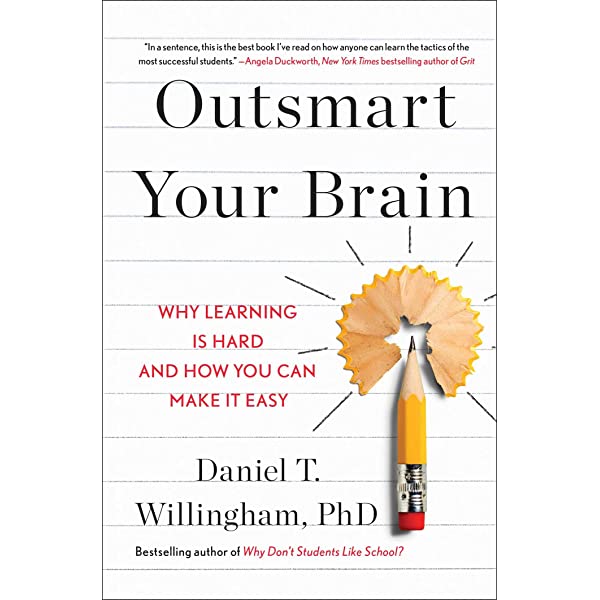
I'm reading University of Virginia cognitive scientist Daniel Willingham's new book, Outsmart Your Brain: Why Learning is Hard and How You Can Make It Easy.   The book offers terrific advice on learning strategies for students, as well as tips for teachers on how to help students learn more effectively.  In the book, Willingham writes, 

If your students consistently do not  ask questions, you should wonder about your relationship with them. They are not quiet because your explanations are so brilliant and clear.  They're quiet because they see asking a question as taking a risk.  Ask yourself why that is.  

What a terrific thought-provoking statement for teachers to ponder.  Now replace the word students in the first sentence with the words "team members" or "employees" and consider the implications for leaders at all levels.  If your people are not asking you questions, you have a problem.  Silence doesn't suggest that you have articulated your vision, goals, and strategies clearly and persuasively.  Silence suggests a problem with the climate you have created.  

Wednesday, February 08, 2023

Super Bowl Ads: Teaming Up is the New Trend


This year's Super Bowl will feature an interesting new trend.  Companies increasingly are partnering with other brands in their commercials.  For instance, several brands have partnered with Netflix to create Super Bowl ads.  Above, you will hear and see Will Ferrell appearing in a General Motors commercial in which he drives GM electric vehicles "through" several highly popular Netflix shows.  Michelob also will be running a Super Bowl ad in partnership with Netflix.  Molson Coors is teaming up with DraftKings in a Super Bowl promotion. 

These partnerships have several potential benefits. First, they spread the cost of very expensive Super Bowl ads across two or more firms.   Second, they help some older brands tap into younger audiences by teaming up with brands that have more Gen Y and Gen Z fans.  Third, they help these ads stand out among a sea of the usual Super Bowl ads that simply try to offer a quick laugh during the game.    

By the way, you might be wondering whether Super Bowl ads truly generate a positive return on investment.  Several years ago, scholars Wesley R. Hartmann and Daniel Klapper conducted a study showing that the ads do generate a positive return, unless a direct rival also runs an ad during the big game. 

Friday, February 03, 2023

Building Resilience

Source: NIH

On college campuses, many faculty members across the nation have been concerned about declining resilience among our students.   Similarly, I'm hearing many business leaders express concerns about a perceived drop in employee resilience in recent years.  

Resilience has been defined as the capacity to withstand or recover quickly from difficulties (Oxford dictionary). In a 2021 Harvard Business Review article, Rob Cross and his co-authors explained why we should care a great deal about resilience in our organizations. They wrote, "Resilience has been shown to positively influence work satisfaction and engagement, as well as overall well-being, and can lower depression levels. There is even evidence that resilience can help protect us from physical illness."

Cross and his colleagues make a very important point about resilience though.  They push back against the conventional wisdom which suggests that resilience is an internal trait.  According to this line of thinking, it's something deep down inside of you that can be drawn up to overcome challenges; if you lack resilience, you somehow are flawed.   Cross and his co-authors offer an alternative perspective:

We can nurture and build our resilience through a wide variety of interactions with people in our personal and professional lives. These interactions can help us to shift or push back on work demands and alter the magnitude of the challenge we’re facing. They can help crystalize the meaningful purpose in what we are doing or help us see a path forward to overcome a setback — these are the kinds of interactions that motivate us to persist. People in our support systems can provide empathy or simply help us laugh and bolster our resilience by shifting perspective and reminding us we are not alone in the fight. In short, resilience is not something we need to find deep down inside ourselves: we can actually become more resilient in the process of connecting with others in our most challenging times. (emphasis added) 

In short, our social networks matter a great deal.  Building and leveraging those networks can be incredibly helpful when we face setbacks and challenges.  Business leaders should take notice.  They need to help their employees connect with one another and with others outside the organization.  Simply asking people to return to the office is not sufficient, nor is holding a few "bonding" days at an off-site gathering.  Leaders need to assist their employees in building relationships with others who will provide critical support, resources, and coaching.  Moreover, they need to help their employees build relationships that will strengthen the sense of meaning that they find in their work, as well as in their lives outside of work.  

Tuesday, January 24, 2023

Expressing Gratitude May Promote Better Collaboration


In past blog posts, I have featured some excellent research on the benefits of expressing gratitude. Most of that work focused on the benefits to the person giving thanks. New research from UNC-Chapel Hill Professor Sara B. Algoe and her colleagues demonstrates an interesting ancillary benefit from thanking others. They call it the witness effect. Gratitude doesn't just benefit the individuals giving and receiving thanks; it also has a positive impact on third parties who witness this exchange.

In their experimental studies, the scholars found that the research subjects "who witnessed a 'thank you' in one line of text, expressed to someone who previously helped the grateful person, were themselves more helpful toward the grateful person." Moreover, in their studies, they found that witnesses "wanted to affiliate more with the grateful person and with the person toward whom gratitude was expressed." Algoe and her colleagues concluded that, "Gratitude may help build multiple relationships within a social network directly and simultaneously."

Here is an excerpt from the paper that Algoe and her colleagues published in the Journal of Personality and Social Psychology:

Specifically, when Harry does something nice for Tom, it is the expression of gratitude that provides a rich signal about Harry. At a fundamental level, the witness learns that Harry voluntarily spent time or effort to do something on Tom’s behalf that Tom values. We proposed and found that witnesses would be more interested in affiliating with a person like Tom (Experiment 5). In addition, we proposed and tested the possibility that this signal would reveal Tom to be a morally good person; indeed, we found that benefactors who were more praised by grateful people were seen as more good which, in turn, predicted greater willingness to help them (Experiment 8). Although our evidence comes from one study, we believe this is a promising avenue for future research: prior research documents that people quickly judge others’ moral goodness (Lindeberg, Craig, & Lipp, 2018) and it carries greater weight than warmth or competence in some settings (Goodwin, Piazza, & Rozin, 2014; Wojciszke, Bazinska, & Jaworski, 1998).

In short, this research suggests that a workplace in which expressions of gratitude are commonplace may be fertile ground for more cooperation and effective collaboration.  Leaders should take notice.  

Thursday, January 19, 2023

A Genuine Apology Goes a Long Way


Ben Cohen reports today in the Wall Street Journal about a remarkable apology email issued by Andrew Benin, chief executive of Graza, a startup that sells squeezable bottles of extra-virgin olive oil.  Unfortunately, the company did not cope effectively with high customer demand during the holidays.  Many people received their packages late, and some packages were damaged.  Customers complained of leaking olive oil bottles.  Cohen drafted a detailed apology and sent it to over 35,000 Graza customers.  Cohen described the rather unconventional email:

The mea culpa from a one-year-old company with the subject line “Learning from our mistakes” was just about the opposite of a typical corporate response. It explained in plain English and candid detail what went wrong and why. It took accountability for those errors and offered a discount on future orders. It was raw, transparent about uncertainty and messy with typos and misspellings. It was also oddly entertaining and strangely charming.

You can read the entire email for yourself if you view Cohen's article on the Wall Street Journal website.  Like Cohen, I found the apology very genuine and sincere, and it didn't feel as robotic as many corporate apology emails do (I could do without the spelling and grammatical errors though. I am a professor after all).  In Cohen's article, he cites author Marjorie Ingall's advice for issuing apologies.  

1. Say you’re sorry.
2. For what you did.
3. Show you understand why it was bad.
4. Only explain if you need to; don’t make excuses.
5. Say why it won’t happen again.
6. Offer to make up for it.

The six recommendations seems sensible.  However, the real reason for the effectiveness of the Graza email seems to be in the tone, not just the content itself.  You can do the six things above, and yet you may still write a robotic email that sounds inauthentic.  Did this email work? Well, 867 people actually replied to the email, many quite positively. One said, “Thanks for your honesty. I wish more businesses did the same.”

Thursday, January 12, 2023

Does Pay Transparency Help or Hurt Workers?

Source: TechTarget

Conventional wisdom seems to suggest that increased transparency about compensation will help workers. For instance, a CNBC story about New York's new salary transparency law is titled, "How NYC’s pay transparency law could help millions across the U.S. earn more money." Naturally, researchers have not taken the conventional wisdom as a given. They have begun exploring the actual impact on employees. Some early research suggests that the impact might not be as positive as some transparency advocates believe.

The UCLA Anderson Review recently published a feature article titled, "Pay Transparency: Will It Help or Hurt Workers?" The article focused on the work of Harvard Business School Professor Zoe Cullen and Brown University Professor Bobak Pakzad-Hurson.  These scholars found that employers with non-unionized workforces might capitalize on the newly available data about salaries across a wide range of firms to drive a very hard bargain with job candidates.  As a result, the transparency laws might depress starting wages.  Here is an excerpt from the article: 

Cullen and Pakzad-Hurson analyzed all job postings, worker bids and other transactions from 2010 to 2014 on the TaskRabbit platform, where employers hire temporary workers for lower-skilled jobs. Online labor markets employ perhaps 7 percent of the U.S. workforce, or 14 million people. The short-term, constantly renegotiated nature of the gigs offers an accelerated look at how transparency works its way through a market. The findings aren’t necessarily applicable to traditional labor markets, but are certainly worth considering in the transparency debate.

The model, in addition to suggesting fierce negotiating by companies pre-employment, indicates workers looking to be hired would not be so tough. Knowing wages are transparent within the company, a worker would want to get hired and then, upon learning what others make, negotiate a raise. The combination of those factors depressed wages, Cullen and Pakzad-Hurson report.

“Our analysis of equilibrium wages, hiring rate and profits under greater pay transparency reveals consequences that are counterintuitive and economically large in a market for low-skill tasks,” Cullen and Pakzad-Hurson write.

More research clearly must be done, and this paper's conclusions from analysis of the TaskRabbit platform might not apply to the broader labor market.  Still, the study suggests that more attention must be paid to the actual impact of these new transparency laws, rather than simply assuming that they will benefit employees.  

Monday, January 09, 2023

Equinox vs. Planet Fitness: Twitter Clash!

Several years ago, I wrote a case study about Planet Fitness, the "Judgement Free Zone" chain of fitness centers.  Therefore, I tend to follow the gym industry.   On New Year's Day, premium fitness center chain Equinox posted the following message on social media.  It created quite a stir.  


 Planet Fitness responded promptly with a humorous and blunt retort.  


Others on social media criticized Equinox as well.  What was Equinox doing scaring potential customers away with what seemed like an insulting tweet.  Yet, we should ask the question: Did Equinox really make a mistake?  To understand the intent of these dueling tweets, we need to assess the contrasting strategies of these two firms.  Equinox targets serious fitness enthusiasts and provides them a premium experience at premium prices.  Planet Fitness focuses on the person who previously may have not enjoyed going to the gym at all.  They are after the person who is trying to get some exercise, but is most certainly not a "gym rat" at all.  Planet Fitness doesn't cater to the fitness enthusiast at all. For instance, they don't have heavy weights at all in their gyms, and they don't offer exercise classes.  Their gyms focus mostly on cardio machines and light weights.  Given their target audience, this humorous rebuttal is right on the money.  It fits their customer quite well, and it provides that sharp contrast with the upscale gym, Equinox.  

Interestingly, both firms are telling certain people they are NOT very welcome at their gyms.  Recall Planet Fitness' famous "I lift things up and put them down" advertisement in which an employee shows a bodybuilder the exit!  That Planet Fitness advertisement is very much like this January tweet from Equinox.  So, neither firm is off the mark here.  They are each addressing their customers with distinct messages that fit their contrasting audiences and their associated needs and wants.  They are both trying to attract their core customer by explicitly describing who doesn't fit at their gyms.

Thursday, January 05, 2023

Owning Your Job

Source: Verywell Mind
Adam Bryant has written a thought-provoking piece for Strategy+Business this week. The article is titled, "Want to set yourself apart? Own your job."  Bryant argues that people who exhibite a strong sense of accountability and truly own their jobs are much more likely to achieve professional success.  Here's an excerpt from his article:

People with these qualities figure out how to get something done, even if the path to success is unclear. When things get tough, they don’t point fingers or throw up their hands in frustration or complain that something isn’t fair or is too hard. Ownership is not just about having a strong work ethic—it’s about having a sense of responsibility to follow through and deliver.

Bryant stresses that the highest performing individuals don't dwell on the reasons why something is challenging, nor do they focus on the situational factors that inhibit expected performance.  Instead, they focus on how they can still accomplish key goals despite these obvious obstacles.  

The article might prove unsettling to some readers. Undoubtedly, some people will label it "old school" and dismiss the logic as out-of-step with today's workforce.  On the other hand, Bryant's comments do remind me of the academic literature on locus of control.  Individuals can exhibit more of an external or internal locus of control.  Those with an external locus tend to explain their performance by focusing on situational or enviromental factors. Those with an internal locus tend to explain their performance by focusing on their personal action and behaviors.  What did I do that caused this particular outcome?  In research on academic achievement, scholars generally find that students perform better in their courses if they exhibit an internal locus of control.  In a sense, Bryant is making an argument consistent with those research findings.  He's arguing for the benefits of an internal locus of control.  

Friday, December 30, 2022

New Year Brings Choice: More Distinctive or More Conventional?

Image Source: Wikipedia

As we approach the new year, we have a choice as individuals and as organizations: Will we become more distinctive or more conventional in our work?  Are we open to experimenting, testing new ideas, and learning by doing?  Or, will we play it safe because we fear negative feedback, criticism, and perhaps failure?  Leaders too need to think about the message they send to their team members.  Are they creating a climate where people are more likely to fall in line with the conventional wisdom, or are they establishing a culture where people are willing to try new things?  Moreover, leaders need to consider how team members interpret certain results and feedback that they receive.  Will that feedback encourage them to continue to push boundaries, or will it stifle their creativity instead?

Interestingly, new research by Giacomo Negro, Balázs Kovács, and Glenn Carroll explores this very question. The scholars published their work in the American Sociological Review earlier this year.  These scholars studied professional musicians. In fact, they collected data on more than 125,000 albums by a wide variety of musical artists. Negro and his colleagues examined how artists' work evolved after either winning a Grammy award vs. earning a nomination but not winning an award. The researchers discovered that Grammy winners tend to "release albums that are more likely to stand out stylistically from other artists." In contrast, the nominees who did not win awards tended to produce subsequent music that was more similar to the work of fellow artists.  

Negro and his colleagues argue that winning an award inspires musicians to take a chance and produce new music that is original and adventurous.  They try different styles and even explore new genres.  The scholars use the Irish rock band U2 as an example.  The band earned  Grammy awards for its groundbreaking Joshua Tree album in the late 1980s, yet Bono and his bandmates chose to try on a very different style with the subsequent album, Achtung Baby.  They went on to earn a Grammy award for that music as well.  

What happens when artists simply get nominated, but fail to win an award? They appear to become more conventional.   Why?  Negro argues, "One possible interpretation is that the nominees interpret the feedback on their artistic choices as essentially negative feedback or a negative signal that what they tried to do did not win them the award."

Tuesday, December 27, 2022

Unlocking Creativity in One Amazing Graphic

Thank you to reader Amelia Crabtree, a geriatrician from Melbourne, Australia, for creating this amazing infographic about my book, Unlocking Creativity.  I'm so grateful! 


Thursday, December 22, 2022

Eight Good Books I Read in 2022

 As I look back on the past year, I wanted to recommend eight interesting books that I read in 2022.  

Tuesday, December 20, 2022

The Right Connections to Make in Your Job Search

Source: www.reliantsproject.com/

Imagine that you are searching for a new job, and you are leveraging LinkedIn as a resource in your search.  You are trying to make the right connections to facilitate the process.  What types of connections are most useful?  First and foremost, you should be building that network LONG BEFORE you are actively in need of new employment.  Don't wait.   Second, you need to consider the types of connections that are most impactful.   For a long time, scholars have argued that connecting with others with whom you have "weak ties" can be more useful than leveraging those with whom you have "strong" ties.   Why?  People with whom you have weak ties enable you to access opportunities, information, and resources that are not readily available to you already.  They help you discover options not known to your close friends and immediate co-workers.  Branching out can be powerful and effective.  

Professors Iavor Bojinov, Erik Brynjolfsson, and Sinan Aral collaborated with two researchers at LinkedIn to test the theory of weak vs. strong ties.  They examined two experiments conducted in 2015 and 2019 involving millions of LinkedIn members and the "People You May Know" algorithm on the social media site.  They discovered that connections with "moderately weak ties" tended to be most effective in the job search process.  These folks tend to be a bit more junior or senior than you, but not extremely distant in terms of stage of their careers.  

Moderately weak ties tend to be most useful for those working in fast-moving industries, or fields such as research and development.  Staying on top of new trends and discoveries outside your narrow domain turn out to be critical in those fields.  Finally, people engaged in remote work tend to benefit a great deal from moderately weak ties, in part because they need those connections to discover novel information they might not otherwise uncover due to the sometimes socially isolating aspects of working from home.  In sum, don't just focus on people you know well when building your network, but consider the diminishing returns of making connections with folks very distant from you.  Finally, the researchers stress that hiring managers need to think about building moderately weak ties as well, because those connections can help them discover talented candidates outside of their smaller group of people with whom they have collaborated closely in the past.  

Friday, December 16, 2022

What Gap Inc. Can Learn From Signet Jewelers CEO Gina Drosos

Source: CNBC

For years, Gap has struggled with a muddled corporate strategy.  Three of the company's four major brands (Old Navy, Gap, and Banana Republic) have blurred competitive positions.  Thus, they focus on overlapping target markets with product offerings that are not clearly distinguishable at times.  They cannibalize each other's sales far too often.  Moreover, while Old Navy has a clear low-cost positioning, and Banana Republic tries to be a differentiator, Gap has remained "stuck in the middle" for years... not clear about whether it's trying to compete on price or achieve higher willingness to pay, and not clear about whether it's a basics brand or a fashion retailer. 

I think Gap could learn a great deal from the turnaround led by CEO Gina Drosos at Signet Jewelers.  Her company owns several major jewelry chain brands (Zales, Kay, Jared).   Fortune recently profiled Drosos and her work improving performance at Signet.  Here's an excerpt from the article by Phil Wahba:

The Signet empire may not always be trendy, but it has considerably more momentum these days than it did when Drosos, the company’s first female CEO, took the helm. Not so long ago, it was not nearly as clear cut what purpose each of Signet’s three biggest chains were most suitable for. Indeed, as Signet fell into a rut during the 2010s, its biggest banners cannibalized each other and started to become almost indistinguishable. Drosos recalls a time when any sales event at Zales would mean a corresponding drop in business at Kay, a problem made all the worse given that the chains often operated rival stores within yards of each other at the same tired malls. “We had all of our banners pretty much on top of each other in the middle tier,” says Drosos.

Now each of the three major brands focuses on different occasions, customer needs, and price points.  The company still faces major challenges given its reliance on brick-and-mortar retailing with a heavy dependence on mall customers.   However, Signet has made some moves to enhance its online presence, including the acquisition of Blue Nile.  More work remains to be done if Signet will survive and thrive given the decline of malls in the United States. 

Of course, to make all this happen, Drosos had to change a toxic culture and address the fallout from a sexual harassment scandal involving a prior CEO.  Here's another excerpt: 

Drosos has also begun to change Signet’s culture—by making sure shell-shocked employees, primarily women, feel heard and included and are willing to buy into management’s vision, and dramatically overhauling the board... The toxic culture went beyond rampant misbehavior: It also took the form of a quasi-autocratic approach to business in which the bosses, disproportionately men, didn’t listen to what people in the field, the predominantly female frontline Signet workers, were seeing. Drosos, says that as a board member from 2012, she had always pushed for Signet to diversify its workforce and culture. When she became CEO, she says, the board told her to accelerate that effort.

The transformation of the culture, naturally, is key to this turnaround.  You cannot design and execute a new strategy without great ideas from people at all levels.  If you don't create an environment where people feel safe speaking up and sharing their ideas, you can't develop a winning strategy in a very challenging competitive landscape. 


Monday, December 12, 2022

One Key to Staying Motivated: Don't Expect Steady Progress


When you start a new project, do you expecct to achieve steady progress toward your goal, week after week?  If so, you might be fooling yourself.  Progress on a challenging initiative is rarely that steady over time.   Expect bumpiness!  Perhaps even more importantly, you might find it difficult to stay as motivated during your work if you have these misguided expectations.  

Check out this new experimental research by Gráinne Fitzsimons and Jessica Paek of Duke University.  They conducted an experimental study in which people were asked to complete tasks for compensation.  Research subjects earned a small amount of incentive pay if they achieved the goal of performing more than 50% of the tasks correctly.   In the experiment, one half of the research subjects achieved steady progress toward their goal, while the others encountered a much more uneven set of results over time.   These scholars found that the latter became less motivated as they worked.  However, if people recognized at the outset that the progress toward the objective would be uneven, they did not have the same type of demotivating experience.  Fitzsimons explains, “Being unrealistic and expecting steady progress is going to make it harder to stay motivated when you meet those inevitable bumps in the road."  

For me, this research reminds me of the work of cognitive scientist and learning specialist Daniel Willingham of the University of Virginia.  Willingham argues that teachers need to assign work that is "desirably difficult" if they wish to maximize learning by their students.  The challenge is very much a Goldilocks story.  If the work is too difficult, students become easily frustrated and demotivated.  If it's too easy, then they don't learn very much.  The sweet spot is when students are challenged, but they can see themselves making progress toward the goal.  Of course, for many students, that progress is uneven.  Some expect a smooth learning process, and that can be problematic.  Learning a new skill is rarely free of obstacles, frustrations, and even dead-ends.  If we expect to see those challenges along the way, we have prepared ourselves for some frustrations.  If we expect smooth sailing, we are setting ourselves up to fail.   As this research by Fitzsimons and Paek demonstrates, the same type of dynamic applies to all of us in our work, not just students.  We have to set the appropriate expectations for ourselves and our team members BEFORE we begin a challenging task.  The key is to frame the work appropriately.  If we frame the project as a learning/development opportunity that will involve challenges, then we are preparing ourselves to succeed.  If we frame it as a routine endeavor that should proceed smoothy, we are setting ourselves up to fail.

Friday, December 09, 2022

Why Your Company Should Build a Volunteering Program


Stanford Professors Jeffrey Pfeffer and Sara Singer have published new research on the subject of company-sponsored volunteering programs.  They studied survey data from more than 53,000 employees in the UK.   They found that company-sponsored volunteering programs can improve job satisfaction and employee commitment.  Perhaps that result does not surprise you.  However, this research also identifies two key reasons why these programs have beneficial effects.  According to Pfeffer and Singer's findings, these programs enhance social bonding among employees, and they enhance the extent to which employees identify with their employers.  What do these scholars mean by "identifying" with employers?  They define it as feeling a sense of belonging, being willing to recommend the company to peers, and sharing the values and goals of the enterprise.   Singer commented on the research implications:

Employer-sponsored volunteer programs are pretty widespread; it’s just that the uptake isn’t very high. The challenge is really in creating programs that encourage people to participate. You’ve got to make opportunities for things that employees want to participate in because they provide meaning and purpose. You have to provide the flexibility that allows them the time to do it. Creating the conditions that allow employees to participate in company-sponsored volunteering programs is key.

The scholars emphasize one very important point.  You won't get the full benefits if people are off volunteering on their own.  They need to be conducting this service work in collaboration with their fellow employees.  Especially in a time of remote or hybrid work, this time together in person can be vitally important for building commitment to the organization and to one another.   

Monday, December 05, 2022

How Leaders Avoid Hero Syndrome


This week Kellogg Insight features a conversation with Colonel Fred Maddox, an assistant professor at the U.S. Army War College and Chief of Staff of the Army senior fellow at the Kellogg School.  Maddox discusses how leaders should react when the execution of a very important project falters badly.   He suggests that many leaders enjoy being the heroes, swooping into the situation and trying to solve the problem personally.   Maddox cautions against this approach, "When leaders act like they’re the only ones who can solve something, it can become an issue for the whole organization because they’re not focused on strategy and they’re doing someone else’s job.”  Moreover, he argues that such "heroic" action can demoralize team members, because they feel as though their skills and voice are not respected.   

Why don't leaders trust their team members in these spots?   Maddox argues that leaders often don't believe in the skills and expertise of their team members.  However, leaders do believe in themselves, yet sometimes that confidence is not well-grounded.  The situation may be far more complex and/or novel than the leader would like to admit.  They need help from their team members; they cannot solve it alone.  However, they somehow convince themselves that they can rectify the situation without assistance.   It's hero complex 101.  

Maddox explains how the military uses various simulations and training exercises to develop the skills of team members.  An investment in training and development does not only help the team members hone their skills; it builds the leaders' confidence in their team members.  Leaders need to find time to see their team members in action in a lower-risk, safer space.  

He explains that a good leader doesn't simply issue orders in these training scenarios.  Instead, the effective leader inquires as to how various people on the team would try to solve a specific probelm.  He calls this Socratic approach "walking in autonomy."  It's essentially a conversation in which the leader coaches and mentors, rather than solving the problem directly. Then, Maddox advocates using the "after-action review" to analyze the decisions that have been made and the impact those choices had on the results - good or bad. Providing time for reflection, feedback, and learning proves crucial for employee development, and these activities help build the leader's confidence in the people throughout the organization.

Friday, December 02, 2022

Is it time to fire yourself?

Source: Intel

This week, author and leadership development consultant Adam Bryant wrote a thought-provoking article titled, "Is it time to fire yourself?" for Strategy+Business. Bryant tells the story of Bracken Darrell, CEO of Logitech International.  After five years leading the firm, Darrell asked himself the question, "Am I the right person for the next five years?"  He pondered stepping down.   Instead, though, he chose to continue as the CEO, while adopting a fresh perspective.  Darrell explains, “I have to rehire myself but have no sacred cows. It was super exciting and fun, and I started changing things that I had put in place. Fortunately, I didn’t have to change things radically, but I felt new again.”  

Bryant also recounts the legendary story of former Intel CEO Andy Grove contemplating how his replacement might adopt a very different strategy facing the specific circumstances challenging the firm in the early 1980s: 

"Grove asked Gordon Moore, Intel’s cofounder, 'If we got kicked out and the board brought in a new CEO, what would he do?'  Moore responded by saying that a new CEO would take Intel out of the memory-chip business. 'Why shouldn’t you and I walk out the door, come back and do it ourselves?' Grove responded. And that’s what they did. They shifted Intel from memory chips to microprocessors, a crucial pivot that led to decades of prosperity for the company." 

Bryant offers a compelling argument for why leaders should consider what might happen if they were replaced.  How might a new person look at the situation?  What other perspectives might be helpful to me now?  Am I stuck in a certain mindset or beholden to certain assumptions that may no longer be valid?  Leaders at all levels absolutely should ask themselves these questions from time time.  

Monday, November 21, 2022

Bob Iger Returns to Disney: How Do Boomerang CEOs Work Out?


The Wall Street Journal reports shocking news from Disney this morning.   CEO Bob Chapek, recently signed to a contract extension by the board, has stepped down effective immediately.  Former CEO Bob Iger will return to take the reins.  Iger, of course, presided over a long period of strong performance at the company.  However, Disney has struggled along multiple dimensions since his departure.   Iger's return prompted me to consider how "boomerang" CEOs have performed.   We all know about the high-profile success stories, such as Steve Jobs returning to Apple long after he was dismissed.   Is that strong return the norm or the exception?

Christopher Bingham, Bradley Hendricks, Travis Howell, and Kalin Kolev studied this question and published their findings in the MIT Sloan Management Review two years ago.  They found that, "Boomerang CEOs indeed performed significantly worse than other types of CEOs. On average, the annual stock performance of companies led by boomerang CEOs was 10.1% lower than their first-stint counterparts. These results held true even when we compared them with other (non-boomerang) CEOs who were hired in times of crisis."

Why might boomerang CEOs struggle, on average, during their return?  First, they might be trying to apply a tried-and-true formula for success, yet conditions and circumstances may have fundamentally changed since their initial departure.   Second, decisions late in their initial tenure actually may have caused some of the downturn in performance after their departure.  Owning up to that fact may be challenging for many leaders.  Third, the team at the top may have changed significantly since their first tenure.  Their earlier success may have had as much, if not more, to do with those talented team members as it did with their own capabilities.   Fourth, the new skills required to thrive in the current environment may not match the leaders' strengths.  Finally, perhaps the returning leader may not be as open to divergent perspestives as he or she once was.  As Iger himself noted in his book

"It’s not good to have power for too long. You don’t realize the way your voice seems to boom louder than every other voice in the room. You get used to people withholding their opinions until they hear what you have to say. People are afraid to bring ideas to you, afraid to dissent, afraid to engage. This can happen even to the most well-intentioned leaders. You have to work consciously and actively to fend off its corrosive effects.

Boards and returning leaders must, of course, also acknowledge the fact that they did not manage the succession well.  In essence, the boomerang CEO has some responsibility for having failed in one of the last crucial tasks faced during his or her initial tenure: a smooth transition for the successor.  Now, the boomerang CEO has to not only right the ship, but find a way to improve the succession and transition the next time he or she steps down.  Again, it's interesting to read Iger's own words:

We all want to believe we’re indispensable. You have to be self-aware enough that you don’t cling to the notion that you are the only person who can do this job. At its essence, good leadership isn’t about being indispensable; it’s about helping others be prepared to step into your shoes—giving them access to your own decision-making, identifying the skills they need to develop and helping them improve, and sometimes being honest with them about why they’re not ready for the next step up.

Friday, November 18, 2022

Rethinking The Way You Hire


If you have a job opening in your organization, are you trying to find a superhero that, in all likelihood, does not exist.  Or, is your desperation to fill a position distorting your recruiting and selection process?   Recently, I read an interview with Patty McCord, former CHRO at Netflix.  McCord described the challenges that many managers face when trying to hire people.  Then, she provided a different approach to recruitment.  I found it be a fascinating perspective and process.  She calls it "reverse thinking."  Here's an excerpt:

First you start with the timeframe. I usually say six months to a year, depending on the level of the role. If we hire the right person in that role and things were amazing, what would be occurring then, that’s not occurring now? Then I tell people to list out all of their metrics to measure success. Everyone has numerals. Spit them all out.

Then I say to make a movie of it. If I’m walking around, are there more meetings or are there less meetings? Are people’s heads down? Are they working collaboratively? What does it look like?

That gives you the behaviors and the drive and the motivation. What somebody wants to get engaged with in purposeful work.

Now that I have my movie and I have my metrics, now I say okay, in order for those things to happen that aren’t happening now, what does somebody need to know how to do?

Now you get to the skill set that’s never on the job description. Then you look at the skills and experiences that would lead someone to know how to do that.

I like this reverse thinking because most people write job openings to describe (a) the person who left that they didn’t want to leave (b) the fantasy person who doesn’t exist (c) whatever it will take to get the req approved.

Wednesday, November 16, 2022

How to Encourage People to Offer Suggestions & Ideas


Why do some front-line workers keep their best ideas to themselves?  How might we encourage them to bring their suggestions forward to their managers in a proactive fashion?  Jieun Pai, Jennifer Whitson, Junha Kim and Sujin Lee have published an interesting paper addressing these questions.  They conducted a field experiment at a large manufacturing company with several thousand technicians.  

Before the experiment, the firm had instituted an initiative to collect ideas for improvement from their technicians.  Of the 3,800 workers, 55 of them proposed suggestions in the first six months of the effort.   Then, the scholars began their field experiment.  They designed two sets of posters for the manufacturing company.   One set of posters featured technicians talking about how they were willing to offer an improvement suggestion because they worked for a supportive manager.  Morever, the posters encouraged people to think about a supportive manager at the firm.  A second set of posters also featured workers talking about submitting suggestions. However, the quotes described how the workers' own knowledge and expertise led them to propose an idea.  

Workers who viewed the first set of posters submitted 71 ideas in four days.   The technicians who viewed the second set of posters offered just 45 ideas in four days.  In both cases, the number of suggestions rose substantially from that prior six-month period.  However, the posters featuring discussion of supportive managers had a much more positive impact.  

These researchers argue that we need to act supportively as managers and to create what they call a secure relationship with employees.  Front-line workers need to trust their managers, and they need to have a relationship that makes them comfortable bringing ideas forward.  Moreover, the experiment shows that how we encourage workers matters.  We can't just ask for their ideas.  We have to design our call to action in a way that reminds them of how we really do want to hear their ideas.  

To me, those posters helped because they featured the voices of their peers.  They showed that fellow workers felt that their voices were heard, and that their suggestions actually made a positive impact on the organization.  People want to know that someone genuinely considers their views and actually takes action based on their recommendations.  

Wednesday, November 02, 2022

Uncovering Hidden Risks: Three Challenges


I've argued that leaders need to become more proactive problem finders if they wish to avert surprising failures in their organization.   They need to seek out and uncover hidden risks.  Unfortunately, as humans, we struggle with regard to how we cope with risk.   Three patterns of behavior prove particularly problematic when it comes to risk.  

1.  We actively downplay and discount ambiguous risks.

As Amy Edmondson, Richard Bohmer, and I have argued, individuals and organizations are predisposed to downplay ambiguous threats.   Think the foam strike on the Columbia shuttle or the early news reports of a deadly virus in Wuhan, China.  

2.  We normalize riskier actions over time.

As Diane Vaughan has argued, we engage in a gradual acceptance of higher and higher risk over time.  We deviate from a standard, and if nothing bad happens, we set a "new normal" for ourselves. That makes a further deviation from standard seem quite small, when in fact, we are drifting further and further from what was initially deemed to be the appropriate benchmark.  Consider how we can incrementally make our way to driving 30 miles over the speed limit.  

3.  We take more risk when we know that safety protocols, back-up systems, and redundancies are in place. 

Consider how we drive once we know our car has a number of technological innovations that help us stay safe (lane assist, back-up cameras, object detection, assisted braking, etc.)   We sometimes take more risk because we think that those systems will protect us.  

Friday, October 28, 2022

As a Leader, Are you Trying to Impress or Connect?


I recently listened to an interview with Jon Levin, Dean of the Stanford Graduate School of Business.  The podcast focused on communication.   Levin offered a great take on how his thinking about communciation has changed over time, as he has taken on leadership roles.  

My thinking about communication has evolved over my career. I started as a professor teaching. And when you’re giving research talks, it’s just everything is about presenting ideas and information clearly, and maybe even impressing people a little bit and getting them to change the way they think about a problem.

In a leadership role, so much more of communication is about connecting with people, establishing shared humanity, motivating them, inspiring them, sometimes challenging them. So, going through my career, that has really reinforced to me the different purposes that communication serves: to inform people, to connect with people, to motivate and inspire them.

I really love this distinction between IMPRESSING PEOPLE and CONNECTING WITH PEOPLE.   The former, of course, often involves talking AT people.  The latter means that leaders listen to others, engage them in dialogue, and collaborate WITH team members.   Every leader should think about how they build connection so as to motivate, inspire, and build commitment in their organization.  

Friday, October 21, 2022

How Leaders Can Build Trust

Source: openaccessgovernment.org

In far too many organizations, employees indicate that they do not trust senior leaders.   Why is trust so important?  It helps leaders build buy-in and commitment, particularly when they have to make difficult decisions.  It drives engagement and helps increase employee retention.   Heightened trust increases intrinsic motivation, leading to higher productivity and organizational effectiveness.

How can leaders build trust?  Here are five strategies that prove quite effective:

  1. Be transparent.  That doesn't just mean providing more information about the performance of the organization.  It means helping others understand how you think.  What are the criteria you use to make big decisions?  What is the rationale for particular actions?  What are the values guiding your behavior?
  2. Walk the walk.  If you articulate a certain set of values and norms, then be sure that you are acting in ways consistent with those principles.  Root out any instances of misalignment between words and actions. 
  3. Lead fairer decision-making processes.  Fair process doesn't mean giving people their way. It means giving people voice and genuinely considering their views before making key decisions.  As noted leadership scholar Michael Watkins says, it means avoiding the "charade of consultation." By that, he means not asking for input AFTER you have already made up your mind.  Employees see right through the charade when you ask for advice, yet simply act in the way you always intended from the start. 
  4. Own your mistakes. If you fail, acknowledge it.  Explain what happened and why, and be clear about how you plan to fix the problem. Don't throw others under the bus.  Instead, describe what you learned from the failure. 
  5. Listen early, often, and actively.  When you speak to large groups of employees, make sure that at least half the time is reserved for questions.  Don't force people to submit questions in advance.  Be willing to show some vulnerability and address questions in the moment.  If you don't know the answer, say so.  Tell people how and when you will get them the answer.  

Wednesday, October 19, 2022

Case Companion: A New Tool from Harvard Business Publishing


In the past few months, Harvard Business Publishing has begun distributing a new online tool that I developed with a terrific team from Torrance Learning and HBP.  

The tool - Case Companion - helps students learn how to analyze a case study.   To date, we have received some very positive feedback from students and faculty.  We look forward to using this tool to help our students improve their performance in case-based classes.  

CFOs, Leadership Development, and the Cost of Losing Talent

Source: Forbes.com

Michael Pickrum has written a good article for CFO magazine titled, "The CFO's Role in Leadership Development."   He argues that talent is crucial to achieving an organization's strategic and financial goals, and that the job of leadership development does not rest only with the chief human resource officer.  The CFO can and should play a vital role.  Among other things, Pickrum argues that the CFO can help the organization recognize the value of leadership development efforts.  He writes,

Use data and more holistic analysis to aid better decision-making. What are the costs for contracting or recruiting externally versus upskilling internal high performers? Apply your visionary eye to this analysis. What are those costs over the long-term, given the value of in-house knowledge and retaining those who possess both the expertise and the experience with your organization’s way of working?

In short, Pickrum makes the case that CFOs can help organizations identify and quantify the costs and risks of losing key talent.  What precisely is the damage done by high employee turnover?  What benefits will we acheive if our development efforts improve the retention of highly talented employees?  Many CFOs (and other top executives) question the ROI of leadership development efforts.   Yet, CFOs should do more than ask the question in a theoretical way.  They should help the organization develop an accurate and thorough understanding of the potential benefits of leadership development efforts as well as the risks and costs of NOT investing in leadership development.   The connection between development and retention is crucial, and understanding the true cost of employee turnover is essential.  

Thursday, October 13, 2022

Flaws in the Rationale for the Direct-to-Consumer Business Model


Alexandra Sternlicht has written an article this week for Fortune titled "How Silicon Valley’s retail revolution withered. Eight years after Allbirds and Glossier were born, VC investors say direct-to-consumer is dead."  She quotes several investors, including Nicole Johnson, a partner at venture capital firm Forerunner.  

“We’re a whole decade past where pursuing the DTC model was at the forefront of innovation and retail, or was interesting on its own,” Johnson says. A direct-to-consumer sales channel is just “table stakes” today, she says—a useful feature for a young consumer brand, but not a business model in its own right.

It’s a sentiment echoed by numerous VC investors that Fortune spoke to, reflecting significant changes that have altered the internet landscape, as well as the shifting mindset among private company investors at a time of economic uncertainty. If direct-to-consumer startups were once touted as the harbingers of a retail revolution, today they are viewed by VCs as relics of a different era.

I found the article quite thought-provoking, but I'm particularly interested in reflecting on the rationale that many executives and entrepreneurs use to support a DTC business model.   Often, you will hear people say that the DTC model enables the startup to "capture the margin" otherwise obtained by the brick-and-mortar or e-commerce retailer.  Of course, that thinking is DEEPLY flawed.   Yes, you aren't giving away the "mark-up" to the retailer.  However, you ARE spending a considerable amount of money on your own marketing to build brand awareness, since you don't have the assistance of the retailer.  You have to find a way to distribute the product, and that "last mile" to the consumer's home can be quite expensive.  Moreover, if you end up opening some of your own brick-and-mortar stores, as some of these startups have done, then you are investing heavily in assets and will have to generate sufficient additional profit to maintain a healthy return on those expensive assets.  In short, the retailer does serve a very useful function for a nascent brand.  This is not to say that I believe DTC business models are not viable.  I'm simply arguing that entrepreneurs should not fool themselves into thinking there's easy money to capture by cutting out the retailer.