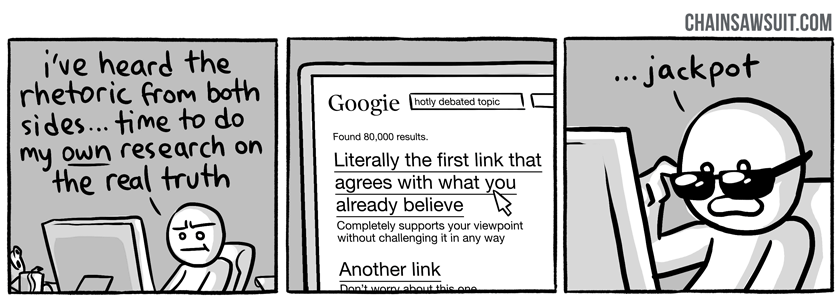
Showing posts with label cognitive bias. Show all posts

Friday, February 06, 2026

What Happens When We Can Quantify Some Aspects of a Decision But Not Others?


Do we make biased decisions because we are obsessed with quantifying our decision analysis? Linda Chang, Erika Kirgios, Sendil Mullainathan, and Katherine Milkman have published an interesting new study titled, "Does counting change what counts? Quantification fixation biases decision-making."  They asked the question: "Do people decide differently when some dimensions of a choice are quantified and others are not?"

The scholars conducted a series of experiments.  Each decision that the research subjects encountered involved some tradeoffs.  Some dimensions of the tradeoffs were described quantitatively and others qualitatively.  The results of the experiments demonstrated that people tended to prefer the alternatives about which numerical data was offered, rather than qualitative information.  Thea authors explain that, "This 'quantification fixation' is driven by the perception that numbers are easier to use for comparative decision-making."  

The scholars argue that we face many decisions in business and in life in which some dimensions of the tradeoffs can be quantified, but others simply cannot.  The qualitative information may be rich and useful though.  The numbers may tell only a portion of the story.  Think about a manager facing a decision about a brand extension.  Numbers may be readily available demonstrating the potential for sales growth, market share increases, and profitability enhancement.  On the other hand, the risks around brand dilution may be more readily described in qualitative fashion.  Do managers pay less attention those very real brand dilution risks simply because they can't easily produce numbers about how dilution may arise and impact the business?

The scholars conclude, "Those who structure decision contexts ignore quantification fixation at their peril. As quantification becomes increasingly prevalent, people may be pulled away from valuable qualitative information toward potentially less diagnostic numeric information."

Friday, March 22, 2024

Action vs. State Orientation: Who is More Vulnerable to the Sunk Cost Trap?

Source: The MSLs' Liaison Newsletter

Some individuals have a strong action orientation.  Others have what is described as a state orientation. What's the difference?  According to James Diefendorff and his colleagues, 

"Individuals with a strong action orientation are able to devote their cognitive resources to the task at hand, thus enabling them to expediently move from a present goal state to some desired future goal state. These individuals flexibly allocate their attention for the purpose of task execution and goal attainment. Persons who are more action oriented are characterized by enhanced performance efficiency and the ability to complete tasks after minor failures or setbacks."

On the other hand, Diefendorff and his colleagues describe a state orientation as follows:

Alternatively, individuals with more of a state orientation tend to have persistent, ruminative thoughts about alternative goals or affective states, which reduces the cognitive resources available for goal-striving. This reduction of available resources impairs state-oriented individuals' ability to initiate activities and to follow tasks through to completion, especially when the activities are difficult, nonroutine, or both.

How do these contrasting orientations affect our decision making?   Are individuals with one of these orientations more vulnerable to certain cognitive biases when making critical choices?  Marijke van Putten and his co-authors examined this question with specific focus on the sunk cost trap.  In other words, they asked the question:  Are individuals with a strong state orientation more susceptible to throwing good money after bad than individuals with a strong action orientation?   They posited that state-oriented people would ruminate about past events and dwell on past failure. Consequently, they might try to recoup past losses and escalate commitment to failing courses of action.  Action-oriented people would, according to their hypothesis, focus on the future.  That forward focus would enable them to cut their losses and de-escalate commitment to an ineffective course of action.  

The findings from an experiment confirmed their hypothesis.  The sample size was rather small, and more work certainly needs to be done in this area.  However, the initial exploratory results are quite intriguing to me.   It speaks to a broader set of psychological research suggesting that people's well-being and decision-making abilities may suffer if we them to dwell or ruminate on their emotional state. Encouraging people to shift toward an action orientation may be beneficial.  

Wednesday, February 05, 2020

Entrepreneurs and Salespeople: Are You Overestimating How Much Others Value Your Product?

Created on https://www.wordclouds.com/

Minah Jung, Alice Moon, and Leif Nelson have published a new paper titled, "Overestimating the valuations and preferences of others," in the Journal of Experimental Psychology.   The scholars examine how individuals evaluate the preferences of others.  Specifically, they find that people tend to systematically overestimate how much others will value something.   Here's an excerpt from their paper: 

In social judgments, we are frequently called upon to make predictions about the evaluations of others, such as how much a friend will enjoy a recommended novel, how long a coworker will be willing to wait for useful feedback, or how much a potential buyer will be willing to offer for a used set of golf clubs. The overestimation bias has important implications on real-world economic and social decisions. Furthermore, the paradox we document suggests that someone who perfectly understands others’ enjoyment for a good may nevertheless be imperfect at setting prices, simply because they fail to recognize how people trade off enjoyment against other valuation metrics, such as willlingness-to-pay and willingness-to-wait. This suggests that social and consumer judgments may suffer not only from general overestimation but also from an additional imperfect understanding of how people weigh trade-offs. Many preferences are developed from a complex weighting of positives and negatives, the balance of which produces a summary evaluation for each individual. When judging the preferences of others, however, that complexity may be ignored and the weight of some attributes will seemingly tip the scales in the direction of a simpler, more intense preference.

This research has important implications for entrepreneurs who are trying to determine whether their idea will gain traction in the market.   Are they systematically overvaluing their idea, or overestimating how much people will be willing to pay for the product or service?   We all know that entrepreneurs can fall in love with their own idea, but this research gives us a deeper understanding of precisely why we can't estimate willingness-to-pay properly and accurately.   The same bias, of course, affects salespeople in a wide variety of professions.  Do they really understand the potential buyers' preferences?  Can they accurately assess value from the buyers' perspective?   

Thursday, January 09, 2020

Is Avoiding Losses Actually a More Significant Motivating Force Than Realizing Gains?

For decades, psychologists and behavioral economists have proclaimed the importance of loss aversion, one of the most prominent cognitive biases identified by researchers. However, a recent thought-provoking article in Scientific American by David Gal challenges the conventional wisdom. Gal writes about the research he has conducted with David Rucker and published in the Journal of Consumer Psychology. 

Source:  Blue Diamond Gallery
Gal argues that, "Loss aversion is essentially a fallacy." The statement surprised and intrigued me. Could it really be true that such a prominent theory was incorrect, and that a great deal of evidence existed to contradict it? Gal explains in more detail:


That is, there is no general cognitive bias that leads people to avoid losses more vigorously than to pursue gains. Contrary to claims based on loss aversion, price increases (ie, losses for consumers) do not impact consumer behavior more than price decreases (ie, gains for consumers). Messages that frame an appeal in terms of a loss (eg, “you will lose out by not buying our product”) are no more persuasive than messages that frame an appeal in terms of a gain (eg, “you will gain by buying our product”).

People do not rate the pain of losing $10 to be more intense than the pleasure of gaining $10. People do not report their favorite sports team losing a game will be more impactful than their favorite sports team winning a game. And people are not particularly likely to sell a stock they believe has even odds of going up or down in price (in fact, in one study I performed, over 80 percent of participants said they would hold on to it).

To be sure it is true that big financial losses can be more impactful than big financial gains, but this is not a cognitive bias that requires a loss aversion explanation, but perfectly rational behavior. If losing $10,000 means giving up the roof over your head whereas gaining $10,000 means going on an extra vacation, it is perfectly rational to be more concerned with the loss than the gain. Likewise, there are other situations where losses are more consequential than gains, but these require specific explanations not blanket statements about a loss aversion bias.

Perhaps most interestingly, Gal goes on to offer an explanation for why loss aversion has become such a prominent principle generally accepted by many scholars as truth.  He explains that another key cognitive bias, confirmation bias, has been a major factor. Scholars have tended to look for evidence that confirms and bolsters the theory of loss aversion, while dismissing or discounting contradictory or discordant findings. Other social forces too have helped to maintain and preserve the conventional wisdom. Gal concludes, "Wrong ideas can persist for a long time despite contrary evidence, and therefore, that there is a need to critically assess accepted beliefs and to be wary of institutional consensus in science and otherwise."

Thursday, July 12, 2018

Design Thinking is Hard on the Brain

In a new article published in Research-Technology Management (When Cognition Interferes with Innnovation:  Overcoming Cognitive Obstalces to Design Thinking), my colleague Allison Butler and I offer one plausible explanation for why many individuals struggle with the design thinking process. We argue that design thinking is "hard on the brain."   In developing our argument, we draw upon six years of work in curriculum design, teaching, and research on design thinking - including the creation and execution of Bryant University's IDEA program (an intense, three-day design thinking experience that all 850+ first-year students undertake each year).   

We believe that all individuals have the capacity to be creative, yet we often think, reason, and process information in ways that hinder our ability to innovate. Our brains are wired to operate as efficiently as possible, which is ideal for making our way in the world in daily life, but an impediment to successful design thinking.  The article examines the cognitive obstacles at each stage of the design thinking process, and we offer strategies for overcoming these impediments.  

For instance, we describe how our tendency to engage in top down processing when we observe a situation can cause us to miss important details about user behavior.   Moreover, we explain how inattentional blindness and confirmation bias afflict many people trying to conduct field research and empathize with users.  During the ideation stage of the design thinking process, fixation becomes a significant problem.  People get stuck on ideas within a particular category during the brainstorming process, and they fail to generate a sufficiently diverse range of concepts and solutions.   Finally, during the prototyping and testing stage, a number of cognitive obstacles impede our ability to learn, adapt, and iterate effectively.  For instance, our tendency to rationalize our own failures as due to external circumstances rather than internal causes (the fundamental attribution error) prevents us from using feedback effectively to iterate and improve our solution.   Similarly, the sunk cost effect means that we often find ourselves throwing good money and effort after bad, rather than abandoning solutions that receive negative user feedback. 

How do individuals overcome these obstacles?   That's the key contribution of our article.  Based on our work with many students and practitioners, we describe countermeasures to address these cognitive obstacles.  The article offers a number of such strategies.  One of my favorite is the notion of engaging in parallel rather than serial prototyping.  We draw upon research that shows how parallel prototyping can help people avoid fixation and premature convergence on one type of solution, and it can help individuals receive and utilize user feedback more effectively.   For an in-depth explanation of each our countermeasures, I hope you will take a look at the article.  

Thursday, July 20, 2017

Avoiding Confirmation Bias

Earlier this year, Tom Stafford wrote a column for the BBC's website about how to combat confirmation bias.  In other words, how do we avoid the problem of searching for and relying on data that confirm what we already believe (while dismissing or avoiding data that contradict our pre-existing beliefs)?  

Stafford recalls a famous set of experiments by Charles Lord,  Lee Ross, and Mark Lepper.  In one classic study from several decades ago, they looked at how people's attitudes toward the death penalty changed after being exposed to two contrasting studies - one demonstrating a powerful deterrent effect for the death penalty and another showing the exact opposite finding.   Lord, Ross, and Lepper found that people's attitudes polarized after looking at the two studies.  Why?  They assimilated the data in a biased way, relying heavily on the information that supported their pre-existing beliefs.  

Stafford describes a second experiment that these scholars conducted.  In this subsequent research, they compared two strategies for trying to combat confirmation bias.  They analyzed the impact of two different sets of instructions for people.   They were given these instructions before looking at the data.  Stafford summarizes what these scholars discovered: 

For their follow-up study, Lord and colleagues re-ran the biased assimilation experiment, but testing two types of instructions for assimilating evidence about the effectiveness of the death penalty as a deterrent for murder. The motivational instructions told participants to be "as objective and unbiased as possible", to consider themselves "as a judge or juror asked to weigh all of the evidence in a fair and impartial manner". The alternative, cognition-focused, instructions were silent on the desired outcome of the participants’ consideration, instead focusing only on the strategy to employ: "Ask yourself at each step whether you would have made the same high or low evaluations had exactly the same study produced results on the other side of the issue." So, for example, if presented with a piece of research that suggested the death penalty lowered murder rates, the participants were asked to analyse the study's methodology and imagine the results pointed the opposite way.

They called this the "consider the opposite" strategy, and the results were striking. Instructed to be fair and impartial, participants showed the exact same biases when weighing the evidence as in the original experiment. Pro-death penalty participants thought the evidence supported the death penalty. Anti-death penalty participants thought it supported abolition. Wanting to make unbiased decisions wasn't enough. The "consider the opposite" participants, on the other hand, completely overcame the biased assimilation effect – they weren't driven to rate the studies which agreed with their preconceptions as better than the ones that disagreed, and didn't become more extreme in their views regardless of which evidence they read.

Wednesday, May 11, 2016

20 Years Later: The Mount Everest Tragedy

Source: National Geographic
This week marks the 20th anniversary of the tragedy that took the lives of Rob Hall,  Scott Fisher, and other members of their expeditions. Many of you may have read Jon Krakaeur's book, Into Thin Air, which chronicled the events of May 1996 in detail.  Others may have watched the Everest movie that came out last year.  Still others have seen the tremendous documentaries produced by David Breashears about the events of May 1996.  

As most of my blog readers know, I've conducted extensive research on the decision-making processes of Everest climbers.    As part of that research, I've spent a considerable amount of time learning about the events of May 1996, including through multiple conversations with the leaders of the IMAX expedition team, Ed Viesturs and David Breashears.   Ed and David turned around, while the Hall and Fisher teams continued up the mountain.   Later Viesturs and Breashears helped rescue the survivors of the tragedy that took place when a blizzard occurred.  

What are some lasting leadership lessons from that tragedy?  

1.  Great leaders exercise restraint.   As David Breashears has told me, the best leaders don't simply order you up the mountain no matter what.   They listen to others' ideas before expressing their views.  They must be willing to gather input from a variety of people.  Unfortunately, he says, some leaders are not willing to listen to dissenting views.   The best leaders create a climate of psychological safety, where everyone is willing to speak up.   After gathering input and advice from multiple sources, the leader can make a more informed and thoughtful decision.  

2.  Great leaders don't attribute all their past success to their own qualities and choices.  Instead, they acknowledge that past success hinged upon favorable environmental conditions, a strong team to support and assist them, an effective support network back at base camp and at home, and a significant dose of good fortune.   When leaders begin believing that past success is all about their own excellence, and fail to recognize other contributing causes, they get in big trouble.  

3.  Great leaders recognize how cognitive biases can impair decision making, particularly in stressful situations.  They don't escalate commitment to failing courses of action in the presence of substantial sunk costs.   In other words, climbers don't simply keep climbing because they have put so much into the expedition (money, effort, time, and other resources that they cannot get back).   You can't look back; you must look ahead.  Don't keep moving forward simply because  you don't want to waste the investment you have already made.  Don't throw good money, or good effort, after bad!  Other biases include confirmation bias (looking for data that confirms what you already believe) and compensatory behavior (taking more risk because you know a safety mechanism or system redundancy is in place; in Everest's case, carrying supplemental oxygen can create a false sense of security according to Ed Viesturs).  

4.  Great leaders don't build rigid plans.  As Dwight Eisenhower once said, "Planning is everything.  Plans are useless."   In other words, be incredibly prepared.  Be ready for all scenarios.  Prepare meticulously.  However, once the execution of your plan begins, be ready to adjust and adapt to conditions on the ground.  Don't build a rigid plan in a turbulent environment.  Retain flexibility.  Don't just try to work harder to "get back on plan" when things start unfolding in ways you did not predict.  In fact, great planning is not about predicting the future.  It's about preparing for multiple scenarios that might unfold in the future.  

5.  Great leaders build a team around a shared vision, not simply a common goal.  What do I mean by that?  The Hall and Fisher expedition team members certainly all had a common goal: to reach the summit (we might argue that the more appropriate goal is to return safely to base camp).  The problem, though, is that each person was focused on their own personal attainment of that goal.  They didn't strive necessarily to achieve the summit as a team.  Contrast that with the shared vision of the IMAX team there in May 1996.  They strove to put a fifty pound camera on top of the mountain.  They wanted to create a great documentary.  It was not about individual accomplishment; it was truly a shared vision to create something extraordinary.   

For more of my work on the 1996 Everest tragedy, see the HBS case study that I wrote, as well as the California Management Review article that I published.  In recent years, I also co-created (with Amy Edmondson) the Everest Leadership and Team Simulation, available from Harvard Business Publishing.  

Monday, February 01, 2016

The Dangers of Decisiveness


Last week, Derek Pankratz and I published a new article in the Deloitte Review.  The article focuses on decisiveness, and it is titled, "Crossing the mental Rubicon: Don't let decisiveness backfire."   Here's a summary:

We demand that leaders be decisive, but research in social psychology and behavioral economics suggests that decisiveness is not an unequivocal good. Studies on “mindset” reveal that, when contemplating an important decision, prematurely focusing on execution can exacerbate decision-making biases and lead to overconfidence and excessive risk-taking.

In the article, we describe two mindsets for decision-makers.  We argue that people adhere to a deliberative mindset as they are making a critical choice.  They are contemplating the options they might pursue to achieve their goals, and they are evaluating the consequences of various courses of action. At some point, people shift to an implemental mindset. At this stage, individuals focus on how to execute a particular plan of action. They consider the key steps involved in implementation, who will be responsible for those elements of their plan, and how progress will be measured. Of course, decision-makers often look ahead to issues of execution as they are contemplating their choice. We argue that jumping ahead into the implemental mindset too soon can be dangerous. Here's the core of our argument:

Herein lies the danger. Even if a decision seems correct at the time it was made, new facts may arise, warranting reconsideration. However, the implemental mindsets we adopt to help us achieve our chosen goals can exacerbate a host of judgmental and decision-making biases. An execution-oriented frame of mind may encourage “tunnel vision” and lead to overconfidence and excessive risk taking. In the end, individuals may stick to decisions that no longer make sense, with potentially disastrous consequences.

Monday, October 19, 2015

Friday, July 17, 2015

Were We Lucky or Smart?

Eric J. McNulty, Director of research at the National Preparedness Leadership Initiative, has written a highly useful blog post for Strategy+Business.   He examines outcome bias and how to overcome it.  Outcome bias, put simply, is the tendency to evaluate a decision (or set of decisions) simply based on the result.  In other words, if the outcome is positive, people assume that good decisions were made, and that an effective decision-making process was employed.  If the results are less than desirable, people presume that  the parties involved made faulty decisions and engaged in a flawed decision process.    Of course, that need not be the case.  We sometimes achieve great results despite some poor choices and a flawed process.  Similarly, we sometimes experience poor outcomes despite having made sound decisions.  How do we overcome outcome bias?  McNulty has a simple question that should be considered when great results are achieved:  Were we smart and capable or were we simply lucky?  By asking about the role of luck, we get people to consider the role of external and/or uncontrollable factors that may have contributed to our success.  It causes us to look beyond ourselves and to look beyond the simple explanation that our wonderful capabilities led to success. 

Thursday, August 14, 2014

The Outcome Bias

Andrew O’Connell's brief blog post on HBR this week highlights research by three BYU professors - Lars Lefgren, Brennan Platt, and Joseph Price.   These three economists have written about the outcome bias, an important cognitive bias that impairs our ability to make good decisions.   According to Jonathan Baron and John Hershey, the outcome bias refers to the tendency of people to "take outcomes into account in a way that is irrelevant to the true quality of the decision."   In other words, you should not judge the quality of a decision simply based on an evaluation of the result, yet people do.  You should examine whether a choice was the best possible course of action given the information available at the time, and given the uncertainty in the situation.  Yet, we don't look back at how the decision was made in many cases.  We simply judge the result.  

Professors Lefgren, Platt, and Price explore the outcome bias by looking at the decision-making processes of professional basketball coaches.  These scholars report, "We find they [basketball coaches] are more likely to revise their strategy after a loss than a win—even for narrow losses, which are uninformative about team effectiveness. This increased strategy revision following a loss occurs even when a loss was expected and even when failure is due to factors beyond the team's control."   

Of course, the outcome bias works the other way as well.  How many times do we conclude that we made a good decision simply because a positive result was achieved?   Perhaps the positive outcome occurred despite the fact that made a poor choice.  Perhaps luck played a role.  We tend to downplay those possibilities, and we attribute the good result to our wise choice.  As a Navy Seal once told me, "The minute we forget that luck may have played a role in our most recent success is the minute when we enhance our risk of dying on the next mission." 

Thursday, June 12, 2014

Counteracting the Confirmation Bias

The confirmation bias afflicts us all.  We look for and rely on information and evidence that confirms what we already believe, and we avoid or discount data that may contradict our pre-existing positions and beliefs.   This bias leads to many flawed decisions, because we are not looking in a balanced way at the evidence.  How can managers counteract this pernicious decision-making trap?  Here are a few suggestions:
  1. Before you begin to analyze a problem, write down your pre-existing beliefs.  Then, make two lists - one of the evidence supporting your initial position, and other of the data that disconfirms your initial views.   Make sure that you find at least three significant pieces of disconfirming evidence.   
  2. Role play someone with a different pre-existing position.  Build a short presentation intending to persuade others of the validity of that position.  In so doing, you are forcing yourself to collect data that disconfirms your initial view.
  3. Assign someone on your team to collect and present disconfirming evidence. 
  4. As people to work in pairs as they conduct research on an issue, with the pairs created so as to connect people with different initial viewpoints.
  5. Write down a few of the key assumptions that underlie your beliefs and positions.  Then design a simple test or experiment to try to validate each assumption. 

Tuesday, April 01, 2014

Baseball Umpires and the "Inconsequential Bias"

Stanford Graduate School of Business PhD students Etan Green and David P. Daniels have conducted a fascinating new study about umpires in Major League Baseball.   Here's an excerpt from an article on the Stanford website:

Green and Daniels analyzed ball and strike calls made by Major League Baseball umpires for more than a million pitches between 2009 and 2011. In their study, which recently won second place at the MIT Sloan Sports Analytics Conference, they show that an umpire’s strike zone shrinks in counts when the batter already has two strikes (and therefore a third strike would result in an out) and expands when the batter has three balls (with a fourth ball then resulting in a walk). “Oftentimes, the umpires face a choice between a call that would be really pivotal and a call that would be relatively inconsequential,” says Green. “And what we find is that they err on the side of the inconsequential call unless they’re absolutely certain that the pivotal call is the right one.”

What do we take away from this study?  The findings suggest that decision-makers in high stakes situations may be biased toward "punting" - i.e. they may choose the more inconsequential course of action, if one exists, rather than taking the action with more substantial impacts.   We certainly have all been in situations where we choose the "path of least resistance."  Of course, this study differs from the managerial context in organizations, because the umpires do not experience the consequence here.  The batter and pitcher do (though the umpire is more likely, perhaps, to be criticized if he makes a highly consequential call).   In a business context, the decision-maker often experiences the consequences for themselves.  Still, we should be mindful of this potential bias that may affect us in high stakes situations.   

Thursday, December 05, 2013

Overconfident CFOs

Strategy and Business reports today on a new study by Itzhak Ben-David, John R. Graham and Campbell R. Harvey.   They examined the accuracy of predictions by chief financial officers (CFOs).  They examined over 13,000 surveys of chief financial officers in 2011.  What did they find?  "Instead of hitting the right range 80 percent of the time, the CFOs were correct in only about 36 percent of the cases when predicting the market’s point total a year out, the authors found. Even during the least volatile periods in the sample, CFOs had only a 59 percent success rate."  

Psychologists, of course, have long known that human beings are subject to an overconfidence bias.  Interestingly, this study shows that the overconfidence extends to projections about company performance as well.  According to Strategy and Business, "CFOs who erred on market forecasts also tended to provide unrealistic estimates of returns on investment for their firm’s projects. These hubristic CFOs failed to anticipate volatility and risks, even when they could look to benchmarks like their firm’s return on invested capital as a basis for their predictions."  

What I do take away from this study?   In many companies, the senior management team looks to the CFO to be the "voice of reason" or the "force for restraint" in the face of ambitious executives who want to invest, grow, and expand.  This study shows that many CFOs may not be effective forces of reason and restraint. Instead, their overconfidence may add fuel to the fire when it comes to flawed strategies.  Far from being the cynic or the ultra-conservative person watching the pennies closely, some CFOs may dramatically underestimate the risks associated with certain investments.  Moreover, they may support rosy projections for the future. 

Thursday, July 11, 2013

Freemium Business Models: Taking Advantage of Cognitive Bias

Psychologists have described a number of cognitive biases that affect our decision-making processes. These biases are systematic errors or traps that we encounter as we make choices.  Put another way, these biases are ways in which actual human behavior deviates from the assumptions economists make in their models of "rational" choice. 

In this terrific blog post titled, "The Psychology Behind Freemium," Alex Mayyasi describes how one such bias may explain the success of many freemium business models.   For those not familiar with the term, a freemium business is one in which customers can use a service for free at first, but must pay for upgraded versions or additional features.  

Mayyasi attributes the success of freemium business models in part to something called the "endowment effect."  If humans were perfectly "rational" in their choices, they would be willing to pay the same amount for a product or service they did not have as they would demand to be paid for giving up a good that they already possessed.  However, many individuals actually demand more in compensation for giving up a good they already have than they are willing to pay for that same good if they do not already possess it.   Mayyasi cites a study by Ziv Carmon and Dan Ariely in which they examined how people behave with regard to NCAA Final Four men's basketball game tickets.  They asked people what the highest price was that they were willing to pay for such tickets.   They also asked them the price at which they would be willing to sell their tickets if they already owned them.  The selling price was more than 10 times the buying price! 

Psychologists attribute the endowment effect, in part, to a cognitive bias called loss aversion.  As Mayyasi says, people "generally react more strongly to losses than gains."  Selling something you already have is a "loss" in many people's minds.  Loss aversion may kick in when you experience a freemium product or service and face the decision about whether to pay a fee to continue enjoying the service. 

I would argue that you can think about this effect in terms of sunk costs too.    Sunk costs are not just investments of dollars.  Sunk costs can be investments of time and energy as well.  If you have put a great deal of time and effort into a video game, you don't want to "waste" those resources that you have invested.  Therefore, when faced with the question of whether to now pay for additional features of the game to continue playing, you are prone to invest some money.  You put more resources into the endeavor because you don't want to "waste" the investment you have already made. 

Tuesday, December 04, 2012

Beware! We Overvalue Growth

Earlier this year, Michael J. Schill, Associate Professor of business administration at the University of Virginia Darden School of Business, wrote a terrific column for the Washington Post.  He offered a simple example of two mining companies. One had embarked on a growth strategy that involved expanding its balance sheet through major asset investments.  The other had embarked on a contraction strategy, spinning off certain parts of its business and shrinking its balance sheet.  Schill asked the question:   In which firm are people likely to invest?

Schill explains that many investors tend to flock toward the growth company.  They are attracted by the prospects of expansion and the new opportunities that those recent investments may bring.  However, that tendency to prefer the growth company may be a mistake.  Here's Schill explaining the potential bias that may be hampering investors' efforts to maximize returns:

Do investors have a good track record in pricing rapidly expanding or contracting companies? History tells us that investors tend to overprice expanding firms and underprice contracting firms. As an example, take a person who systematically invested over 35 years an equal amount of money in the stocks of firms whose balance sheet growth put them in the top 10 percent each year of U.S. public firms. That investor would find that the average annual performance of that portfolio would barely match the returns achieved by U.S. Treasury bills over the same period: about 4 percent. On the other hand, an investor who systematically bought the stocks each year of firms in the bottom 10 percent of balance sheet growth would be delighted to find average portfolio performance over the same period to be more than 22 percentage points above the returns achieved by Treasury bills: about 26 percent. The pattern suggests that expanding firms tend to be overpriced and contracting firms are systematically underpriced.

Friday, November 04, 2011

Strategy by Rule of Thumb

UNC's Christopher Bingham and Stanford's Kathy Eisenhardt have produced some fascinating new research on entrepreneurial firms make decisions in turbulent environments (building on a long stream of excellent research Kathy has done in this area).  These scholars found that the more successful firms frequently rely on heuristics – simple rules of thumb (example: for international expansion, enter English-speaking countries first).   These heuristics become more cognitively sophisticated as managers gain experience and the firm grows.  Moreover, managers learn how to eliminate some rules of thumb over time, as they recognize the limitations or flaws of certain heuristics.   Bingham and Eisenhardt argue that such simple rules of thumb help guide organizational action more effectively than complex processes and procedures. 

Interestingly, this work seems to stand in stark contrast to the psychological research on cognitive biases.  That stream of research suggests that many heuristics can be problematic.  They can lead to highly flawed decisions.   Bingham explains the dichotomy between his work and most of the studies conducted by cognitive psychologists (excerpt from UNC business school's research insights magazine):

He argues that psychologists reached this conclusion by testing people in lab settings and asked binary choice questions that have a definitive correct answer, such as: Which German city has the higher population, Munich or Dusseldorf? Psychologists say that people often base their answer on the city that is most familiar to them, creating a heuristic of answering what first comes to mind, which might not lead to the correct answer.  “Yet in real life, strategists rarely face such clear-cut situations,” Bingham said. Lab studies often stack the deck against heuristics by putting people in unrealistic situations. But by viewing heuristics in the context of the unpredictable environments in which firms compete, Bingham argued that heuristics can be rational and even optimal strategy.

Friday, June 17, 2011

Overconfident CEOs and Earnings Forecasts

Executives must have confidence to succeed, but how much is too much?   How specifically does overconfidence affect organizational actions?   Wharton Professor Holly Yang and Iowa Professor Paul Hribar have written an interesting new paper regarding CEO overconfidence.   They examined 974 CEOs from Fortune 500 firms in the 2000-2007 time period.  They first examined the extent to which the CEOs were overconfident, based on descriptions and quotes in news articles, press releases, etc.  Then they examined those firms' earnings forecasts.  Yang describes their findings: "We found that if a CEO is classified as overconfident, then his or her chance of missing the forecast is 10% higher than for a manager who is less confident."  The authors wrote in their paper: "Overconfident CEOs are more likely to issue optimistically biased forecasts because they overestimate their ability to affect their financial results and/or they underestimate the probability of random events."