![]() |
| Source: Sports Illustrated |
Musings about Leadership, Decision Making, and Competitive Strategy
Monday, May 01, 2023
What All of Us Can Learn About Decision Making From Baseball's New Pitch Clock
Friday, April 28, 2023
A Leader's First 90 Hours
![]() |
| Source: https://www.nettl.com |
Think about how people throughout your team or organization will interpret your words and actions during those first few days. They will be reading between the lines, chatting with their colleagues, and reflecting on the meaning behind your actions. Through it all, they are trying to discern what is important to you, and what your priorities will be. Who and what do you value?
Therefore, consider carefully the way others will perceive those initial actions. Who are you meeting with during those early days? What are you emphasizing in your communications? What small changes will you make to signal your values? Are there any immediate investments you can make that suggest a new way of leading? How open and transparent will you be in relation to what prior leaders have done? Considering these questions carefully will be highly important as you set the tone in those first few days in a new role.
Wednesday, April 19, 2023
Have You Become Too Reliant on Star Performers?
![]() |
| Source: NBA.com |
Tom Taiyi Yan and Elad Sherf wrote a brief article this week in the Wall Street Journal describing their fascinating new research regarding team over-reliance on superstars. They cite a terrific study of National Basketball Association players. Here's an excerpt:
Tuesday, April 18, 2023
Big Data AND Consumer Anthropology
Qualitative research can be most effective when we study people in their natural environment - retail stores, homes, workplaces, public parks, mass transit stations, etc. The key is to see what they do, rather than relying simply on what they say. After all, as Margaret Mead once said, "What people say, what people do, and what they say they do are entirely different things.” Fong offers a wonderful example of how qualitative research can deepen our insights into consumer behavior and even prevent us from jumping to the wrong conclusions. Kellogg Insight describes her powerful example:
Monday, April 10, 2023
How You Handle Low Performers Can Hurt Morale and Drive Away Your Best People
- Low-performers hurt morale in the workplace and increase the workload for others. When asked to pick the greatest problems created by low-performers, the top concern was that they reduce overall workplace morale (cited by 68 percent of respondents). Forty-four percent said that low-performers increase the work burden on high-performers.
- Low-performers stifle innovation and contribute to a standard of mediocrity. Some 54 percent said that low-performers contribute to a lack of initiative and motivation, resulting in a work culture where mediocrity is accepted.
Monday, March 27, 2023
Why You Should Train as a Barista
The Wall Street Journal's Heather Haddon reported several days ago about the leadership transition at Starbucks. Laxman Narasimhan has taken over for Howard Schultz, who has completed his third stint at chief executive of the coffee chain. I found one element of the transition particularly interesting. Haddon notes that Narasimhan "spent 40 hours training to become a certified barista" and served coffee at cafes around the world. He learned a great deal about challenges on the front lines. Haddon described the new CEO's plans to stay engaged in the stores moving forward:
Wednesday, March 22, 2023
What Do I NOT Know?
Why begin with this question? Here's my logic. If you start with what you know, you frame the problem for others on your team. You might even exert undue influence on them as discussion ensues about the issue. They might defer to you and your expertise and authority, and in so doing, you may not gain access to vital information and perspectives. Perhaps you even make yourself particularly vulnerable to confirmation bias. As Harvard Business School Professor Amy Edmondson argues, effective leaders encourage people to speak up by acknowledging their own limits. "I'd like to learn more about this specific issue. I could you use your help to understand more about it."
Satya Nadella, CEO of Microsoft, put it best when he argued that the "learn-it-all" leaders outperform the "know-it-all" leaders. Becoming a "learn-it-all" leader begins with asking the question: "What do I NOT know about this issue, and how can I learn effectively and quickly so as to fill the gap in my expertise?"
Friday, March 17, 2023
Persuading Others: "I'm one of you..."
![]() |
| Source: https://psychology.iresearchnet.com/ |
Sunday, March 12, 2023
My Fast Company article about Ted Lasso
Today, Fast Company published my article titled, "Was Ted Lasso's Leadership to Blame for Nate's Betrayal?" The article describes why "giving employees ownership of the win" is very important.
Thursday, March 02, 2023
Synchronized Scheduling Serves as Social Glue
While many people enjoy the flexiblity of collaborating virtually in today's hybrid work environment, they do still crave personal connection. Many people will make personal sacrifices to insure that the opportunity for personal connection exists. Franklin Shaddy, Peking University and Ayelet Fishbach have conducted a series of studies to examine the extent to which people will choose to synchronize their schedules with others as a means of connecting with them.
Monday, February 27, 2023
Victim of Layoffs? Don't Burn Bridges, Focus on Development
![]() |
| Source: Flexjobs |
Eleanor Pringle has written a good column for Fortune titled, "Do’s and don’ts of layoffs: These are the things you should never post on LinkedIn if you lose your job."
Friday, February 17, 2023
The Dangers of Self-Driving Cars: Is it the Technology or the Humans?
![]() |
| Source: Car and Driver |
On Thursday, Tesla recalled more than 350,000 automobiles with its experimental self-driving software technology. Apparently, the software may lead to accidents in intersections, and it can cause cars to move at excess speeds at times.
Monday, February 13, 2023
Reducing Employee Turnover: Break Up Long Streaks of Difficult Work
![]() |
| Source: SHRM |
We know that many employees find challenging work to be rewarding. They want to feel that their work is meaningful, and that they are making an impact on others. At the same time, we have watched employee turnover soar at many organizations in recent years. Does that mean many employees are not being challenged sufficiently? Do they find their work tedious and mundane? Or, are they quitting becuase of burnout driven by other factors?
Friday, February 10, 2023
What Happens When You Invite Questions From Your Team?
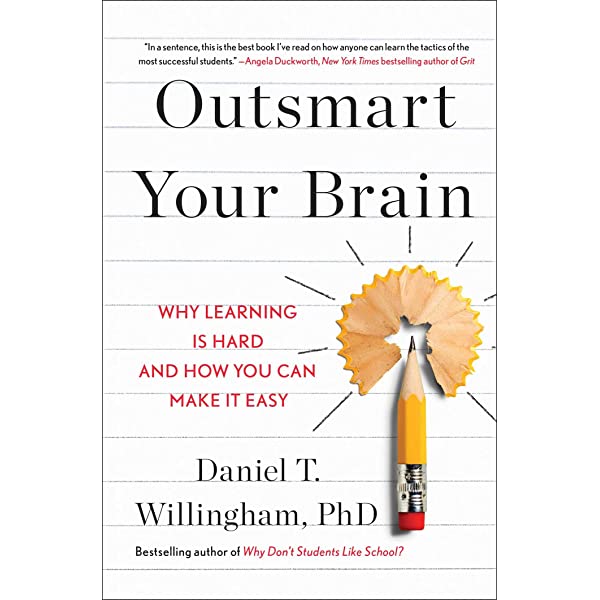
I'm reading University of Virginia cognitive scientist Daniel Willingham's new book, Outsmart Your Brain: Why Learning is Hard and How You Can Make It Easy. The book offers terrific advice on learning strategies for students, as well as tips for teachers on how to help students learn more effectively. In the book, Willingham writes,
If your students consistently do not ask questions, you should wonder about your relationship with them. They are not quiet because your explanations are so brilliant and clear. They're quiet because they see asking a question as taking a risk. Ask yourself why that is.
What a terrific thought-provoking statement for teachers to ponder. Now replace the word students in the first sentence with the words "team members" or "employees" and consider the implications for leaders at all levels. If your people are not asking you questions, you have a problem. Silence doesn't suggest that you have articulated your vision, goals, and strategies clearly and persuasively. Silence suggests a problem with the climate you have created.
Wednesday, February 08, 2023
Super Bowl Ads: Teaming Up is the New Trend
Friday, February 03, 2023
Building Resilience
![]() |
| Source: NIH |
Resilience has been defined as the capacity to withstand or recover quickly from difficulties (Oxford dictionary). In a 2021 Harvard Business Review article, Rob Cross and his co-authors explained why we should care a great deal about resilience in our organizations. They wrote, "Resilience has been shown to positively influence work satisfaction and engagement, as well as overall well-being, and can lower depression levels. There is even evidence that resilience can help protect us from physical illness."
Cross and his colleagues make a very important point about resilience though. They push back against the conventional wisdom which suggests that resilience is an internal trait. According to this line of thinking, it's something deep down inside of you that can be drawn up to overcome challenges; if you lack resilience, you somehow are flawed. Cross and his co-authors offer an alternative perspective:
Tuesday, January 24, 2023
Expressing Gratitude May Promote Better Collaboration
In past blog posts, I have featured some excellent research on the benefits of expressing gratitude. Most of that work focused on the benefits to the person giving thanks. New research from UNC-Chapel Hill Professor Sara B. Algoe and her colleagues demonstrates an interesting ancillary benefit from thanking others. They call it the witness effect. Gratitude doesn't just benefit the individuals giving and receiving thanks; it also has a positive impact on third parties who witness this exchange.
Thursday, January 19, 2023
A Genuine Apology Goes a Long Way
Thursday, January 12, 2023
Does Pay Transparency Help or Hurt Workers?
![]() |
| Source: TechTarget |
The UCLA Anderson Review recently published a feature article titled, "Pay Transparency: Will It Help or Hurt Workers?" The article focused on the work of Harvard Business School Professor Zoe Cullen and Brown University Professor Bobak Pakzad-Hurson. These scholars found that employers with non-unionized workforces might capitalize on the newly available data about salaries across a wide range of firms to drive a very hard bargain with job candidates. As a result, the transparency laws might depress starting wages. Here is an excerpt from the article:
More research clearly must be done, and this paper's conclusions from analysis of the TaskRabbit platform might not apply to the broader labor market. Still, the study suggests that more attention must be paid to the actual impact of these new transparency laws, rather than simply assuming that they will benefit employees.
Monday, January 09, 2023
Equinox vs. Planet Fitness: Twitter Clash!
Several years ago, I wrote a case study about Planet Fitness, the "Judgement Free Zone" chain of fitness centers. Therefore, I tend to follow the gym industry. On New Year's Day, premium fitness center chain Equinox posted the following message on social media. It created quite a stir.
Interestingly, both firms are telling certain people they are NOT very welcome at their gyms. Recall Planet Fitness' famous "I lift things up and put them down" advertisement in which an employee shows a bodybuilder the exit! That Planet Fitness advertisement is very much like this January tweet from Equinox. So, neither firm is off the mark here. They are each addressing their customers with distinct messages that fit their contrasting audiences and their associated needs and wants. They are both trying to attract their core customer by explicitly describing who doesn't fit at their gyms.
Thursday, January 05, 2023
Owning Your Job
![]() |
| Source: Verywell Mind |
Friday, December 30, 2022
New Year Brings Choice: More Distinctive or More Conventional?
![]() |
| Image Source: Wikipedia |
Interestingly, new research by Giacomo Negro, Balázs Kovács, and Glenn Carroll explores this very question. The scholars published their work in the American Sociological Review earlier this year. These scholars studied professional musicians. In fact, they collected data on more than 125,000 albums by a wide variety of musical artists. Negro and his colleagues examined how artists' work evolved after either winning a Grammy award vs. earning a nomination but not winning an award. The researchers discovered that Grammy winners tend to "release albums that are more likely to stand out stylistically from other artists." In contrast, the nominees who did not win awards tended to produce subsequent music that was more similar to the work of fellow artists.
Negro and his colleagues argue that winning an award inspires musicians to take a chance and produce new music that is original and adventurous. They try different styles and even explore new genres. The scholars use the Irish rock band U2 as an example. The band earned Grammy awards for its groundbreaking Joshua Tree album in the late 1980s, yet Bono and his bandmates chose to try on a very different style with the subsequent album, Achtung Baby. They went on to earn a Grammy award for that music as well.
What happens when artists simply get nominated, but fail to win an award? They appear to become more conventional. Why? Negro argues, "One possible interpretation is that the nominees interpret the feedback on their artistic choices as essentially negative feedback or a negative signal that what they tried to do did not win them the award."
Tuesday, December 27, 2022
Unlocking Creativity in One Amazing Graphic
Thursday, December 22, 2022
Tuesday, December 20, 2022
The Right Connections to Make in Your Job Search
![]() |
| Source: www.reliantsproject.com/ |
Friday, December 16, 2022
What Gap Inc. Can Learn From Signet Jewelers CEO Gina Drosos
![]() |
| Source: CNBC |
I think Gap could learn a great deal from the turnaround led by CEO Gina Drosos at Signet Jewelers. Her company owns several major jewelry chain brands (Zales, Kay, Jared). Fortune recently profiled Drosos and her work improving performance at Signet. Here's an excerpt from the article by Phil Wahba:
Monday, December 12, 2022
One Key to Staying Motivated: Don't Expect Steady Progress
When you start a new project, do you expecct to achieve steady progress toward your goal, week after week? If so, you might be fooling yourself. Progress on a challenging initiative is rarely that steady over time. Expect bumpiness! Perhaps even more importantly, you might find it difficult to stay as motivated during your work if you have these misguided expectations.
Friday, December 09, 2022
Why Your Company Should Build a Volunteering Program
Monday, December 05, 2022
How Leaders Avoid Hero Syndrome
Why don't leaders trust their team members in these spots? Maddox argues that leaders often don't believe in the skills and expertise of their team members. However, leaders do believe in themselves, yet sometimes that confidence is not well-grounded. The situation may be far more complex and/or novel than the leader would like to admit. They need help from their team members; they cannot solve it alone. However, they somehow convince themselves that they can rectify the situation without assistance. It's hero complex 101.
Maddox explains how the military uses various simulations and training exercises to develop the skills of team members. An investment in training and development does not only help the team members hone their skills; it builds the leaders' confidence in their team members. Leaders need to find time to see their team members in action in a lower-risk, safer space.
He explains that a good leader doesn't simply issue orders in these training scenarios. Instead, the effective leader inquires as to how various people on the team would try to solve a specific probelm. He calls this Socratic approach "walking in autonomy." It's essentially a conversation in which the leader coaches and mentors, rather than solving the problem directly. Then, Maddox advocates using the "after-action review" to analyze the decisions that have been made and the impact those choices had on the results - good or bad. Providing time for reflection, feedback, and learning proves crucial for employee development, and these activities help build the leader's confidence in the people throughout the organization.
Friday, December 02, 2022
Is it time to fire yourself?
| Source: Intel |
Bryant also recounts the legendary story of former Intel CEO Andy Grove contemplating how his replacement might adopt a very different strategy facing the specific circumstances challenging the firm in the early 1980s:
"Grove asked Gordon Moore, Intel’s cofounder, 'If we got kicked out and the board brought in a new CEO, what would he do?' Moore responded by saying that a new CEO would take Intel out of the memory-chip business. 'Why shouldn’t you and I walk out the door, come back and do it ourselves?' Grove responded. And that’s what they did. They shifted Intel from memory chips to microprocessors, a crucial pivot that led to decades of prosperity for the company."
Bryant offers a compelling argument for why leaders should consider what might happen if they were replaced. How might a new person look at the situation? What other perspectives might be helpful to me now? Am I stuck in a certain mindset or beholden to certain assumptions that may no longer be valid? Leaders at all levels absolutely should ask themselves these questions from time time.