Showing posts with label succession. Show all posts

Monday, August 19, 2024

Three Critical Questions for the New Starbucks CEO Brian Niccol


As we all know, Starbucks hired a new CEO last week. They hired Chipotle CEO Brian Niccol to replace beleaguered CEO Laxman Narasimhan.  Niccol faces many challenges as the company has experienced declining revenues, frustrated customers, and disgruntled employees.  As a loyal customer (albeit also a frustrated one) and a close observer of the company, I've been considering the questions that Niccol must grapple with as he embarks on this transformation effort.  Here are three key questions:

1.  How much customization can Starbucks offer to its customers?  Give the customers what they want, right?  Customers clearly love to customize their drinks (in far more complex ways than Chipotle faces).  However, it has become abundantly clear that many Starbucks cafes are unable to effectively handle their throughput each day, particularly given the intense amount of customization they must deliver.  We've read about or experienced long wait times, abandoned orders, and incorrect drink orders.  Mass customization only works if a company can actually deliver on its promises.  One might argue that Niccol simply has to figure it out, and that he has to improve operational efficiency so that Starbucks can offer abundant customization.  However, Niccol also has to think about the practical implications of this strategy.  Should he curtail customization at all while he tries to figure out the operational challenges in the cafes?  I'm reminded of the story of Lego's turnaround twenty years ago, led by CEO Jorgen Vig Knudstorp (see HBS case study by Jan Rivkin and Stefan Thomke for details on this story).  He took charge when Lego faced the prospect of bankruptcy.  The number of parts produced by the company had doubled in the late 1990s, leading to numerous manufacturing and supply chain problems.  Knudstorp reduced the number of parts substantially so as to help the company gets its operations back in order.  At the same time, he invested heavily in innovation.  Lego came roaring back stronger than ever.  Niccol might want to study that turnaround as he considers the customization challenges at Starbucks.  

2.  How will the design (or redesign) of cafes balance worker efficiency vs. customer comfort/needs?  Longtime Starbucks CEO Howard Schultz envisioned the cafes as a "Third Place" where people could gather with others either to enjoy a friendly conversation or to get work done.  However, many of the cafes were designed to handle much less volume than they currently receive.  Workers are in each other's way, and they lack the equipment needed to handle as many orders as they receive.  In one of my local Starbucks cafes, they have renovated completely.  Now, the workers have more equipment (two espresso stations rather than one) and more space.  Undoubtedly, the set-up is much more efficient, and wait times will hopefully decline as a result.   However, customers have less places to sit and gather with others.  No tables are within reach of outlets at this point, reducing the ability to work at the cafes.  You can clearly see the tradeoffs that Starbucks must grapple with in their design choices.  Niccol has to determine the appropriate balance here between enhanced efficiency vs. "Third Place" dynamics.  

3.  How will Niccol handle the shadow of longtime CEO Howard Schultz?  We all know the story by now of how Schultz has returned twice after his initial resignation as CEO in 2000.  We also know that he has opined about the challenges his successors have faced, and he's done so in a very public way at times.  Most recently, he took to LinkedIn to criticize the efforts of CEO Laxman Narasimhan.  Niccol will have to think about how to engage Schultz.  He clearly has a great deal of influence, though he no longer serves on the Board of Directors.  Niccol can't allow Schultz to dictate strategy, but he cannot ignore him completely.  

Wednesday, May 08, 2024

Succession Troubles at Starbucks

Source: zeebiz

Last week, Starbucks announced disappointing financial results.  The stock dropped 12% in after-hours trading on Tuesday, April 30th when Starbucks announced a 2% decline in sales and a 15% decrease in earnings relative the second quarter last year. 

Former CEO Howard Schultz decided to comment on the subpar performance through a LinkedIn post.  He wrote:

At any company that misses badly, there must be contrition and renewed focus and discipline on the core. Own the shortcoming without the slightest semblance of an excuse...

Over the past five days, I have been asked by people inside and outside the company for my thoughts on what should be done. I have emphasized that the company’s fix needs to begin at home: U.S. operations are the primary reason for the company’s fall from grace. The stores require a maniacal focus on the customer experience, through the eyes of a merchant. The answer does not lie in data, but in the stores.

Senior leaders—including board members—need to spend more time with those who wear the green apron. One of their first actions should be to reinvent the mobile ordering and payment platform—which Starbucks pioneered—to once again make it the uplifting experience it was designed to be. The go-to-market strategy needs to be overhauled and elevated with coffee-forward innovation that inspires partners, and creates differentiation in the marketplace, reinforcing the company’s premium position. Through it all, focus on being experiential, not transactional.

Now, Schultz may be exactly right in his diagnosis and recommendations for the company.  However, one has to wonder about whether he should have publicly articulated these points.  After all, Schultz has twice returned to the CEO role after stepping down.  Each time, he has resumed leadership of the company after a successor stumbled.  In this case, Laxman Narasimhan has only been CEO for a short time (he formally assumed the role in March 2023).  Shouldn't Schultz give him a chance to put his stamp on the company before criticizing the firm so publicly?  What benefit is there for the company, its employees, and its shareholders if he publishes this commentary on LinkedIn, rather than simply talking privately with fellow shareholders and/or directors and executives of the company?   Knowing when and how to leave is a critical part of any succession.  Starbucks has struggled mightily in this regard.  The Board needs to navigate this situation carefully, lest they find themselves searching for a new CEO again far too soon. 

Monday, March 27, 2023

Why You Should Train as a Barista


The Wall Street Journal's Heather Haddon reported several days ago about the leadership transition at Starbucks. Laxman Narasimhan has taken over for Howard Schultz, who has completed his third stint at chief executive of the coffee chain.  I found one element of the transition particularly interesting.  Haddon notes that Narasimhan "spent 40 hours training to become a certified barista" and served coffee at cafes around the world.  He learned a great deal about challenges on the front lines.  Haddon described the new CEO's plans to stay engaged in the stores moving forward:

Mr. Narasimhan said he plans to regularly work alongside baristas in cafes to understand why it sometimes is so aggravating to get a customer a simple cup of coffee. He intends to work four hours in a different Starbucks store each month and expects his senior leaders to do the same.

To me, this type of direct engagement on the front lines is MUCH more effective than simply visiting restaurants, stores, or factories.   You can truly empathize with your employees if you actually do the work that they do, and if you engage in conversation while tackling tasks alongside them.   You learn a great deal about the obstacles they face each day that make their jobs much harder than they need to be.  Starbucks, as we all know, has had its labor relations challenges in recent years.   This type of engagement can be a step forward. 

Narasimhan's work here reminds me of when Chris Nassetta took over as CEO of Hilton Hotels.  The company was in rough shape.  Inc. magazine reported on the turnaround several years ago.  Nassetta said, "We had lost touch with the front line."  The article noted, that, "Nassetta and his senior executives started spending one week each year working at hotels--in housekeeping, engineering and the front desk. 'Their job is harder than your job,' Nassetta says. 'You get in there, and you pay them the respect.'"

Tuesday, March 22, 2022

Sucession Problems? Howard Schultz Returns as Starbucks CEO... Again


And you thought the HBO hit show Succession was fascinating... how about Starbucks for some boardroom succession drama?!  Several days ago, we learned that Kevin Johnson has decided to step down as Starbucks CEO.  In addition, the company made the surprising announcement that Howard Schultz would return for his third tenure as CEO.  Starbucks announced that Johnson had informed the Board of Directors about one year ago that he intended to step down around this time.  This news left many corporate governance experts scratching their heads.  Why go to Schultz as interim CEO if the board had a year to plan for the succession?  Did the Board stumble in an effort to replace Johnson, or is there some other reason for going back to Schultz once again?  In a Forbes article by Jena McGregor, experts offered some perspective on the potential pitfalls of this decision: 

Still, corporate governance experts say the move includes some potential succession pitfalls. Bringing back a CEO a second time—or a third—can impact future CEO recruitment, says Jason Schloetzer, a professor at Georgetown University’s business school who studies CEO succession.

“When you have a culture among the management team where the founder is still around and still actually pretty heavily involved, it can be difficult to recruit somebody who wants to do their own thing,” he says.

Meanwhile, CEOs who return to a job—especially those as successful as Schultz was in his second tour of duty—may try to do things that brought them success before, even as employees’ mindsets and public expectations may have changed.

Such CEOs can “essentially operate in a repeat methodology,” says Steve Mader, a strategic partner with executive search firm ON Partners who formerly ran the board practice for Korn Ferry. “But things change. [The] solutions five years ago are not necessarily good solutions now.”

Naturally, we will learn more in the coming weeks and months about Starbucks' succession plans.  Perhaps the Board simply had to wait for their preferred candidate to be available.  However, even if that is the case, the move to Schultz doesn't come without pitfalls as described above.  The situation certainly speaks to the need for succession planning long before a leader indicates that they are thinking of stepping down.  The best leaders cultivate and develop talent, including the people who can step into their shoes.  That process should begin soon after the day a leader assumes a role, not when they begin to contemplate stepping away.  

Monday, January 24, 2022

When Hiring Leaders from the Outside Fails

Source:  NBC Sports

When organizations struggle and falter, they often look to the outside for new leadership.  They hire CEOs from companies that they consider to be top notch.   If the firm has excelled, then presumably, it has star members of the C-suite who could make terrific CEOs elsewhere.  So goes the logic.  Of course, we know that these outside hires don't always work out.  The question is why. 

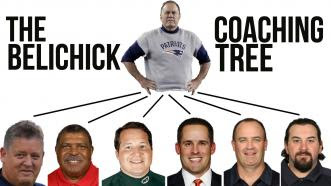
I've been thinking about this topic over the past few weeks, as we have witnessed a number of National Football League teams fire their head coaches.   Among these firings, two more of New England Patriots' head coach Bill Belichick's proteges lost their jobs as head coaches of other teams.  Observing these dismissals, I decided to compile the NFL win-loss record of all of Belichick's former assistant coaches during his time as the boss in New England:  175 wins, 252 losses, and 1 tie for a winning percentage of 40.9%.  That's awful.  Only one of his former assistants managed to compile a winning record (Bill O'Brien with 52 wins and 48 losses).  

Why have Belichick's proteges failed so miserably?  Several hypotheses come to mind. 

1.  The most obvious conclusion:  None of these assistants had Tom Brady as their QB!  As we all know, even Belichick has a losing record as a coach without Brady.  More generally, these proteges didn't have all the other talent that accompanied Brady in New England. University of Texas coaching legend Darrell Royal once said, "It's not about the X's and the O's, but the Jimmys and the Joes."  In other words, perhaps we overrate coaching and don't attribute enough of team success to the players themselves.  In corporate terms, perhaps we place too much credit for success at the feet of a few top executives at successful firms and forget about the impact of many others supporting them.  

2.  Some of these proteges try to copy the Belichick style and system in its entirety rather than adapting to the new situation in which they find themselves.  Moreover, these proteges attribute the Patriots' success to some factors that are not, in fact, the primary drivers of the team's high performance.  Kalyn Kahler wrote an article for the Bleacher Report two years ago titled, "When the Patriot Way Goes Wrong." She wrote:

"Listen, we all want to replicate the Patriots' success, but the track record of guys that come out and seem to try to replicate it is tough among front office and coaches," says another source, who has interviewed coaching candidates coming from New England, including Patricia. "Authoritarian, very hierarchical organizations, whether they are in football or otherwise, that's what you get: You don't get people to develop their own way.... "There is a sort of skepticism when people interview people coming out of New England," the source who has interviewed Patriots coaches, including Patricia, says. "Some of the New England ways have been so draconian. ... The league does look at those experiences and say, 'Are these guys trying to replicate a really, really difficult model to replicate?' It is certainly a focus when you talk to those prospects."

Many business leaders make the same mistake.  They try to import the exact methods and techniques to which they attribute their former organization's success.  They fail to assess the situation and adapt accordingly. 

3.  Many of these proteges had little or no professional football experience outside of working for Belichick in New England.   Therefore, they did not have a solid understanding of how different his methods were from those to which other players and coaches were accustomed.  A incomplete appreciation of the culture of other organizations left them ill-prepared to take over another team.   Business leaders fall into the same trap if they take on a CEO role after spending their entire career in one organization (think about some of the former GE executives who stumbled elsewhere).  

4.  Perhaps these Belichick proteges believed that the Super Bowl rings on their finger would automatically generate buy-in and commitment on the part of the players on their new teams.   However, it doesn't work that way.  Yes, people will respect your past success, but you still have to build buy-in from the ground up.  You have to cultivate trust and respect.   Moreover, you have to convince players that the methods are key to winning.  They aren't stupid. They see Tom Brady on the Patriots and think, "Are these dictatorial methods really the path to winning, or were those rings simply a result of having the greatest QB of all time?"  Rightly or wrongly, that's the way some will think.   Business leaders face similar challenges when they switch organizations.  Employees will quickly tire of hearing that certain methods "worked before in my prior organization and can work again here."  

5.  Finally, one has to consider the impact that Belichick's hands-on style may have on the development of talent in his organization.  Note that Belichick's mentor, Bill Parcells, has had a coaching tree that has been far more successful (Belichick, Tom Coughlin, Sean Payton, etc.).  Similarly, Tom Landry and Bill Walsh had incredibly successful coaching trees.  Does the way that those coaches led their teams matter? Perhaps they delegated more effectively, and in so doing, they developed the coaching talent around them more successfully.  Understanding the leadership style of a person's former boss may be critical as you hire C-suite executives from another firm.  Did the person work for a micromanager, and as a result, are they as prepared to make decisions on their own as you would like them to be?

Wednesday, January 18, 2017

Do Boards Pick the Right Person as CEO?

What happens when the Board of Directors appoints an internal candidate to the position of CEO?  Do they tend to pick the right person, or do they overlook/reject an alternative candidate that would have been a better CEO?  Stanford scholars David Larcker, Stephen Miles, and Brian Tayan examined this issue recently.  They examined 121 transitions at the 100 largest companies over a ten-year period.  They found that roughly 1/3 of executives who were not selected for internal promotion to CEO were, in fact, hired at other companies.  However, the internally promoted CEOs experienced higher shareholder returns than those executives who were not chosen and left to lead other firms.   

Tuesday, April 08, 2014

Troubling Data about Talent Management & Succession

Stanford's David Larcker, Stephen Miles, and Brian Tayan have written a new article titled "Seven Myths of CEO Succession."  They cite some rather startling statistics about succession.  

Each year, approximately 10 to 15 percent of companies change CEOs either because of retirement, recruitment to another firm, resignation following poor performance, or for health-related issues. For this reason, shareholders expect that companies have a chosen successor identified at all times to immediately assume the CEO position should the need arise. Unfortunately, research data indicates that this is often not the case. According to a 2010 study by Heidrick & Struggles and the Rock Center for Corporate Governance at Stanford University, only 54 percent of companies state that they are grooming a specific successor to the CEO position, and 39 percent claim to have no viable internal candidates to permanently replace the CEO if required to do so immediately. 

Wow... what an indictment of the leaders and the leadership development efforts at many companies! Nearly 4 of 10 firms report "no viable internal candidates."  The data raise some troubling questions.  Are these firms not investing in leadership development efforts?   Or, are they spending unwisely in their efforts to groom future leaders?   Perhaps most importantly, are many firms not holding their senior executives, including the CEO, accountable for developing talented people who can assume top positions in the future?  CEOs and other top leaders should be held responsible for more than meeting financial and non-financial performance targets.  They also need to be held accountable for talent development and succession.   That part of their job helps to insure the long term viability and success of the institution. 

Friday, January 03, 2014

The Difference Between the Top Job vs. Second-in-Command

In this article in the Wall Street Journal, CEOs not only perform different tasks from their second-in-commands -- who typically focus on running operations -- but they have to act differently, too. That means the two roles often demand very different personality traits, say people who have been there."  He goes on to quote a number of executives who argue that some folks have the personality traits required to be a highly successful COO, but they don't have the attributes necessary to thrive as the CEO.   

I will acknowledge that some second-in-commands are not well-suited for the top job.  However, I think it's rather simplistic to argue that the two jobs require fundamentally different personality traits.  After all, most successful CEOs did spend time as a second-in-command prior to taking the top job.  I think it's more important to think about the skills, activities, and behaviors that differ between the two roles.  Then those who aspire to these roles must think about how they must CHANGE their behavior to thrive in each role.   Perhaps it may require some development or coaching to adjust to the new role.  In the end, a learning/development mindset enables people to consider taking on one of these roles and to grow into the job.  A "fixed" mindset simply falls back on the "traits" argument, suggesting that some are suited for particular roles and others are not.   Stanford's Carol Dweck has done extensive research about how those children with a developmental mindset are more successful in school than those with a fixed mindset.  I would argue that the same goes for executives.  Those who simply take their talents and skills as fixed are not as likely to succeed.   Those who believe that they can continue to grow and develop, even at a later stage in their careers, are more likely to thrive in various roles. 

Tuesday, June 18, 2013

Lululemon: How Much "Discretion" Should a CEO Exercise?

This week Lululemon CEO Christine Day announced that she would be stepping down.   Her resignation comes just three months after the substantial product recall of yoga pants that led to the departure of the firm's Chief Product Officer.   On the day of Day's surprising announcement, Lululemon shares fell 17%.  Investors wondered if other bad news might be coming from the company that has been a terrific growth story over the past several years.  Day chose not to discuss the detailed reasons for her departure.  She told Fortune, "There is no difference in strategic vision for the company, we were and are aligned... My values include discretion. While I know everyone would like to know 'the reason' [I'm leaving] there are some things that should remain private because the truth is the good things outweighed the bad and by being respectful and grateful one can remember that."  

I find this incident very interesting.  It raises some difficult questions regarding the responsibilities of a public company CEO.   While I respect Day's right to privacy, I can't help but look at that stunning 17% drop in the firm's shares.  Do the shareholders deserve more information?  Does Day have a responsibility to disclose more information about her departure so as to prevent such a drop in the firm's shares?   It's hard to say, of course, given that we don't know the reasons.   However, it seems clear that investors were spooked by the surprise departure.   Investors simply do not like being left in the dark. 

Tuesday, October 16, 2012

Insiders vs. Outsiders: Sweeping Generalizations Don't Make Sense

I read an interesting blog post this week on the HBR site.  The post consists of an interview with Harvard Professor Gautum Mukunda.   Here is an excerpt (video posted below as well):

The finding: The best leaders tend to be outsiders who don’t have a great deal of experience.
 
The research: Gautam Mukunda studied political, business, and military leaders, categorizing them into two groups: “filtered leaders,” insiders whose careers followed a normal progression; and “unfiltered leaders,” who either were outsiders with little experience or got their jobs through fluke circumstances. He then compared the groups’ effectiveness; for instance, with U.S. presidents, he looked at historians’ rankings from the past 60 years. He discovered that the unfiltered leaders were the most effective—and also the least effective—while highly filtered leaders landed in the middle of the pack. 
 
The challenge: Is searching for a leader with a long, impressive résumé a waste of time? Is experience a predictor of mediocre performance? Professor Mukunda, defend your research.
 
Mukunda: I was surprised by how unambiguous the data were, but they confirmed what I suspected: If you choose an insider who you know can do the job well, most of the time that person won’t perform any differently from any other top candidate with lots of experience. Such insiders—I call them “filtered leaders”—might be good, but they probably won’t be brilliant. It’s the unfiltered leaders, the outsiders without lots of experience, who perform the very best.

I'm highly skeptical of such a sweeping generalization.  I don't think we can argue that outsiders are ALWAYS preferable to insiders, that unfiltered folks are always preferable to experienced individuals.    The bottom line is: It depends!  Certain circumstances call for an outsider or a person with fresh perspective, while others lend themselves to an insider or someone with deep experience in an industry or company. Each company needs to assess its situation and make the right choice for that organization, given its strategy and culture, AT THAT POINT IN TIME.  The right solution for Company XYZ in 2012 may not make sense in 2018, as conditions change.   Moreover, the search for that superstar outsider can be a futile one, as I've written about in earlier blog posts.  We sometimes become enamored with the outside "star" hire... and then feel very underwhelmed a few years later.  

Thursday, September 22, 2011

The HP Board: Another CEO Bites the Dust?

News reports indicate that the HP Board of Directors will fire CEO Leo Apotheker today and replace him with Meg Whitman.  Many people have criticized the Board heavily for its actions over the past few years... and rightfully so.  They have had their share of public fiascoes.  From my perspective, they deserve the most criticism for not having developed a talent pipeline and a succession plan that would have enabled them to promote an insider during at least one of these management changes.  From Fiorina to Whitman, the Board keeps going outside the firm to find a new CEO.  How can a firm such as HP constantly have to reach for an outsider?  That's a flawed talent strategy and poor governance.

On the positive side, I applaud the Board for not falling into the sunk cost trap with Apotheker.  They deserve some credit for acknowledging their mistake and cutting their losses.  Many Boards would have been reluctant to fire a CEO after such a short period of time, even if it became quite clear that things were not working out.  

Tuesday, August 30, 2011

Developing your people: Lessons from NFL Quarterbacks

Karl Moore and Devin Bigoness have a good column at Forbes.com about developing your people.  They draw lessons from the development of National Football League quarterbacks.  As they point out correctly, teams tend to take one of two contrasting approaches with their young quarterbacks.  Some teams take the "immediate testing" approach - i.e. they throw them in the pond and challenge them to learn to swim.   These quarterbacks often will struggle mightily in their rookie year.   It's trial by fire.   Other teams will adopt a "learning to win" model.  These quarterbacks sit on the sidelines for some time, perhaps even several years, watching a veteran quarterback lead the team.  

Each of these models has had its successes and failures.  Aaron Rodgers succeeded using the "learn to win" approach.  He spent four seasons as a back-up before becoming the starting quarterback for the Green Bay Packers.  He went on to become a star and a Super Bowl champion.   Peyton Manning, on the other hand, went the immediate testing route.  His team lost many games during his first year, and he did throw many interceptions.  However, we went on to craft a Hall of Fame career, won multiple MVP awards, and became a Super Bowl champion too.   Of course, both models also have their share utter failures as well.

Moore and Bigoness do not advocate one model over another (appropriately, I might add).  Instead, they propose that you should really understand your people, so that you can determine which model might be best for each individual.  At the same time, you have to assess your organization's needs.  You must balance what's best for individual against what is best for the firm.  Some times, you might have to "rush" someone's development, despite some risks, because of a pressing organizational need.  In other cases, you may determine that the organization can afford to give an individual a bit more time to "learn to win." 

Importantly, if you do adopt at  the "learn to win" model, you do need to still make sure that you present that individual with sufficient challenges and development opportunities.  One risk, with this model is that a talented person will leave because they are not receiving the opportunity that they desire.  In the NFL, teams have control over young players for several years.  In companies, people can depart at any time.  Thus, leaders must share their development strategy with the individual being groomed, and work with them to co-create a development plan that works for them and the organization. 

Friday, July 01, 2011

Part 2 - Interview with HR Expert Jane Perdue


Here is Part 2 of an interview I conducted recently with Jane Perdue, CEO and founder of Braithwaite Innovation Group.  Perdue has extensive experience as a human resource executive, and now a consultant, at Fortune 500 firms. 

Many changes have been made in employee evaluation and merit review processes in the past decade or so. What are some of the most significant problems that still remain with those evaluation processes?

There are many days in which I wish I had a magic wand and could transform the entire performance appraisal process into something practical and meaningful! In my perspective, many of the changes have been in process. An organization can have the most extraordinary online appraisal systems and still fail to move the needle on developing employee performance.

There’s too much focus on the form and too little on the content. While a lunch once with a boss, he wrote a few development notes on a napkin – that’s truly the most effective performance feedback I ever received.

Performance assessment and evaluation must transcend being simply a document completion process to a corporate-wide mindset and dedication to continuous improvement. A mindset that’s embedded in multiple systems: strategic planning, business metrics, staffing, leadership and succession development, just to name a few.

What are 2-3 key success factors with regard to developing sound management succession processes?


For management succession development to be effective and successful:
  •  An organization must have identified the requisite knowledge, skills and abilities – both from a quantitative and qualitative perspective – that are crucial to running the business and are embedded in a leadership development program based on measured outcomes
  •  Succession development is practiced, recognized and rewarded as business fundamental, just like strategic planning and budgeting
  • The process is simple and straightforward, having been pared down to the core essentials with reams of paperwork avoided.