Showing posts with label coaching. Show all posts

Wednesday, October 15, 2025

Does Your Boss Know Your Strengths and Help You Pursue New Roles Based on Those Skills?

Source: https://www.skillscaravan.com

Has one of your former bosses identified your (perhaps previously undiscovered) strengths and helped you pursue new roles that were well-suited to those capabilities? If so, you are very fortunate. The benefits from having such a boss may be significant and long-lasting.

In today's Wall Street Journal, University of Chicago Professor Virginia Minni explains the findings from a well-designed study of managers at a large multinational company.  She identified "top managers" as those who were promoted much faster than their peers.  She explains her methodology and results:

Here is how it worked. Let’s say two different teams of comparable workers have a regular boss (in other words, not a top manager). Then the managers rotate, and one of those two teams gets a top-performing leader while the other team gets another lesser chief. Since the two teams are otherwise the same, the manager would be responsible for any changes in performance.

The results were striking. For one thing, employees who had contact with a high-quality manager were much more likely to make a lateral move within the firm—about 40% more likely than other workers, within seven years of being assigned to a top manager. These weren’t trivial moves, either: They often involved large changes, such as moving between completely different roles at the company.

That leads to the next striking difference in performance. The workers who served under a top manager and changed jobs were much better paid and much more productive than other workers. Within seven years of contact with a top manager, these people earned about 13% more than workers with lower-performing managers. And their performance metrics—like sales per capita—were 16% higher than other workers’ numbers.

Minni discovered that the effects endured, meaning that the workers did not just benefit while working for the highly effective boss.  They continued to excel in their career after shifting roles and working for different leaders.  She finds that these excellent bosses spent more time in one-on-one meetings with workers, which she argues helped these leaders match their employees with the right roles moving forward.  Moreover, they coached people to excel in those new roles.  

While the study may not offer earth-shattering (or even mildly surprising) results, it does document in a very rigorous way the impact of having an excellent boss who looks out for your interests.  What I would add is that some managers are not bad at leading their current teams, but they do hoard talent.  In other words, they are not always looking out for the interests of their team members.  They would rather hold on to talented individuals, rather than helping them find the next great role that could advance their career.  The best leaders create high-performing teams, but they also develop their people and help them secure great new opportunities.  Because they know how to identify and develop talent, these great leaders don't worry about losing that talent.  They are able to find new people who they can coach and develop to replace the people who have shifted to new roles.  

Monday, April 10, 2023

How You Handle Low Performers Can Hurt Morale and Drive Away Your Best People


I recently re-read a post from The Society for Human Resource Management (SHRM) about a study conducting by Eagle Hill Consulting.  The post focuses on the highly detrimental impact of not acting to address low performers in your workplace. Here's an excerpt from the SHRM blog post:

These findings, drawn from a survey of more than 1,700 professionals from across the private, nonprofit and government sectors, are detailed in a research report by Arlington, Va.-based Eagle Hill Consulting, Are Low-Performers Destroying Your Culture and Driving Away Your Best Employees? The researchers found that:
  • Low-performers hurt morale in the workplace and increase the workload for others. When asked to pick the greatest problems created by low-performers, the top concern was that they reduce overall workplace morale (cited by 68 percent of respondents). Forty-four percent said that low-performers increase the work burden on high-performers.
  • Low-performers stifle innovation and contribute to a standard of mediocrity. Some 54 percent said that low-performers contribute to a lack of initiative and motivation, resulting in a work culture where mediocrity is accepted.
Addressing low performance does not mean you have to fire people.  It does mean you have try to understand WHY certain individuals are not performing to expectations.  What are the causes? Don't assume you know.   Then, you must provide concrete, actionable feedback to people who are not achieving their goals.  It means putting in place a specific plan for coaching and developing low performers.  Finally, it means having key milestones at which you can check in on the performance of these individuals, measure progress or lack thereof, and take additional steps to address performance below expectations.  Failing to have the hard conversations will not only harm the organization's effectiveness, it will lead to a deterioration in employee morale.  Ultimately, it might lead to the departure of your best employees, who become frustrated and upset with the situation. 

Monday, January 24, 2022

When Hiring Leaders from the Outside Fails

Source:  NBC Sports

When organizations struggle and falter, they often look to the outside for new leadership.  They hire CEOs from companies that they consider to be top notch.   If the firm has excelled, then presumably, it has star members of the C-suite who could make terrific CEOs elsewhere.  So goes the logic.  Of course, we know that these outside hires don't always work out.  The question is why. 

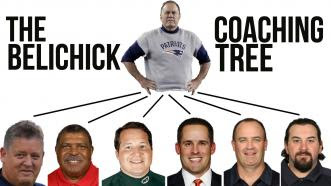
I've been thinking about this topic over the past few weeks, as we have witnessed a number of National Football League teams fire their head coaches.   Among these firings, two more of New England Patriots' head coach Bill Belichick's proteges lost their jobs as head coaches of other teams.  Observing these dismissals, I decided to compile the NFL win-loss record of all of Belichick's former assistant coaches during his time as the boss in New England:  175 wins, 252 losses, and 1 tie for a winning percentage of 40.9%.  That's awful.  Only one of his former assistants managed to compile a winning record (Bill O'Brien with 52 wins and 48 losses).  

Why have Belichick's proteges failed so miserably?  Several hypotheses come to mind. 

1.  The most obvious conclusion:  None of these assistants had Tom Brady as their QB!  As we all know, even Belichick has a losing record as a coach without Brady.  More generally, these proteges didn't have all the other talent that accompanied Brady in New England. University of Texas coaching legend Darrell Royal once said, "It's not about the X's and the O's, but the Jimmys and the Joes."  In other words, perhaps we overrate coaching and don't attribute enough of team success to the players themselves.  In corporate terms, perhaps we place too much credit for success at the feet of a few top executives at successful firms and forget about the impact of many others supporting them.  

2.  Some of these proteges try to copy the Belichick style and system in its entirety rather than adapting to the new situation in which they find themselves.  Moreover, these proteges attribute the Patriots' success to some factors that are not, in fact, the primary drivers of the team's high performance.  Kalyn Kahler wrote an article for the Bleacher Report two years ago titled, "When the Patriot Way Goes Wrong." She wrote:

"Listen, we all want to replicate the Patriots' success, but the track record of guys that come out and seem to try to replicate it is tough among front office and coaches," says another source, who has interviewed coaching candidates coming from New England, including Patricia. "Authoritarian, very hierarchical organizations, whether they are in football or otherwise, that's what you get: You don't get people to develop their own way.... "There is a sort of skepticism when people interview people coming out of New England," the source who has interviewed Patriots coaches, including Patricia, says. "Some of the New England ways have been so draconian. ... The league does look at those experiences and say, 'Are these guys trying to replicate a really, really difficult model to replicate?' It is certainly a focus when you talk to those prospects."

Many business leaders make the same mistake.  They try to import the exact methods and techniques to which they attribute their former organization's success.  They fail to assess the situation and adapt accordingly. 

3.  Many of these proteges had little or no professional football experience outside of working for Belichick in New England.   Therefore, they did not have a solid understanding of how different his methods were from those to which other players and coaches were accustomed.  A incomplete appreciation of the culture of other organizations left them ill-prepared to take over another team.   Business leaders fall into the same trap if they take on a CEO role after spending their entire career in one organization (think about some of the former GE executives who stumbled elsewhere).  

4.  Perhaps these Belichick proteges believed that the Super Bowl rings on their finger would automatically generate buy-in and commitment on the part of the players on their new teams.   However, it doesn't work that way.  Yes, people will respect your past success, but you still have to build buy-in from the ground up.  You have to cultivate trust and respect.   Moreover, you have to convince players that the methods are key to winning.  They aren't stupid. They see Tom Brady on the Patriots and think, "Are these dictatorial methods really the path to winning, or were those rings simply a result of having the greatest QB of all time?"  Rightly or wrongly, that's the way some will think.   Business leaders face similar challenges when they switch organizations.  Employees will quickly tire of hearing that certain methods "worked before in my prior organization and can work again here."  

5.  Finally, one has to consider the impact that Belichick's hands-on style may have on the development of talent in his organization.  Note that Belichick's mentor, Bill Parcells, has had a coaching tree that has been far more successful (Belichick, Tom Coughlin, Sean Payton, etc.).  Similarly, Tom Landry and Bill Walsh had incredibly successful coaching trees.  Does the way that those coaches led their teams matter? Perhaps they delegated more effectively, and in so doing, they developed the coaching talent around them more successfully.  Understanding the leadership style of a person's former boss may be critical as you hire C-suite executives from another firm.  Did the person work for a micromanager, and as a result, are they as prepared to make decisions on their own as you would like them to be?

Friday, February 05, 2021

Super Bowl Coaches, The Curse of Expertise, and The Importance of Perspective Taking

Source: Sporting News

As we approach the Super Bowl this weekend, here's a quick look back at the history of NFL championship coaches.  The data are clear.  In football, championships are generally not won by coaches who were formerly superstar players.  33 coaches have won the 54 Super Bowls that have taken place. Several coaches have earned multiple championships, including Bill Belichick (6) and Chuck Noll (4). Of those coaches, only 1 man made the Pro Football Hall of Fame as a player (Mike Ditka). Only 2 men earned Pro Bowl status as players (Mike Ditka and his mentor, Tom Landry, who made it to one Pro Bowl as a punter for the New York Giants in the 1950s). None of the other Super Bowl winning coaches earned Pro Bowl status as a player. 

Why might great players not thrive as coaches in the league?  Multiple potential explanations exist.  However, I'll focus here on something called the curse of expertise.   Put simply, experts sometimes have a difficult time teaching much less experienced and accomplished people.  Why?  They forget what's it like to be in the novice's shoes.  They can't predict the types of challenges and problems that the novice will face when mastering a new skill.   In many cases, the expert may not even be fully aware of the "how" behind certain highly effective results.  It comes so naturally to them that they don't have a complete understanding of the process that leads to those successful outcomes.   

Moreover, a study by Yale psychologists Matthew Fisher and Frank Keil shows that experts think they can teach and explain effectively.  In other words, they often don't recognize the curse of expertise.  Fisher and Keil conducted a series of experiments demonstrating that, "Highly educated individuals tend to overestimate their ability to explain their own areas of formal expertise."   In short, they argue that the experts' "confidence is unwarranted."  

Managers in business face the same curse of expertise as they lead teams and organizations.  They may not be able to recognize the problems and challenges that front-line or entry-level workers face as they try to master their job.  They may be overconfident in their ability to teach their team members.  To overcome the curse of expertise, managers need to get better at perspective taking.  They need to be able to step into their employees' shoes.  They must ask open-ended questions to learn about the challenges their team members are facing.  They have to reflect back and recall some of the early failures and stumbles in their career.   They need to check in with their employees and test for understanding after explaining something to them.  How did they interpret what I said?  Did they understand my rationale, my thinking, my logic?  Finally, managers need to invite questions.  What more would you like to know?  How can I clarify what I have explained?  The better managers become at perspective taking, the more likely they are to overcome the curse of expertise.  

Wednesday, January 04, 2017

Are Technical Experts Better Leaders?

James K. Stoller, Amanda Goodall, and Agnes Baker have published an intriguing Harvard Business Review article titled, "Why the Best Hospitals are Managed by Doctors."   In the piece, they state the following based on their research: 

Support for the idea that physician-leaders are advantaged in healthcare is consistent with observations from multiple other sectors. Domain experts – “expert leaders” (like physicians in hospitals) — have been linked with better organizational performance in settings as diverse as universities, where scholar-leaders enhance the research output of their organizations, to basketball teams, where former All Star players turned coaches are disproportionately linked to NBA success, and in Formula One racing where former drivers excel as team leaders.

The final sentence surprised me a bit.  I'm a lifelong basketball fan, and the conventional wisdom certainly has been that All-Star players do not always make the best coaches.   Consider the struggles of NBA greats such as Dave Debusschere, Isaiah Thomas, Bob Cousy, Willis Reed, Elgin Baylor, Bill Cartwright, Kurt Rambis, and Wes Unseld.  In addition, who can forget Magic Johnson's very short coaching career with the Lakers?   He won just 5 of 16 games and quit coaching.   

Given the conventional wisdom, I took a look at the research.  Goodall wrote a paper with Lawrence Kahn and Andrew Oswald about NBA coaches.   They studied NBA coaches from 1996-2004, and they found that former all-stars have a higher coaching winning percentage than non-stars, and former players overall do better than non-players.  The results were statistically significant.  I decided to probe a bit further though.  What about championships?  Did former players excel at winning championships as coaches?  Here are the all-time results for professional basketball championships:  
  • 13 former NBA All-Stars have won championships as a coach, totaling 18 championships. 
  • 9 former players, who never earned All-Star status as players, won 24 championships. 
  • 10 men who never played in the NBA won championships, totaling 28 championships. 
Yes, 22 former players earned championships vs. only 10 non-players.   That's a large difference. However, only 41% of the coaches who won championships were all-stars, and only 26% of the championships were won by coaches who were all-star players. Moreover, many All-Stars earned a single championship as a coach, while many non-stars or non-players built a legacy of multiple championships (consider Popovich's tenure with the Spurs as the most recent example).   Interesting... I'm not sure what to make of this data, but I certainly think it's worth further investigation.  Do similar patterns hold true in other professions?  

Tuesday, January 05, 2016

Be Tough... but, Show Your People You Care

Source:  NBC New York
Yesterday, Tom Coughlin stepped down as head coach of the New York Giants.   Coughlin has enjoyed tremendous success as a football coach.  He won two Super Bowls as head coach of the Giants, as well as another one as an assistant back in 1990.  He built the Jacksonville franchise from the ground up, when it was an expansion team.  In addition, he turned around the Boston College team as head coach of that college program many years ago. It pains me that he defeated my beloved Patriots twice in the Super Bowl, but I have a great deal of respect for his work as a coach.  

Ian O'Connor published a terrific article for ESPN yesterday that described the evolution of Coughlin's leadership style (thanks to my colleague,  Peter Nigro, for sharing the article with me).  The lesson from Coughlin's experience has important implications for all leaders, as well as for teachers and professors everywhere.  Coughlin began his head coaching career with the approach of a drill sergeant.   He ran a very tight ship, demanding that his players show up early for meetings, requiring them to wear their socks in a particular manner, and putting them through incredibly tough conditioning drills.   The approach nearly cost him his job, though, at the end of the 2006 season.  Players chafed at his methods and requirements.  The team under-performed on the field.  O'Connor describes what happened next:  

Everything changed, of course, after Coughlin was nearly fired following the 2006 season. John Mara (owner of the Giants) told him he needed to take something off his fastball, that he had to ease up with the players and the news media, and Coughlin agreed. The coach told Mara he wanted to establish a leadership council of veterans to bridge the divide between his office and the locker room. "If I could do cartwheels," Mara said, "I would've done one that day."  There were assists along the way. Coughlin's wife, Judy, and children implored him to show his private self in public settings. Charles Way, a former Giants fullback serving as director of player development, told Coughlin that many players didn't have father figures and that they needed to see him in that context."Right now, they feel it's us against them," Way told him, "that you don't care about me, that I'm just a piece of meat to you, just a number to you. And if you want them to play for you, given the way you are, you have to show them that you care about them, which I know you do. But you have to show them that." 

What's the lesson here?  Leaders, professors, and teachers should set high expectations and demand a great deal from those with whom they work.   Discipline, hard work, and a high bar should be part of their approach.  However, they only will get the maximum effort from others if they also show that they care.  If others believe you care about them, they will run through walls for you.   In talking about teaching, my colleague Jane McKay-Nesbitt puts it best, when she says, "If you want them to care about what you know, first let them know that you care."  

Wednesday, July 31, 2013

CEOs: We Want Coaching, But We Don't Receive it.

Stanford has collaborated with the Miles Group to release its 2013 Executive Coaching Survey.   The findings are quite interesting.  According to the Stanford website, the report indicates that, "Nearly two-thirds of CEOs do not receive coaching or leadership advice from outside consultants or coaches, and almost half of senior executives are not receiving any either."  However, it seems that almost every CEO responded that they welcomed outside coaching and advice, and they thought it was worthwhile.   Huh?  So, you think having an external sounding board would be a good thing... what exactly is stopping you?  Is the board prohibiting you from reaching out to get this outside advice and counsel?  Can you not afford it?   It seems that the CEOs are telling us what they think we want to hear, but when asked about actual practice at their firms, they reveal the truth - many of them are not reaching out to make sure that they receive the kind of feedback, advice, and external input that could be very helpful. 

Now interestingly, most of the CEOs who do receive coaching made this happen on their own; they were not forced to do so by their boards.  Thus, some CEOs do see the benefit, and they have reached out to find coaching that can help them. 

In what areas did the CEOs indicate that they need the most help?  Conflict management ranks very high for them.  Since I do a ton of work in this area, I was quite pleased to see that executives value this competency.   I would hope, though, that they recognize that sometimes the key challenge for CEOs is the lack of conflict in key decision-making processes; too often people do not raise dissenting voices in the presence of a powerful chief executive.

Finally, the survey responses indicated that boards of directors are very concerned about talent development practices within firms.  They want their CEOs focused on developing future leaders, and putting good succession plans in place.  That's good news, as we see too many companies left searching externally for a CEO when a sudden need emerges because they have not put a good talent development and executive succession process in place.   


Friday, September 02, 2011

Making the Most of A Leadership Coach

In Fortune magazine, Vicki Elmer has a good column on the growth in the use of executive coaches.  She offers "four ways to make your coaching experience a success."

1.  Find the right match.

2.  Get clarity on your firm's expectations regarding the coach.

3.   Come prepared with key issues to discuss when meeting with your coach.   

4.   Make sure the coach observes you interacting with peers and direct reports. 

I would add that you shouldn't recommend that someone get a coach unless you think they are prepared/ready for that experience.   Some people may need some other types of developmental experiences to establish a "readiness" to be coached.  If you rush someone into a coaching relationship, they may not be willing yet to share their concerns about problems they are experiencing, or they may not even yet be fully aware of their areas requiring improvement.   If that's the case, then they won't get the most of a coaching experience.