Musings about Leadership, Decision Making, and Competitive Strategy
Thursday, June 22, 2023
Should Internships Be Fully Remote?
Monday, June 19, 2023
Investing in Your Own Development This Summer
What can we do this summer to learn and develop as a leader?
- READ whole books! Yes, blog posts 😉, web articles, and Twitter threads can be quite informative at times. However, we should take the time to embark on a deep dive into a few important subjects this summer. I don't mean just business or leadership books per se. We can learn a great deal from reading history, about pressing problems of the past and the leaders, both successful and flawed, who tackled those issues. For example, I just finished a terrific book titled "The Devils Will Get No Rest" by James B. Conroy. The insightful book takes a close look at the Casablanca Conference of January 1943, when British and American poltical and military leaders gathered to develop a gameplan to win World War II. I learned so much about how these leaders navigated contentious issues, debated intensely, and found a way to reach agreement, all while maintaining and even enhancing their working relationships.
- Find a great podcast. I don't mean the latest true crime adventure, though they can be entertaining. Find one that tells a great story about the rise or fall of an enterprise, or offers insights into organizational behavior. I enjoy podcasts such as How I Built This, Freakonomics, Cautionary Tales, Land of the Giants, The Dropout, and Choiceology.
- Meet with a mentor/mentee. If you have been too busy to invest in a mentoring relationship, commit to spending time on it this summer. Make sure it's a two-way street, in which both parties are benefiting to some degree. Try to take the time to meet in person, if possible. Prepare for these meetings. Come with good questions and with some issues on which you woud like some advice and guidance.
- Select a new skill to master. Perhaps you want to learn how to code, or maybe you would like to learn more about data visualization. However, don't just focus on these types of "hard skills." Think carefully about certain "soft skills" you might hone over the summer too. Maybe you want to improve at public speaking or presenting, or you would like to get better at setting and achieving goals. Having a gameplan to improve both hard and soft skills is critical as you embark on your leadership development journey.
- Reflect systematically. I've written previously about Kellogg Professor and former Baxter Healthcare CEO Harry Kraemer's recommended practices for self-reflection. Find some time this summer to reflect. Perhaps you might use Kraemer's questions, or you could conduct an "after-action review" regarding a project you led recently. As you reflect, don't build a long laundry list of things to work on moving forward. Be selective and prioritize a few action items for the coming year. You are much more likely to make progress if you focus your improvement efforts.
Wednesday, June 14, 2023
Why the Decline in Labor Productivity?
![]() |
Thier also writes that some experts have begun to question whether remote and hybrid work might be driving declines in labor productivity. Cowen argues that more data are needed to draw definitive conclusions about the impact of remote work. Fellow economist Gregory Daco of EY Parthenon argues that comments from various clients suggests that remote work might be causing a decline in productivity.
Many companies reported high productivity of their employees during those early months of the pandemic. I wonder, though, whether unique circumstances contributed to that efficiency boost, and if productivity might be falling as those conditions no longer hold. Many employees and organizations rallied in those early days of the pandemic, working extremely hard to ensure that their firms would survive amidst a preciptious economic downturn. Moreover, we all were stuck in our homes. We had very little else to do, and so perhaps many were quite productive in those circumstances.
Things have changed though. Now, perhaps, we are seeing some of the limitations of remote work, and it may be having a deleterious impact. It's not the popular thing to say these days. People who try to argue for return to office often get pummeled by the press, and they potentially scare off talented employees who insist on working remotely. Yet, the national productivity data should trouble us greatly. We have to dig deeper into these data, and more rigorous empirical work must be done to understand the complete ramifications of remote/hybrid work.
Monday, June 12, 2023
When Layoffs Occur, Who Else Leaves?
![]() |
| Source: Moneycontrol.com |
What about when an employee is dismissed for cause? Interestingly, they again found a disparity in subsequent attrition rates. Higher performing employees tended to stay, but low performers left in larger numbers after a peer was dismissed for cause. Sajjadiani explains:
Wednesday, June 07, 2023
Leadership Lessons from Chris Licht's Fall
![]() |
| Source: CNN |
News has broken this morning that Chris Licht is out as CEO of CNN, just days after controversy erupted about a lengthy piece in The Atlantic about the cable news network's new leader. I'm sure the list of mistakes he made is quite lengthy. I'll just note three key lessons here in the immediate aftermath of his departure:
1. Giving a journalist seemingly unfettered access during your early days as CEO, and then being so loose with commentary and language during that time together, was a colossal mistake. It's hard to believe someone would not anticipate how such access could lead to massive fallout. Leaders need to work with the press and shape their message through the media at times. If you are a media CEO, you certainly can't seclude yourself. Having said that, this type of access seems completely unnecessary. I simply don't see any potential upside here.
2. Locating his office away from the newsroom appears to have been a major error. It's simply too easy for executives to become isolated from their staff members. You might make it even more likely that you will be detached from their concerns if you remove yourself physically from their workspaces. The location also serves a symbolic purpose. It signals many things about your priorities and your leadership approach, even if unintentionally.
Monday, June 05, 2023
Build Relationships & Trust by Tapping Into Others' Expertise
![]() |
| Source: Noam Galai Copyright: 2015 Getty Images |
Jennifer Hyman co-founded Rent The Runway and currently serves as the CEO. Recently, she spoke to Stanford University students about her experiences as an entrepreneur and leader. Hyman described a critical meeting when she was first beginning to conceive her idea for the business. She landed a meeting with fashion-giant Diane Von Furstenberg. During that meeting, Hyman asked for feedback about her idea, and she tried to learn as much as possible about the fashion business. She asked many questions and listened actively. Hyman explains the lesson she takes away from that remarkable encounter:
Wednesday, May 31, 2023
How Business Travel Spurs Innovation
![]() |
| Source: muratart/shutterstock |
Dany Bahar, Prithwiraj Choudhury, Do Yoon Kim and Wesley W. Koo have written a new working paper titled, "Innovation on Wings: Nonstop Flights and Firm Innovation in the Global Context." The scholars collected data from over 5,000 airports around the world over a ten-year period (2005-2015). They married flight data with other datasets that provided information about company patents. The scholars found that, "a 10 percent increase in nonstop flights between two locations led to a 1.4 percent increase in new patents between firms in those places." Choudhury explains the finding in a comment for a HBS Working Knowledge feature about the research:
Sunday, May 21, 2023
Delivering Negative Feedback
![]() |
| Source: Getty Images |
In a recent article for Kellogg Insight, Professor Brooke Vuckovic offered some great tips on how to deliver negative feedback effectively. Among the bits of advice, Vuckovic recommended trying to anticipate the types of new information that might emerge and challenge one's beliefs about the drivers of poor performance: "To prepare for this possibility, she suggests asking yourself a few prompts: What’s your story of the problem—and what story might this other person tell about the same problem?" She advocates preparing for the possibility that you might not have a complete and accurate understanding of the situation. You might ask yourself: Under what circumstances might I change my mind about this employee's status? Finally, Vuckovic argues that you also have to consider whether you did not articulate goals and expectations clearly. What role did you perhaps play by not communicating clearly?
Thursday, May 11, 2023
What Causes Us to Regret Key Decisions?
![]() |
| Source: Getty Images |
Do you find yourself often regretting the path not taken? What's causing those feelings? Is it affecting your job satisfaction, or your commitment to a key plan of action at work? Scholars Daniel Feiler and Johannes Müller-Trede have published a fascinating study about regret in the context of decision making. Prior research had shown that "decision-makers both anticipate and experience greater regret when they can observe the consequences of unchosen options." However, these two scholars found something slightly different in their study. They discovered that, "Participants in our studies were more likely to experience regret when they did not observe the outcome of the forgone alternative than when it was revealed." How could that be?
Monday, May 01, 2023
What All of Us Can Learn About Decision Making From Baseball's New Pitch Clock
![]() |
| Source: Sports Illustrated |
Friday, April 28, 2023
A Leader's First 90 Hours
![]() |
| Source: https://www.nettl.com |
Think about how people throughout your team or organization will interpret your words and actions during those first few days. They will be reading between the lines, chatting with their colleagues, and reflecting on the meaning behind your actions. Through it all, they are trying to discern what is important to you, and what your priorities will be. Who and what do you value?
Therefore, consider carefully the way others will perceive those initial actions. Who are you meeting with during those early days? What are you emphasizing in your communications? What small changes will you make to signal your values? Are there any immediate investments you can make that suggest a new way of leading? How open and transparent will you be in relation to what prior leaders have done? Considering these questions carefully will be highly important as you set the tone in those first few days in a new role.
Wednesday, April 19, 2023
Have You Become Too Reliant on Star Performers?
![]() |
| Source: NBA.com |
Tom Taiyi Yan and Elad Sherf wrote a brief article this week in the Wall Street Journal describing their fascinating new research regarding team over-reliance on superstars. They cite a terrific study of National Basketball Association players. Here's an excerpt:
Tuesday, April 18, 2023
Big Data AND Consumer Anthropology
Qualitative research can be most effective when we study people in their natural environment - retail stores, homes, workplaces, public parks, mass transit stations, etc. The key is to see what they do, rather than relying simply on what they say. After all, as Margaret Mead once said, "What people say, what people do, and what they say they do are entirely different things.” Fong offers a wonderful example of how qualitative research can deepen our insights into consumer behavior and even prevent us from jumping to the wrong conclusions. Kellogg Insight describes her powerful example:
Monday, April 10, 2023
How You Handle Low Performers Can Hurt Morale and Drive Away Your Best People
- Low-performers hurt morale in the workplace and increase the workload for others. When asked to pick the greatest problems created by low-performers, the top concern was that they reduce overall workplace morale (cited by 68 percent of respondents). Forty-four percent said that low-performers increase the work burden on high-performers.
- Low-performers stifle innovation and contribute to a standard of mediocrity. Some 54 percent said that low-performers contribute to a lack of initiative and motivation, resulting in a work culture where mediocrity is accepted.
Monday, March 27, 2023
Why You Should Train as a Barista
The Wall Street Journal's Heather Haddon reported several days ago about the leadership transition at Starbucks. Laxman Narasimhan has taken over for Howard Schultz, who has completed his third stint at chief executive of the coffee chain. I found one element of the transition particularly interesting. Haddon notes that Narasimhan "spent 40 hours training to become a certified barista" and served coffee at cafes around the world. He learned a great deal about challenges on the front lines. Haddon described the new CEO's plans to stay engaged in the stores moving forward:
Wednesday, March 22, 2023
What Do I NOT Know?
Why begin with this question? Here's my logic. If you start with what you know, you frame the problem for others on your team. You might even exert undue influence on them as discussion ensues about the issue. They might defer to you and your expertise and authority, and in so doing, you may not gain access to vital information and perspectives. Perhaps you even make yourself particularly vulnerable to confirmation bias. As Harvard Business School Professor Amy Edmondson argues, effective leaders encourage people to speak up by acknowledging their own limits. "I'd like to learn more about this specific issue. I could you use your help to understand more about it."
Satya Nadella, CEO of Microsoft, put it best when he argued that the "learn-it-all" leaders outperform the "know-it-all" leaders. Becoming a "learn-it-all" leader begins with asking the question: "What do I NOT know about this issue, and how can I learn effectively and quickly so as to fill the gap in my expertise?"
Friday, March 17, 2023
Persuading Others: "I'm one of you..."
![]() |
| Source: https://psychology.iresearchnet.com/ |
Sunday, March 12, 2023
My Fast Company article about Ted Lasso
Today, Fast Company published my article titled, "Was Ted Lasso's Leadership to Blame for Nate's Betrayal?" The article describes why "giving employees ownership of the win" is very important.
Thursday, March 02, 2023
Synchronized Scheduling Serves as Social Glue
While many people enjoy the flexiblity of collaborating virtually in today's hybrid work environment, they do still crave personal connection. Many people will make personal sacrifices to insure that the opportunity for personal connection exists. Franklin Shaddy, Peking University and Ayelet Fishbach have conducted a series of studies to examine the extent to which people will choose to synchronize their schedules with others as a means of connecting with them.
Monday, February 27, 2023
Victim of Layoffs? Don't Burn Bridges, Focus on Development
![]() |
| Source: Flexjobs |
Eleanor Pringle has written a good column for Fortune titled, "Do’s and don’ts of layoffs: These are the things you should never post on LinkedIn if you lose your job."
Friday, February 17, 2023
The Dangers of Self-Driving Cars: Is it the Technology or the Humans?
![]() |
| Source: Car and Driver |
On Thursday, Tesla recalled more than 350,000 automobiles with its experimental self-driving software technology. Apparently, the software may lead to accidents in intersections, and it can cause cars to move at excess speeds at times.
Monday, February 13, 2023
Reducing Employee Turnover: Break Up Long Streaks of Difficult Work
![]() |
| Source: SHRM |
We know that many employees find challenging work to be rewarding. They want to feel that their work is meaningful, and that they are making an impact on others. At the same time, we have watched employee turnover soar at many organizations in recent years. Does that mean many employees are not being challenged sufficiently? Do they find their work tedious and mundane? Or, are they quitting becuase of burnout driven by other factors?
Friday, February 10, 2023
What Happens When You Invite Questions From Your Team?
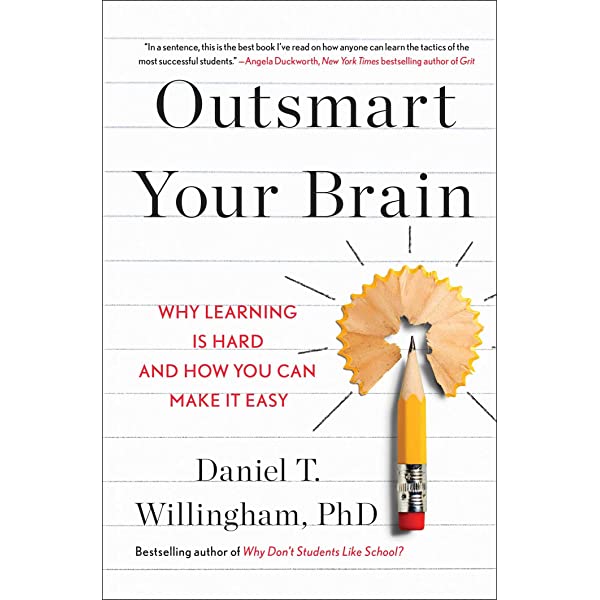
I'm reading University of Virginia cognitive scientist Daniel Willingham's new book, Outsmart Your Brain: Why Learning is Hard and How You Can Make It Easy. The book offers terrific advice on learning strategies for students, as well as tips for teachers on how to help students learn more effectively. In the book, Willingham writes,
If your students consistently do not ask questions, you should wonder about your relationship with them. They are not quiet because your explanations are so brilliant and clear. They're quiet because they see asking a question as taking a risk. Ask yourself why that is.
What a terrific thought-provoking statement for teachers to ponder. Now replace the word students in the first sentence with the words "team members" or "employees" and consider the implications for leaders at all levels. If your people are not asking you questions, you have a problem. Silence doesn't suggest that you have articulated your vision, goals, and strategies clearly and persuasively. Silence suggests a problem with the climate you have created.
Wednesday, February 08, 2023
Super Bowl Ads: Teaming Up is the New Trend
Friday, February 03, 2023
Building Resilience
![]() |
| Source: NIH |
Resilience has been defined as the capacity to withstand or recover quickly from difficulties (Oxford dictionary). In a 2021 Harvard Business Review article, Rob Cross and his co-authors explained why we should care a great deal about resilience in our organizations. They wrote, "Resilience has been shown to positively influence work satisfaction and engagement, as well as overall well-being, and can lower depression levels. There is even evidence that resilience can help protect us from physical illness."
Cross and his colleagues make a very important point about resilience though. They push back against the conventional wisdom which suggests that resilience is an internal trait. According to this line of thinking, it's something deep down inside of you that can be drawn up to overcome challenges; if you lack resilience, you somehow are flawed. Cross and his co-authors offer an alternative perspective:
Tuesday, January 24, 2023
Expressing Gratitude May Promote Better Collaboration
In past blog posts, I have featured some excellent research on the benefits of expressing gratitude. Most of that work focused on the benefits to the person giving thanks. New research from UNC-Chapel Hill Professor Sara B. Algoe and her colleagues demonstrates an interesting ancillary benefit from thanking others. They call it the witness effect. Gratitude doesn't just benefit the individuals giving and receiving thanks; it also has a positive impact on third parties who witness this exchange.
Thursday, January 19, 2023
A Genuine Apology Goes a Long Way
Thursday, January 12, 2023
Does Pay Transparency Help or Hurt Workers?
![]() |
| Source: TechTarget |
The UCLA Anderson Review recently published a feature article titled, "Pay Transparency: Will It Help or Hurt Workers?" The article focused on the work of Harvard Business School Professor Zoe Cullen and Brown University Professor Bobak Pakzad-Hurson. These scholars found that employers with non-unionized workforces might capitalize on the newly available data about salaries across a wide range of firms to drive a very hard bargain with job candidates. As a result, the transparency laws might depress starting wages. Here is an excerpt from the article:
More research clearly must be done, and this paper's conclusions from analysis of the TaskRabbit platform might not apply to the broader labor market. Still, the study suggests that more attention must be paid to the actual impact of these new transparency laws, rather than simply assuming that they will benefit employees.


.jpg)