![]() |
| Source: Variety.com |
Musings about Leadership, Decision Making, and Competitive Strategy
Friday, April 22, 2022
How Subscriber Declines May Affect the Netflix Culture
Tuesday, April 19, 2022
Successful Mentor-Mentee Relationships
![]() |
| Source: Monterail.com |
Kellogg Insight features a very good article this week on how to be a better mentor (and mentee). I found the tips to be quite useful. One of the most interesting points made in the story centers on research by Kellogg Professor Brian Uzzi and his co-authors. Here is the excerpt:
An analysis of the careers of more than 37,000 scientist mentors and mentees confirmed that having a mentor who is at the top of their game improves a mentee’s odds of ultimately becoming a superstar themselves by nearly sixfold.
Tuesday, April 12, 2022
Rise in Perfectionism Will Damage Our Ability to Innovate
![]() |
| Source: Skill Collective |
London School of Economics Professor Thomas Curran and York St. John Univesrity Professor Andrew Hill have published an important new study about perfectionism. They find that perfectionism is on the rise among young people in the UK, USA, and Canada. They attribute some of this rise in perfectionims to "anxious, overly involved, and/or overly controlling forms of parenting." In short, "increases in parental expectations and parental criticism offer the most plausible explanation for rising perfectionism to date." The scholars stress that they are not blaming parents. They believe larger systemic and structural forces are creating this pressure.
The rise in perfectionism creates a host of concerns, including about young people's well-being in the face of such pressures. However, I'd like to also stress the implications for innovation in our organizations. Innovation requires the ability to test out new ideas, experiment and prototype, and iterate quickly based on feedback. Naturally, such experimentation comes with a fair dose of failure. My concern with the rise in perfectionism is that young people will be afraid to expose their ideas to others and open themselves up to constructive feedback. They will wait to refine their ideas, in hopes of making them perfect, before testing them out with others. This reticence to put ideas out there before they are "complete" may lead to lost opportunities to improve those ideas, and it may slow down the process of innovation substantially. We need young people to be willing to share their incomplete, "minimally viable" concepts with others, and then to build upon and improve those concepts based on the input from others...without constant fear of failure.
Tuesday, March 22, 2022
Sucession Problems? Howard Schultz Returns as Starbucks CEO... Again
Friday, March 18, 2022
Negativity Bias: Conservatism in Funding Novel Projects?
| Source: capital.com |
Using quantitative and qualitative measures, we found a clear and
reproducible pattern: Negative information had a much stronger effect on people’s
attention, information processing, and behavior, consistent with the negativity
bias found in other domains (Baumeister et al. 2001, Rozin and Royzman 2001). Qualitative
comments accompanying the evaluators’ decisions to adjust their scores suggest
that, as a result of exposures to critical information, evaluators devoted
greater attention to evaluation-criteria-specific tasks, such as scrutinizing
the proposal for critiques and weaknesses. In contrast, exposures to neutral
and higher scores led to shorter comments, with a greater focus on
non-criteria-specific aspects of evaluation, such as confidence in their
judgment or achieving consistency with the other reviewers, which did not prompt
additional information processing of the evaluation task at hand. Thus,
provided with the opportunity to deliberate and influence each other,
evaluators are more likely to focus on proposal weaknesses than strengths. This
asymmetry suggests that reviewers are more concerned with false positives
(i.e., type I errors) than false negatives (i.e., type II errors), as the
furnishing of negative information weighs more heavily on reviewers’ decisions
than positive information of comparative magnitude. This finding may help
explain what many see as “conservatism bias” in funding novel projects, which
has conjured slogans such as “conform and be funded” and “bias against novelty”
(Nicholson and Ioannidis 2012, Boudreau et al. 2016). If the risk of proposals
is associated with their weaknesses, then, relative to independent evaluations,
postsharing evaluations favor more conservative projects. These decisions, in
turn, directly shape the disruptiveness of innovation occurring at the
knowledge frontier.
Sunday, March 13, 2022
Fran Horowitz' Turnaround at Abercrombie & Fitch
Wednesday, March 02, 2022
Fun & Creative Techniques to Tackle Challenging Goals
Wednesday, February 23, 2022
Strategic Deterrence: P&G, Clorox, and the Bleach Category
| Source: Fortune.com |
Thursday, February 17, 2022
Louis Vuitton, Luxury Brands, & Inflation
The Wall Street Journal reports today that Louis Vuitton "increased its handbag prices globally this week, in some cases by double-digit percentages, according to Bernstein Research." Louis Vuitton, of course, is a major brand house within the global luxury brand conglomerate, LVMH. The parent company owns a variety of luxury brands including Bulgari, Givenchy, Tiffany, Christian Dior, Moët & Chandon, and Dom Pérignon. Last year, I published a case study about LVMH's acquisition of the American jeweler, Tiffany. Thus, I took special interest in this news today.
Monday, February 14, 2022
Becoming More Resilient: Three Excellent Tips
| Source: Entrepreneur.com |
1. Focus on learning from our own successes and others' failures. Eskreis-Winkler reminds us that attribution bias causes individuals to struggle when it comes to learning from our own failures. That inability to reflect and learn from our failures inhibits our resilience at work. She explains: “People do not struggle to learn from their own success. Nor do they struggle to learn from others’ failures. Someone else’s failure is not upsetting or threatening. It’s just information." In short, promote learning whenever you can, and recognize that some forms of learning are much easier to accomplish than others. Use attribution bias to your advantage!
Wednesday, February 09, 2022
The Fall of Peloton
| Source: NPR |
Thursday, February 03, 2022
Best Practices for Virtual Meetings
Two years into the pandemic, we have all become quite accustomed to virtual meetings. For some of us, we feel as though our teams have improved their ability to communicate and collaborate virtually. Others have encountered various frustrations and grappled with Zoom fatigue. Recognizing these challenges, Kellogg School Professor Leigh Thompson has offered us three important recommendations for improving virtual meetings.
1. Work on engaging in constructive conflict with others. Start with low-stakes situations and decisions, and use those discussions as an opportunity to build your team's capability to have thoughtful, productive, and positive debates. Thompson explains in this excerpt from a Kellogg Insight article about her work:
Monday, January 24, 2022
When Hiring Leaders from the Outside Fails
| Source: NBC Sports |
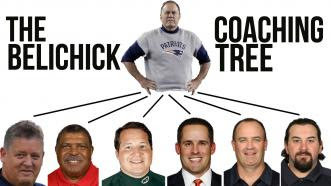
I've been thinking about this topic over the past few weeks, as we have witnessed a number of National Football League teams fire their head coaches. Among these firings, two more of New England Patriots' head coach Bill Belichick's proteges lost their jobs as head coaches of other teams. Observing these dismissals, I decided to compile the NFL win-loss record of all of Belichick's former assistant coaches during his time as the boss in New England: 175 wins, 252 losses, and 1 tie for a winning percentage of 40.9%. That's awful. Only one of his former assistants managed to compile a winning record (Bill O'Brien with 52 wins and 48 losses).
Why have Belichick's proteges failed so miserably? Several hypotheses come to mind.
1. The most obvious conclusion: None of these assistants had Tom Brady as their QB! As we all know, even Belichick has a losing record as a coach without Brady. More generally, these proteges didn't have all the other talent that accompanied Brady in New England. University of Texas coaching legend Darrell Royal once said, "It's not about the X's and the O's, but the Jimmys and the Joes." In other words, perhaps we overrate coaching and don't attribute enough of team success to the players themselves. In corporate terms, perhaps we place too much credit for success at the feet of a few top executives at successful firms and forget about the impact of many others supporting them.
Wednesday, January 12, 2022
The "Kill the Company" Exercise
Monday, January 10, 2022
Warming Up Before Solving a Tough Problem
| Source: NY Times |
Suppose your team has a very challenging, complex problem to solve. You would like to generate some creative solutions to that problem. What might you do BEFORE you gather the team together as a mechanism for stimulating more innovative thinking? You could encourage the team to warm up before tackling the issue together. What types of "warm-up" should you engage in before "running the race" together?
1. Physical activity: As Annie Murphy Paul notes in her fabulous new book, The Extended Mind, engaging in some physical activity can be an effective way to enhance your brainpower. Moreover, getting outdoors for that activity can be especially powerful. Getting the blood moving is essential to thinking clearly and creatively.
2. Be an anthropologist: Rather than simply immerse yourself in spreadsheets and data, go out into world and observe some actual customers. Watch how your firm's products and services are actually being used, and watch for those pain points experienced by your customers.
3. Imagine someone else tackling this problem: Scholars Evan Polman and Kyle Emich have shown that research subjects are more likely to solve a challenging problem if they imagine someone else faced that particular predicament (rather than being in that situation themselves).
4. Engage in an improv exercise: A simple "yes-and" exercise can be a powerful way to get people to lower their inhibitions, think more freely, and become more comfortable offering bold and original ideas despite some reservations or concerns.
5. Brainstorm questions, not answers: Ask the team to come up with different questions that they would like to answer regarding this problem. What might they like to learn more about in this situation? These efforts can be effective at helping people reframe the problem before the team in a manner that may stimulate more creative thinking. In many cases, the initial frame may be too narrow, and therefore, it may constrain the range of options considered.
6. Gather some physical materials: We can think more creatively if we have objects to touch, feel, and work with along with our team. They might enable us to build mock-ups as we later brainstorm together, or we might use the materials to illustrate a customer pain point more clearly (rather than simply using words spoken or on a page).
7. What would we never do? Ask the team to generate a list of solutions that your company would NEVER choose. Then ask the team to explain WHY these options would not be considered. What orthodoxy or conventional wisdom does that reveal? Should that conventional wisdom or these assumptions be questioned before trying to solve this problem?
Friday, January 07, 2022
Unlocking Creativity
Thursday, January 06, 2022
Widen Your Lens: How Might I Learn From Others Far From My Technical/Industry Domain?
| Source: Forbes.com |
Naik describes a fascinating moment that occurred one day as Drs. Allan Goldman and Martin Elliot watched one of their favorite sports on television. The physicians observed in awe as a Formula One auto racing pit crew engineered a remarkably efficient and safe handoff each time the driver entered the pit during a race. They decided to try to learn from these racing crews and apply those lessons to their work in the hospital. Naik describes what happened next:
Wednesday, January 05, 2022
Fighting Decision Fatigue
| Source: Discover Magazine |
Rachel Feintzeig has written a Wall Street Journal article this week titled "Decision Fatigue is Real: Here's How to Beat it This Year." The article notes that many people are feeling overwhelmed during the pandemic by the sheer number of seemingly consequential decisions they must make, both personally and professionally. Scholars describe a phenomenon called anticipatory regret, in which people look ahead to why they might be unsatisfied with the choice they are about to make, and as a result, they find themselves unable to act now.
Wednesday, December 29, 2021
A Lesson In Setting (and Achieving) Our Goals
| Source: Mission to Learn |
We can learn a great deal about setting and achieving goals by studying how people engage in physical exercise. That's precisely what University of Pennsylvania scholar Katy Milkman has done very successfully in her career. She features some of that insightful research in her terrific new book,
Wednesday, December 15, 2021
It's More than OK to say "I don't know."
| Source: Lean Enterprise Institute |
Mandy Gilbert, Founder and CEO of Creative Niche, wrote an interesting article several years ago for Inc. The title of the essay was, "Why Saying 'I Don't Know' Is a Sign of a Strong Leader." The article reminded me of a conversation I had with a UK-based CEO in the early days of the COVID-19 pandemic. She recounted a story of her first meeting with her top management team after shutting down the corporate offices in March 2020. This CEO started the meeting by telling the team, "I just want to remind you all that I haven't been through a global pandemic either. So, let's figure this out together." Here's what Gilbert wrote in her article that reminded me very much of this story of the CEO confronting the pandemic with her senior team: