Musings about Leadership, Decision Making, and Competitive Strategy
Monday, July 21, 2025
Porsche vs. Ralph Lauren: The Danger of Diluting Brand Equity
Sunday, July 13, 2025
What Happens When We Compare Ourselves to Generative AI?
![]() |
| Source: https://itsoli.ai/ |
Of course, simply having more self-confidence does not mean people actually will perform well on a subsequent task. In one of their studies, Reich and Teeny show that those who had compared themselves to an AI model did no better at a creative task than the individuals who compared themselves to other humans.
Thursday, July 10, 2025
Scarcity, Pricing, and Luxury Goods: The Case of the Birkin Bag
![]() |
| Source: Teen Vogue |
No company has mastered scarcity better than Hermès. The company markets the famous Birkin bag, named after British actress Jane Birkin, who inspired Hermès Executive Chairman Jean-Louis Dumas to create the leather bag during a conversation aboard a flight in 1984. A classic Birkin 25 bag sells for more than $12,000 today. Could the company raise prices even further? Given the even higher prices on the resale market, it seems the firm could raise prices. However, as Carol Ryan wrote this week in the Wall Street Journal, Hermès chooses to drive profitability through a different strategy. She writes:
Thursday, June 26, 2025
Rethinking the Exit Interview
Tuesday, June 17, 2025
Will Using AI at Work Damage Your Reputation?
How does using AI at work shape others' perceptions of you? Could you enhance or damage your reputation by leveraging AI extensively? Jessica Reif , Richard Larrick, and Jack Soll have published a fascinating new paper on this topic titled "Evidence of a social evaluation penalty for using AI." The scholars conducted a series of experiments to examine how people perceive those that use AI extensively at work. The authors concluded, "This work provides experimental evidence that people incur a social evaluation penalty for using AI tools at work. This generates a dilemma for employees: The productivity gains they can achieve with AI tools carry a social cost."
Monday, June 09, 2025
Deep Curiosity to Solve Hard Problems
Recently, AMD CEO Lisa Su spoke at Stanford's Graduate School of Business. She described how leaders should be aiming to provide opportunities for their people to tackle hard problems. She argued that you won't be sure they can achieve those ambitious goals, but your job is to create those opportunities and provide them support. For employees, their goal should be to have an intense curiosity about solving tricky problems and an interest in exploring new challenges. Together, a leader looking to provide challenges and an employee with curiosity can be a perfect match. Here's an excerpt from Lisa Su's interview:
Wednesday, May 28, 2025
Are You Leaning on AI Because You Are Afraid To Speak With Your Manager?
Are You Leaning on AI for Advice and Feedback Because You Are Afraid To Speak With Your Manager? Perhaps many employees are doing so these days. Fortune's Brit Morse writes:
Thursday, May 22, 2025
The Pressure To Appear Confident
Do you feel pressure at times to appear confident in your decisions and plans? Are you actually certain, or are you trying to put on a brave face for your team members and/or external constituents? Are you afraid of appearing as though you are not sure how to proceed, or how the future will unfold for your organization? Fast Company's Kate O'Neill addresses the topic of confidence in a great new article titled Why the best leaders embrace ‘strategic disappointment’ (and how you can, too)
Monday, May 19, 2025
Hiring and Collaborating with Higher-Paid Employees
![]() |
| Source: Berkeley Economic Review |
What happens when we know that others are paid more than us? Does it affect our willingness to collaborate with them? What about hiring decisions? Are we more or less likely to hire someone who may earn more than us? Cornell Professors Kevin Kniffin and Angus Hildreth examined this question in a series of experimental studies. They found an interesting, but not surprising, dichotomy when it came to collaboration vs. hiring.
Wednesday, May 14, 2025
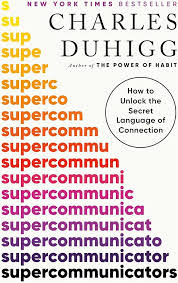
How to be a Supercommunicator
Have you met someone who is a highly effective communicator who engages you in enjoyable and helpful conversations with ease? Why are they so effective at making conversation? Recently, I read Charles Duhigg's terrific book, Supercommunicators: How to Unlock the Secret Language of Connection. Charles earned a Pulitzer Prize as a writer for the New York Times. Many years ago, he was my student in the MBA program at Harvard Business School. In Duhigg's book, he explores the behaviors and methods of people who are particularly effective at connecting with others. When he published the book, Duhigg sat for an interview with McKinsey & Company. He commented on one very important trait of supercommunicators:
Friday, May 09, 2025
The Value of Companies with Many Occupational Options for Employees
- workers starting their career at firms with more occupational variety switch occupations internally more often within the first 10 years;
- as a result, workers starting their career at firms that offer more job titles tend to have higher wages in 10 years;
- independently of firm size, the more occupations a firm offers, the more likely it is to retain their employees.
Wednesday, April 30, 2025
Role Playing the Competition at Dick's Sporting Goods
Thursday, April 24, 2025
Indecisive? Do You Know The Right Thing to Do, Yet Still Hesitate?
![]() |
| Source: Michigan Daily |
In my research, I've found another form of indecision that occurs frequently. Indecisiveness does not always stem from an inability to determine the best course of action. Instead, in some cases, individuals know precisely what to do, but they resist moving forward anyway? Why? They know that the implementation of this course of action will be quite bumpy. There will be challenging pitfalls to avoid and obstacles to overcome. They know it will be painful at times. They aren't quite certain how to tackle these challenges. Thus, they resist making a decision at all. They delay the choice, even though they know it is the right thing to do. Perhaps you can relate...
What can we do in these situations? First, we can identify precisely what skills, resources, and talent will be needed to address these implementation challenges. We have to identify the gaps in our own expertise and identify the people to complement us and provide the know-how to execute our planned course of action successfully. Second, we can reflect on those past situations we have encountered in which implementations have not gone as planned. We should consider what strategies have worked for us in the past. How have we overcome obstacles, pivoted effectively, and iterated when initial plans faltered. Reflecting on lessons learned from those circumstances will help us become more decisive in this moment. Third, we can imagine what success will look like. Many people have heard of the pre-mortem method. That's when we imagine what failure will look like, and then identify what is likely to cause that poor outcome. The pre-mortem can be very helpful when we face a risky decision. However, if we are indecisive, sometimes the pre-parade can help us move forward. In that method, we imagine what a great success would look like, and we identify what will be the key drivers of that success. Then we can start working on putting those conditions in place to insure success.
Monday, April 14, 2025
Can AI Enable Us To Focus More on the Work We Love to Do?
![]() |
| Source: Doyenhub Software Solution |
Manuel Hoffmann and his colleagues have published a new working paper titled "Generative AI and the Nature of Work." They examined the results of a natural experiment associated with the use of GitHub Copilot, a generative AI tool for software developers. The findings illustrate an interesting shift in the work that developers were doing. First, the generative AI tool enabled software developers to spend more time coding and less time on administrative tasks related to project management. Second, they found that developers engaged in more exploratory work with the introduction of this AI tool. In other words, developers conducted more experiments and spent less time on established projects. The scholars summarize the key results as follows:
Friday, April 04, 2025
Does Competing Outside of Work Harm Collaboration at Work?
![]() |
| Source: ESPN |
Grohsjean, Piezunka, and Mickeler focused on the fact that many professional soccer teammates compete against each other during international tournaments such as the World Cup. Each teammate will play for his or her home country, and then they return to being teammates on their professional club the next season. The scholars decided to look at how World Cup competition affected collaboration among teammates the following season. Specifically, they examined whether these teammates, who had competed against one another in the World Cup, would pass the ball more or less frequently when returning to their professional club the next season. According to these scholars, "The average number of passes between treated players in the post-Cup season drops by about 11%."
Tuesday, April 01, 2025
Can Data Analytics Make Your Product Boring?
Consider the case of the National Basketball Association (NBA). In the 1986 NBA season, teams averaged 3.3 three-point attempts per game. League MVP and champion Larry Bird attempted 194 attempts for the entire season. That number led the entire league. Last year, teams averaged 35.1 three-point attempts per game. 26 players attempted more than 500 three-point shots during the season. In 1986, games involved a wide array of shooting. Teams had powerful low-post players such as Hakeem Olajuwon and Kevin McHale. They had players who could slash to the basket and others who had perfected the mid-range jumper. Today, the game involves an overwhelming number of three-point shots and very little low-post play. In the 1980s, some teams played a bruising, slower, physical game. Others played a run-and-gun, fast-break game. Today, nearly all teams rely heavily on long-distance shooting.
Fans can disagree over whether today's game is better than the 1980s version of NBA basketball. However, it is difficult to argue that today's game is more differentiated than the 1980s version. Most assuredly, teams all play a much more similar style of play today. Strategy convergence has taken place at an incredible rate. What's driven this change? Analytics. The data clearly say that teams should take a high number of three-point shots. It simply makes a great deal of sense if you want to win.
What's the lesson for business leaders? Analytics may drive what seem like clearly better decisions. Yet, it might just lead to strategy convergence, which may be harmful in the long run. Your product may become much more similar to those of your competitors. Distinctiveness falls, and in the long run, that may actually harm profitability for all rivals.
Tuesday, March 25, 2025
Amazon CEO Andy Jassy on Shaping Your Career Journey
Amazon CEO Andy Jassy recently penned a blog post about career planning and development. Mostly, the post offers a series of clichés such as "find your passion" and "don't be afraid to fail." However, one point bears emphasis and reflection. Jassy argues as follows:
"I don't think that you have to know what your final destination is in your job early in your life. Maybe not even in your 40s, 50s, and 60s. I think that you have a chance to keep writing your own story and reinventing your own story. Before I got to Amazon, I had tried sportscasting and sports production, I coached a soccer team, I worked in a retail golf store, I did product management, I tried investment banking, I tried sales, I tried a lot of things. I really do believe it's perhaps as important to figure out what you don't want to do as what you want to do, because it actually helps you get more centered on what really makes you happy. So don't be afraid to try a lot of different things and don't let people tell you that whatever you've done—even if you've done it for a while—is what you must do. You have the opportunity to write your own story."
Most of my young students feel a great deal of pressure about their career choice and job search as they complete college. They often think they have to have it all figured out. If only they thought hard enough, talked to enough people, found the right mentors... they would land the perfect job and know precisely what career they should choose. Then, all they have to do is begin to set some concrete goals for the next 3, 5, 10 years... and they are off to a great start.
The reality is much different, of course. Most will switch jobs frequently, particularly in the early part of their careers. Some will switch to completely different professions, or different functional areas within the business world. The shifts will occur for various reasons, including the emergence of incredible opportunities, changes in family situation, etc. Some, though, will make substantial shifts because they are not satisfied with their early choices, don't find them fulfilling, or discover that they are simply not well-suited for those roles. Here, Jassy's advice becomes so important. We should not think that we have to have it all figured out. We should be willing to experiment, particularly early in our career. We will only know what we enjoy, and what we are skilled at, if we experience it for ourselves. Talking to others is helpful, but not sufficient, for coming to these conclusions effectively.
The willingness to experiment should not end early in your career, according to Jassy. Here I agree wholeheartedly as well. New technologies will emerge, creating new threats and opportunities that will shape people's careers. The willingness to learn will be crucial, and so will the willingness to adapt. Those who began their careers 35 years ago in retail could hardly have imagined the landscape today. Yet, opportunities still exist for those willing to put aside their early career goals and rethink what is best for them today. All of this change may be unsettling, but the first step is to accept that the career path will not be linear for most of us, even later in our lives.
Thursday, March 13, 2025
Southwest Pursues a Me-Too Strategy
![]() |
| Source: Wikipedia |
This week, Southwest Airlines announced a major strategy shift. Alison Sider of the Wall Street Journal reported that, "Southwest Airlines plans to start charging for checked bags, a seismic shift that will boost revenue but potentially give its fiercely loyal passengers a reason to shop around. 'Bags fly free' was a policy so sacrosanct that Southwest trademarked the phrase and devoted a section of a book celebrating its 50th anniversary to it." She also reported that, "Southwest is adding a bare-bones fare similar to its rivals’ basic economy tickets, with restrictions galore, including no advance seat assignment." This latest change comes after other major changes including the move away from open seating, announced in July, as well as the decision to sell tickets on platforms such as Expedia. Southwest has made these changes after pressure from an activist investor, Elliott Investment Management. The firm pressed Southwest to add five new board members in October.
increase; green up pointing trianglSplans to start charging for checked bags, a seismic shift that will boost revenue but potentially give its fiercely loyal passengers a reason to shop around
Monday, March 10, 2025
Interviewing Candidates Who Have Prepared Using Generative AI Technologies
Navio Kwok writes in the MIT Sloan Management Review that job candidates increasingly are utilizing generative artificial intelligence to prepare for interviews. They are providing job descriptions and company data, as well as information about themselves, and then asking for help simulating the interview, anticipating questions, and generating strong responses to those queries. Kwok sounds an alarm though: